
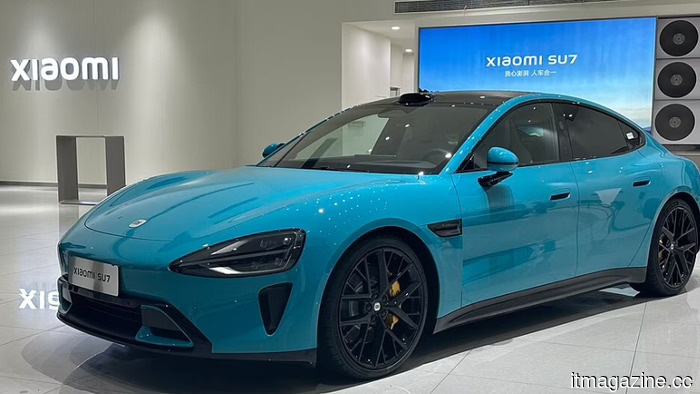
Xiaomi has developed a robotic arm that connects to your electric vehicle at home, fulfilling a commitment that Tesla made in 2014 but never followed through on.
Xiaomi has introduced a home robotic charging arm capable of automatically plugging and unplugging electric vehicles without any user action. The system identifies the vehicle’s location after parking, extends to the charging port, establishes the connection, and retracts once the charging is done or a designated battery level is achieved. The company aims for a retail launch in China in Q4 2026, although pricing details are yet to be revealed.
This concept is not unprecedented. In December 2014, Elon Musk mentioned that Tesla was developing a charger that would “automatically move out from the wall and connect like a solid metal snake.” In August 2015, Tesla showcased a working prototype featuring a segmented robotic arm that located and plugged into the charge port of a Model S. However, this product was never released. Tesla later shifted to wireless charging, acquiring the German startup Wiferion in 2023 and designing the Cybercab robotaxi without a physical charging port. Xiaomi’s method is more traditional and might be more feasible, utilizing a compact unit compatible with current plug-in standards rather than necessitating new vehicle designs.
The arm is only 152mm wide, making it suitable for installation in tight residential garages. It employs AI-based vision recognition, allowing for sub-millimeter precision when connecting the plug. Additionally, owners can start charging remotely via a smartphone as long as the vehicle is within reach of the arm.
Xiaomi stated that the promotional video was shot in a real-world environment and that all showcased features are ready for production, although this claim has not been independently verified. With over 600,000 EVs sold in less than two years, Xiaomi possesses the production capability to market accessories like this. However, it remains uncertain whether the robotic charging arm will attract enough customers to justify its production, especially without a known price.
The robotic arm is meant to work within Xiaomi’s larger ecosystem of smart home and automated parking solutions. The envisioned process combines autonomous parking with automatic charging: the vehicle parks itself, the arm connects the charger, and the owner can leave without further intervention. This scenario relies on vehicle-to-infrastructure communication protocols that Xiaomi has developed across its SU7 and YU7 models, offering an advantage because they manufacture both the car and the accessory.
Xiaomi is not alone in pursuing this technology; other Chinese companies are also exploring similar solutions. In January 2025, Huawei showcased a fully automated robotic charging arm for the Maextro S800. Li Auto, in partnership with CGXi, is developing a rail-based robotic charging system for public stations, aiming for commercial implementation in Q2 2026 across Li Auto's 5C fast-charging network. BYD has even applied for patents for an AI-powered charging robot that can also inflate tires.
The competitive landscape goes beyond just robotic chargers. The Dutch startup Rocsys raised $13 million in April to expand its M1 overhead rail-mounted robotic charger for robotaxi depots, focusing on commercial fleets instead of consumers. Meanwhile, Porsche adopted a different strategy with its 11kW wireless inductive charging pad for the Cayenne Electric, which transfers energy through a magnetic field between a floor plate and a vehicle receiver, with a launch planned for Europe in 2026.
The shared insight among these companies is the belief that electric vehicle owners should not need to manage charging cables. Although various methods exist—robotic arms for automated plug-in charging, wireless pads for cable-free solutions, and overhead rails for fleet applications—the fundamental assumption remains: convenience needs to improve to enhance EV adoption, making the charging process as effortless as possible.
For Xiaomi, the robotic arm has implications beyond mere convenience. The company is aiming for 550,000 vehicle deliveries in 2026 and has established its automotive brand on the premise that all Xiaomi devices, including smartphones, home appliances, and cars, work together seamlessly. A robotic charging arm that exclusively functions with Xiaomi vehicles would reinforce this interconnectivity. Whether this product can be produced at a price that distinguishes it from a novelty will determine its potential success in the market.
Other articles
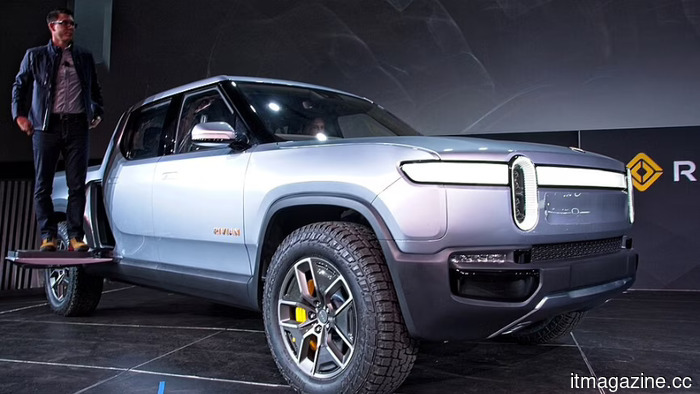 The CEO of Rivian has stated that supervised point-to-point self-driving technology will be available this year, making a direct comparison to Tesla's FSD.
RJ Scaringe has announced that Rivian plans to deliver supervised point-to-point driving for all Gen 2 vehicles and R2 models this year, with fully autonomous driving expected to be available in 2027.
Discussions regarding the ban on Fable 5 are taking place between Anthropic and the Commerce Department.
On Monday, Anthropic will meet with Commerce officials to discuss the suspension of Fable 5 and Mythos 5, following allegations of "recklessness" and the calls for reversal from over 100 cyber experts.
The CEO of Rivian has stated that supervised point-to-point self-driving technology will be available this year, making a direct comparison to Tesla's FSD.
RJ Scaringe has announced that Rivian plans to deliver supervised point-to-point driving for all Gen 2 vehicles and R2 models this year, with fully autonomous driving expected to be available in 2027.
Discussions regarding the ban on Fable 5 are taking place between Anthropic and the Commerce Department.
On Monday, Anthropic will meet with Commerce officials to discuss the suspension of Fable 5 and Mythos 5, following allegations of "recklessness" and the calls for reversal from over 100 cyber experts.
 Japan's largest taxi application secured $553 million in the country's biggest initial public offering this year.
Go Inc. begins trading on the Tokyo Stock Exchange after securing ¥88.6 billion in Japan's largest IPO of 2026, supported by Goldman Sachs and BlackRock.
Japan's largest taxi application secured $553 million in the country's biggest initial public offering this year.
Go Inc. begins trading on the Tokyo Stock Exchange after securing ¥88.6 billion in Japan's largest IPO of 2026, supported by Goldman Sachs and BlackRock.
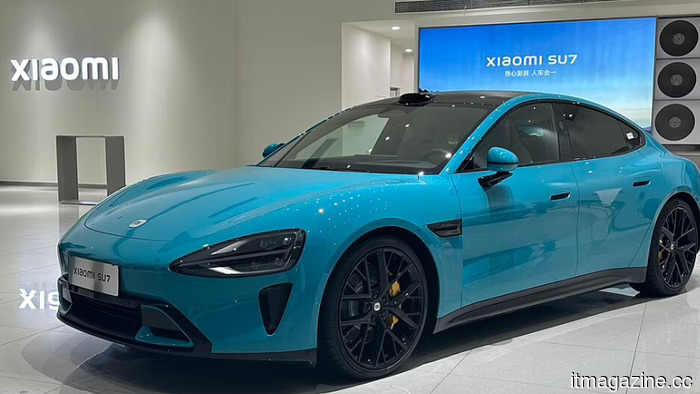 Xiaomi has developed a robotic arm that connects to your electric vehicle at home, fulfilling a commitment that Tesla made in 2014 but never followed through on.
Xiaomi introduced a robotic charging arm for its electric vehicles that autonomously plugs in and unplugs without requiring any input from the owner. The retail release is aimed for the fourth quarter of 2026 in China.
Xiaomi has developed a robotic arm that connects to your electric vehicle at home, fulfilling a commitment that Tesla made in 2014 but never followed through on.
Xiaomi introduced a robotic charging arm for its electric vehicles that autonomously plugs in and unplugs without requiring any input from the owner. The retail release is aimed for the fourth quarter of 2026 in China.
 Canada suggests a revamp of privacy regulations that would limit surveillance costs and grant consumers the ability to erase their data.
Canada's Bill C-36 aims to replace PIPEDA, impose limits on surveillance pricing, classify children's data as sensitive, and establish a regulator with the authority to levy fines of up to C$25 million.
Canada suggests a revamp of privacy regulations that would limit surveillance costs and grant consumers the ability to erase their data.
Canada's Bill C-36 aims to replace PIPEDA, impose limits on surveillance pricing, classify children's data as sensitive, and establish a regulator with the authority to levy fines of up to C$25 million.
Xiaomi has developed a robotic arm that connects to your electric vehicle at home, fulfilling a commitment that Tesla made in 2014 but never followed through on.
Xiaomi has introduced a robotic charging arm for its electric vehicles that automatically connects and disconnects without any input from the owner. The retail release is aimed for the fourth quarter of 2026 in China.