

The largest battery manufacturer in the world has just tempered the excitement surrounding solid-state electric vehicles.
Robin Zeng, the chairman of CATL, indicates that solid-state battery technology is still in the laboratory development phase and that significant market introduction is not expected before 2030.
Solid-state batteries have been touted as a revolutionary technology for electric vehicles, offering greater energy density, quicker charging, and enhanced safety compared to current lithium-ion batteries. However, the leader of the world's largest battery manufacturer advises caution for potential buyers.
Dr. Robin Zeng shared with Caijing Magazine (via CarNewsChina) that mass commercialization of solid-state batteries will not be feasible before the year 2030. The company has established a production volume threshold of 1 million vehicles to validate large-scale deployment, a target that remains unattainable in the near future. When solid-state batteries eventually hit the market, Zeng noted that their initial use will be limited to premium vehicles costing over 250,000 yuan (approximately $37,000).
The manufacturing issue
The main challenge stems from the solid-state interface within the battery. Currently, CATL employs a warm isostatic pressing method at 6,000 atmospheres to fuse components, but materials with varying compaction densities often lead to structural misalignments under that pressure.
These irregularities increase internal resistance and speed up cell deterioration, making mass production unfeasible for the time being. Zeng rated all-solid-state chemistry at level four on the nine-point Technology Readiness Level (TRL), indicating that the technology is still in the validation and prototype stages.
What CATL is currently pursuing
While the research on solid-state batteries progresses, CATL is depending on traditional liquid-electrolyte batteries to satisfy present demand. The company is also investigating sodium-ion technology as an alternative to diminish reliance on lithium in the supply chain.
The cautious assessment from CATL’s chairman holds significant weight, considering the company’s size and power over global battery supply chains. While other manufacturers and research groups make bold assertions about breakthroughs in solid-state technology, the firm that would have to produce them at scale is taking a more prudent stance.



Other articles
 Viewpoint: Who determines who is permitted to use a software application?
One Friday night, the most intelligent software in the world went offline at the command of a single government. While the order could be overturned, the precedent it sets will remain.
Zhipu leaps as Wall Street places its bets on China's open AI.
Zhipu's stock jumped by as much as 48% as JPMorgan and BofA expressed confidence that China's affordable and accessible AI models will capitalize on the market space the US relinquished by limiting Anthropic.
Viewpoint: Who determines who is permitted to use a software application?
One Friday night, the most intelligent software in the world went offline at the command of a single government. While the order could be overturned, the precedent it sets will remain.
Zhipu leaps as Wall Street places its bets on China's open AI.
Zhipu's stock jumped by as much as 48% as JPMorgan and BofA expressed confidence that China's affordable and accessible AI models will capitalize on the market space the US relinquished by limiting Anthropic.
 A study indicates that mental health distress is increasing, with remote work being a significant contributing factor.
Researchers discovered that remote employees experience considerably more solitude, and this change may explain about one-third of the rise in mental distress observed since the pandemic.
Adani and Jabil intend to manufacture AI data center equipment in India.
Adani and Jabil are planning a partnership to produce gigawatt-scale AI data center racks in India, aiming to invest in the "Make in India" initiative to establish themselves as exporters of AI hardware.
A study indicates that mental health distress is increasing, with remote work being a significant contributing factor.
Researchers discovered that remote employees experience considerably more solitude, and this change may explain about one-third of the rise in mental distress observed since the pandemic.
Adani and Jabil intend to manufacture AI data center equipment in India.
Adani and Jabil are planning a partnership to produce gigawatt-scale AI data center racks in India, aiming to invest in the "Make in India" initiative to establish themselves as exporters of AI hardware.
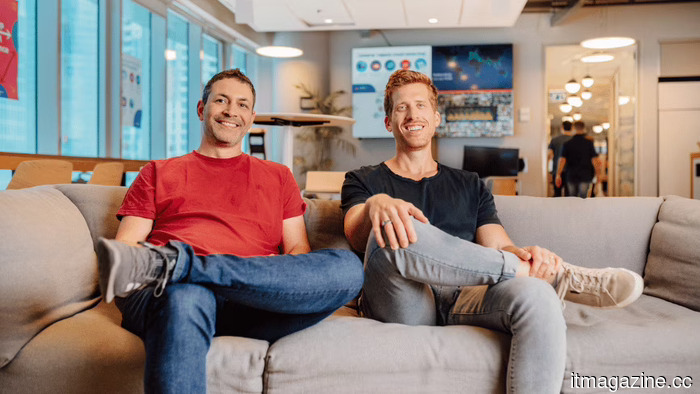 Monday.com introduces a $200 million fund for Monday Ventures focused on AI.
Monday.com has introduced Monday Ventures, a fund of up to $200 million aimed at Israeli workplace-AI startups, initially deploying $50 million and having already completed three deals.
Zhipu leaps as Wall Street invests in China's open AI.
Zhipu's shares jumped by as much as 48% following JPMorgan and BofA's investment, anticipating that China's affordable, accessible AI models will capture the market that the US gave up by limiting Anthropic.
Monday.com introduces a $200 million fund for Monday Ventures focused on AI.
Monday.com has introduced Monday Ventures, a fund of up to $200 million aimed at Israeli workplace-AI startups, initially deploying $50 million and having already completed three deals.
Zhipu leaps as Wall Street invests in China's open AI.
Zhipu's shares jumped by as much as 48% following JPMorgan and BofA's investment, anticipating that China's affordable, accessible AI models will capture the market that the US gave up by limiting Anthropic.
The largest battery manufacturer in the world has just tempered the excitement surrounding solid-state electric vehicles.
CATL chairman Robin Zeng states that manufacturing difficulties will prevent solid-state batteries from being used in mass-market electric vehicles until at least 2030, with initial production confined to high-end models.