
Zhipu leaps as Wall Street invests in China's open AI.
Zhipu's stock is soaring. The Chinese AI lab, known as Knowledge Atlas Technology and listed in Hong Kong, jumped as much as 48 percent on Monday before settling with a gain of about 33 percent, as Wall Street banks speculated that China stands to benefit significantly from the US government's restrictions on Anthropic.
The catalyst for this movement was the timing. Shortly after the US government compelled Anthropic to withdraw its most advanced Claude models from all foreign users, Zhipu announced it would launch its latest and most powerful model, GLM-5.2, as open-source software this week, free of usage constraints. The company made its position clear.
“Advanced intelligence should not be exclusive to a select few and must not be taken back,” it stated. “It should be accessible, available, adaptable, and designed to assist all developers.”
Reasons for Wall Street's interest in Zhipu
Analysts acted swiftly. JPMorgan maintained its overweight rating while increasing its target price for Zhipu from HK$950 to HK$1,400, and downgraded its domestic competitor MiniMax. Bank of America also initiated coverage on both with buy recommendations. The common viewpoint among them is that as US frontier models become more expensive and harder to access, China is in a prime position to seize the "value-for-money" market with affordable but capable models.
The market has already reacted positively. Zhipu's stock has more than tripled since its January IPO, bringing its market capitalization to approximately HK$489 billion, around four times that of MiniMax. Both companies are now considering a secondary listing on Shanghai’s STAR Market.
Additionally, Zhipu has the ability to adjust its prices accordingly: it increased cloud API fees by 8 to 17 percent along with its previous model in April, marking its second price hike this year.
Open vs. Closed Systems, and a Talent Warning
The division is becoming a critical aspect of AI development. While US labs face pressure to limit access to their top models, Chinese firms are adopting a contrasting approach, focusing on open distribution and appealing to cost-sensitive businesses.
Initial community testing indicates that GLM-5.2, which offers a one-million-token context window, performs similarly to Anthropic’s Claude Opus 4.7 in coding and long-term agent tasks, although this is still preliminary and not a verified benchmark.
The narrative carries a more serious undertone as well. Z-Ben Advisors’ Peter Alexander estimates that around 40 percent of AI engineers in the US are originally from China, and this new directive may effectively exclude many of them from the systems they contributed to building, which he warns could lead to a "brain drain" toward Chinese labs such as DeepSeek and Moonshot.
The surge in Zhipu's stock seems to stem from sentiment as much as it does from fundamentals, and the analyst targets represent speculations rather than certainties. Nonetheless, the trajectory is clear: as the US closes opportunities, China is eager to open its doors.
Other articles
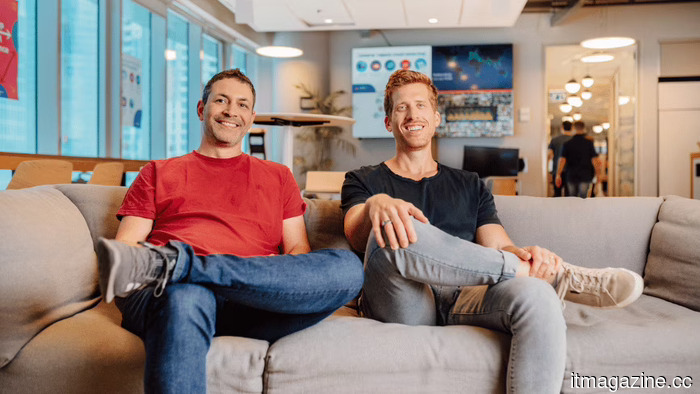 Monday.com introduces a $200 million fund for Monday Ventures focused on AI.
Monday.com has introduced Monday Ventures, a fund of up to $200 million aimed at Israeli workplace-AI startups, initially deploying $50 million and having already completed three deals.
Zhipu leaps as Wall Street invests in China's open AI.
Zhipu's shares jumped by as much as 48% following JPMorgan and BofA's investment, anticipating that China's affordable, accessible AI models will capture the market that the US gave up by limiting Anthropic.
Monday.com introduces a $200 million fund for Monday Ventures focused on AI.
Monday.com has introduced Monday Ventures, a fund of up to $200 million aimed at Israeli workplace-AI startups, initially deploying $50 million and having already completed three deals.
Zhipu leaps as Wall Street invests in China's open AI.
Zhipu's shares jumped by as much as 48% following JPMorgan and BofA's investment, anticipating that China's affordable, accessible AI models will capture the market that the US gave up by limiting Anthropic.
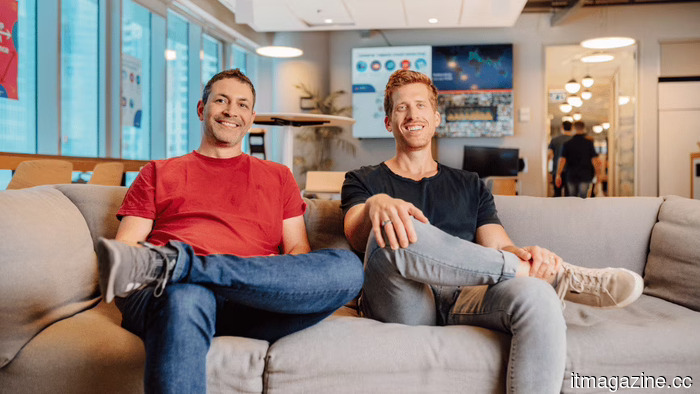 Monday.com introduces a $200 million Monday Ventures AI fund.
Monday.com has introduced Monday Ventures, a fund of up to $200 million dedicated to Israeli workplace-AI startups, initially deploying $50 million and having completed three deals so far.
Monday.com introduces a $200 million Monday Ventures AI fund.
Monday.com has introduced Monday Ventures, a fund of up to $200 million dedicated to Israeli workplace-AI startups, initially deploying $50 million and having completed three deals so far.
 UK intends to implement a social media ban for individuals under 16 as part of a significant initiative for online safety.
The UK government intends to prohibit access to social media for those under 16 and to implement tougher measures designed to lessen harmful online interactions and excessive use of screens.
UK intends to implement a social media ban for individuals under 16 as part of a significant initiative for online safety.
The UK government intends to prohibit access to social media for those under 16 and to implement tougher measures designed to lessen harmful online interactions and excessive use of screens.
 The largest battery manufacturer in the world has just tempered the excitement surrounding solid-state electric vehicles.
CATL chairman Robin Zeng states that manufacturing difficulties will prevent solid-state batteries from being used in mass-market electric vehicles until at least 2030, with initial production confined to high-end models.
The largest battery manufacturer in the world has just tempered the excitement surrounding solid-state electric vehicles.
CATL chairman Robin Zeng states that manufacturing difficulties will prevent solid-state batteries from being used in mass-market electric vehicles until at least 2030, with initial production confined to high-end models.
Zhipu leaps as Wall Street invests in China's open AI.
Zhipu's shares jumped by as much as 48% after JPMorgan and BofA suggested that China's affordable, open AI models could gain the market share that the US lost due to its restrictions on Anthropic.