
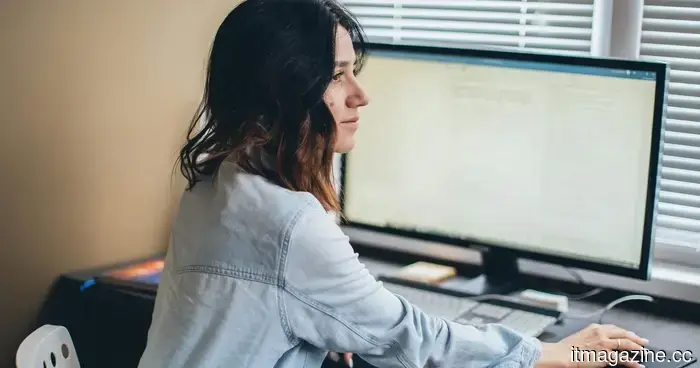
A study indicates that mental health distress is increasing, with remote work being a significant contributing factor.
Remote employees are experiencing increased solitude, and this is impacting their mental health.
Working from home has become commonplace for numerous employees since the pandemic, granting them more flexibility and autonomy regarding their work environment. However, recent research indicates that this transformation may also contribute to growing mental health issues.
Researchers publishing in the journal Science examined data from five large surveys involving over 580,000 U.S. workers from 2011 to 2024. Their results indicate that the rise of remote work has notably heightened social isolation and may be responsible for about one-third of the increase in mental distress seen since the pandemic.
The study concentrated on jobs that can be performed remotely, such as software development and office work, comparing them with positions requiring physical presence.
Remote workers are increasingly spending time alone.
The researchers found that individuals in remote-friendly jobs spent 58% more hours working in solitude than those in roles that cannot be performed remotely. The chances of going a whole day without any in-person interaction rose by 72%.
The effect was even more pronounced among those living alone. These individuals were much more likely to experience a full day without engaging with another person, and they reported a significantly greater rise in mental distress compared to those who live with family members.
The results imply that many discussions surrounding remote work have concentrated on flexibility, convenience, and productivity, while neglecting a fundamental question: What happens when millions of people have significantly less daily contact with others?
The overlooked drawback of workplace flexibility
For many adults, the workplace serves as one of the few venues for regular interaction with people outside of their home. Casual talks, team meetings, lunch breaks, and other daily exchanges might seem trivial, but they play a crucial role in sustaining social ties.
The researchers do not suggest that businesses should return everyone to the office full time. Instead, their findings indicate that maintaining social connections could become a more significant issue as remote and hybrid work setups become increasingly prevalent.
As more organizations adopt flexible work policies, the study poses a critical question: How can employees sustain meaningful social connections when their workplace is no longer a location they frequently visit?





Other articles
 Another study reveals that an excessive number of children are exposed to harmful content on social media.
A study by the Molly Rose Foundation revealed that 34% of teenagers in the UK came across content related to suicide, self-harm, or eating disorders on social media within just one week, showing little to no change since the implementation of the Online Safety Act.
Another study reveals that an excessive number of children are exposed to harmful content on social media.
A study by the Molly Rose Foundation revealed that 34% of teenagers in the UK came across content related to suicide, self-harm, or eating disorders on social media within just one week, showing little to no change since the implementation of the Online Safety Act.
 Viewpoint: Who determines who is permitted to use a software application?
One Friday night, the most intelligent software in the world went offline at the command of a single government. While the order could be overturned, the precedent it sets will remain.
Viewpoint: Who determines who is permitted to use a software application?
One Friday night, the most intelligent software in the world went offline at the command of a single government. While the order could be overturned, the precedent it sets will remain.
 UK intends to implement a social media ban for individuals under 16 as part of a significant initiative for online safety.
The UK government intends to prohibit access to social media for those under 16 and to implement tougher measures designed to lessen harmful online interactions and excessive use of screens.
UK intends to implement a social media ban for individuals under 16 as part of a significant initiative for online safety.
The UK government intends to prohibit access to social media for those under 16 and to implement tougher measures designed to lessen harmful online interactions and excessive use of screens.
 Sarvam has become India's latest AI unicorn following a $234 million funding round.
Sarvam secured $234 million in a funding round led by HCLTech, which contributed $150 million, achieving a valuation of $1.5 billion. This makes the Bengaluru-based sovereign-AI firm the latest AI unicorn in India.
Anthropic lawsuit alleges that it over-promised on $200 Claude plans.
A customer has filed a lawsuit alleging that Anthropic exaggerated the usage limits on its $100 and $200 Claude Max plans, and is requesting refunds as well as class-action status for buyers in the US.
Sarvam has become India's latest AI unicorn following a $234 million funding round.
Sarvam secured $234 million in a funding round led by HCLTech, which contributed $150 million, achieving a valuation of $1.5 billion. This makes the Bengaluru-based sovereign-AI firm the latest AI unicorn in India.
Anthropic lawsuit alleges that it over-promised on $200 Claude plans.
A customer has filed a lawsuit alleging that Anthropic exaggerated the usage limits on its $100 and $200 Claude Max plans, and is requesting refunds as well as class-action status for buyers in the US.
A study indicates that mental health distress is increasing, with remote work being a significant contributing factor.
Researchers discovered that remote employees experience considerably more solitude, and this change may explain about one-third of the rise in mental distress observed since the pandemic.