
Zhipu leaps as Wall Street places its bets on China's open AI.
Zhipu's shares are soaring. The Chinese AI lab, known in Hong Kong as Knowledge Atlas Technology, jumped by as much as 48 percent on Monday before settling with a 33 percent increase, as Wall Street banks believe that China stands to gain significantly from the U.S. government’s restrictions on Anthropic.
The catalyst was timing. Following the U.S. government's mandate for Anthropic to withdraw its most advanced Claude models from foreign users, Zhipu announced it was set to release GLM-5.2, its latest and most advanced model, as open-source software this week, with no limitations on use. The company's messaging was clear: “Cutting-edge intelligence should not belong solely to a select few, nor should it be restricted at any moment. It should be open, accessible, extensible and designed to benefit every developer.”
Reasons for Wall Street’s interest in Zhipu are clear. Analysts acted quickly. JPMorgan maintained its overweight rating and raised its price target from HK$950 to HK$1,400, while also downgrading Zhipu’s domestic competitor, MiniMax. Bank of America began tracking both companies with buy ratings. Their shared belief is that as U.S. frontier models become more expensive and harder to obtain, China is poised to attract the “value-for-money” sector with affordable, effective models.
The market has responded accordingly. Zhipu’s stock has increased more than tenfold since its IPO in January, leading to a market valuation of approximately HK$489 billion, about four times that of MiniMax. Both companies are now looking at a second listing on Shanghai’s STAR Market. Moreover, Zhipu has the leverage to support the excitement surrounding it: the company raised cloud API prices by 8 to 17 percent in conjunction with the launch of its previous model in April, marking its second price hike this year.
The divide between open and closed systems is becoming a defining aspect of AI. U.S. labs face pressure to limit access to their top models, while Chinese companies are embracing open distribution, appealing to cost-sensitive businesses. Initial community testing indicates that GLM-5.2, which features a one-million-token context window, performs comparably to Anthropic’s Claude Opus 4.7 in coding and long-task agent areas, although this data is preliminary and not from an independent benchmark.
There is a more troubling facet to this situation as well. Peter Alexander from Z-Ben Advisors estimates that about 40 percent of AI engineers in the U.S. were born in China, and the new directive effectively excludes many of them from the systems they contributed to, which he cautions could lead to a “brain drain” toward Chinese labs like DeepSeek and Moonshot.
The surge in Zhipu's stock is driven as much by sentiment as by tangible developments, and analyst targets reflect speculation rather than certainty. Nonetheless, the trajectory of this speculation is clear: with every door the U.S. closes, China is eager to keep its doors wide open.
Other articles
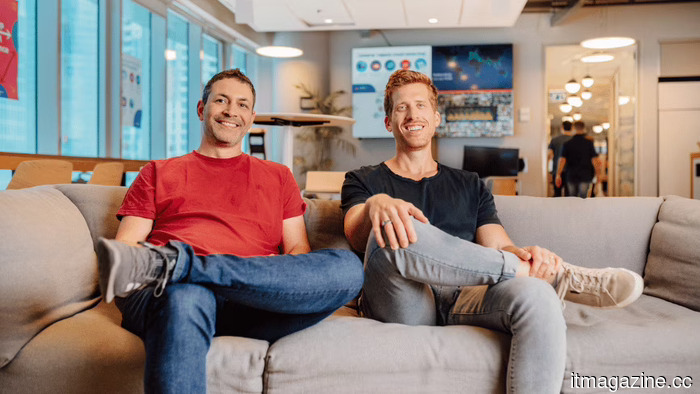 Monday.com introduces a $200 million fund for Monday Ventures focused on AI.
Monday.com has introduced Monday Ventures, a fund of up to $200 million aimed at Israeli workplace-AI startups, initially deploying $50 million and having already completed three deals.
Monday.com introduces a $200 million fund for Monday Ventures focused on AI.
Monday.com has introduced Monday Ventures, a fund of up to $200 million aimed at Israeli workplace-AI startups, initially deploying $50 million and having already completed three deals.
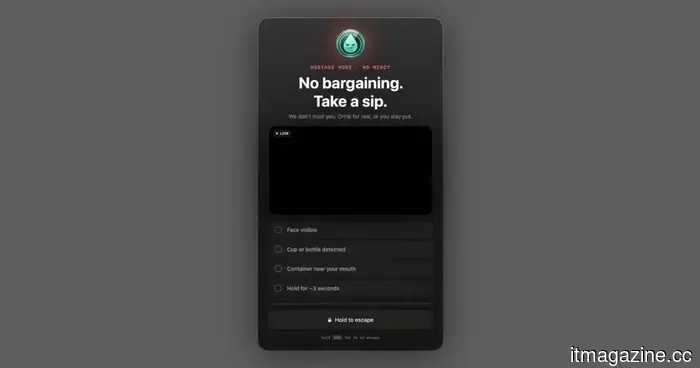 This new Mac application holds your screen captive until you consume some water.
Hydration Hostage schedules screen locks on your Mac and will only unlock once the on-device camera verifies that you've indeed consumed water.
This new Mac application holds your screen captive until you consume some water.
Hydration Hostage schedules screen locks on your Mac and will only unlock once the on-device camera verifies that you've indeed consumed water.
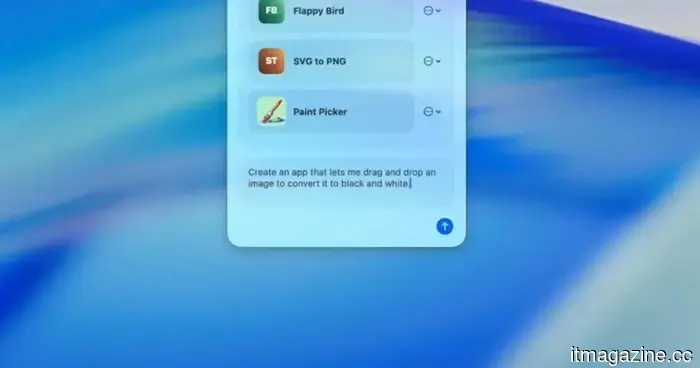 This free AI app builder for Mac transforms discarded prompts into actual desktop applications.
Ironsmith is a free AI application builder for Mac that transforms straightforward language requests into native macOS tools, offering both local and cloud model options for developing small personal utilities.
This free AI app builder for Mac transforms discarded prompts into actual desktop applications.
Ironsmith is a free AI application builder for Mac that transforms straightforward language requests into native macOS tools, offering both local and cloud model options for developing small personal utilities.
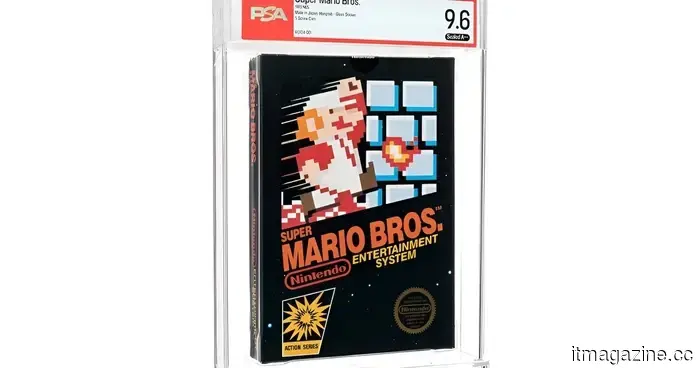 A copy of Nintendo's Super Mario Bros. recently sold for an astonishing $3 million.
A sealed edition of Super Mario Bros. for the NES has been sold for $3 million, establishing a new record in the video game collecting industry.
A copy of Nintendo's Super Mario Bros. recently sold for an astonishing $3 million.
A sealed edition of Super Mario Bros. for the NES has been sold for $3 million, establishing a new record in the video game collecting industry.
 A study indicates that mental health distress is increasing, with remote work being a significant contributing factor.
Researchers discovered that remote employees experience considerably more solitude, and this change may explain about one-third of the rise in mental distress observed since the pandemic.
A study indicates that mental health distress is increasing, with remote work being a significant contributing factor.
Researchers discovered that remote employees experience considerably more solitude, and this change may explain about one-third of the rise in mental distress observed since the pandemic.
Zhipu leaps as Wall Street places its bets on China's open AI.
Zhipu's stock jumped by as much as 48% as JPMorgan and BofA expressed confidence that China's affordable and accessible AI models will capitalize on the market space the US relinquished by limiting Anthropic.