

China establishes a photonic computing laboratory to circumvent US chip restrictions.
China has established its first specialized photonic computing laboratory in Shanghai, a collaborative initiative between Shanghai Jiao Tong University and the startup Lightelligence. This development indicates Beijing's strategy to rely on light-based chips as a means to circumvent the U.S. export restrictions on traditional semiconductors used in AI technology.
The Shanghai Key Laboratory of Integrated Photonic Computing Chips and Systems was inaugurated on June 11, as reported by the state-affiliated Jiefang Daily. This laboratory is a partnership with Lightelligence, a leading startup in photonic computing based in Shanghai. Lightelligence recently debuted on the Hong Kong stock exchange in April, experiencing a remarkable 380% surge on its opening day and claims to be the first in the world to implement large-scale hybrid optical-electronic computing, although this claim has yet to be independently verified.
Why photons matter for AI
Traditional AI chips utilize silicon circuits powered by electrons to transmit data, whereas photonic chips replace electrons with photons—particles of light that can travel more quickly and produce significantly less heat. The potential advantages are substantial; photonic processors could offer greater bandwidth, reduced latency, and significantly lower energy consumption, all of which are crucial as the demand for power in data centers continues to escalate with the training of advanced AI models.
Zou Weiwen, the lab's director and a photonics professor at Shanghai Jiao Tong University, noted that optical computing is "an important pathway for achieving breakthroughs in computing power." The lab will concentrate on developing photonic chip architectures, integrating silicon photonics, creating optical components, and formulating the algorithms necessary for their commercial application.
A strategy against export restrictions
The establishment of this lab aligns with Beijing's broader initiative to achieve technological independence. Since 2022, Washington has limited China's access to advanced semiconductors and has continually tightened these restrictions, compelling Chinese companies to seek alternatives.
This quest has already transitioned China's AI chip strategy from general-purpose GPUs to custom silicon designs. Embracing photonics represents a more significant shift, allowing Chinese engineers to bypass lithography limitations by leveraging the country’s existing expertise in fiber optics and laser technology.
Chinese officials have identified photonics and photonic-electronic hybrid accelerator chips as key national priorities, with Shanghai authorities coordinating funding through various science and technology programs to support this endeavor.
Aiming high, but still in early stages
Beijing is also significantly investing in AI infrastructure through other avenues. Reports indicate a $295 billion plan to create a nationwide data center network largely based on domestic chips by 2028.
However, photonic computing is not yet ready for mass production. Zou highlighted that the field faces "fundamental scientific challenges," particularly the lack of a developed software and algorithm ecosystem that can efficiently leverage photonic technology.
The disparity between the potential of laboratory developments and practical commercialization remains substantial. Nevertheless, as conventional chip supply becomes increasingly constrained and AI needs grow, China is clearly positioning itself to capitalize on the principles of photonics.
Other articles
 I attempted to blur a face on iOS 27, but my iPhone ended up providing a new one instead.
Apple enhanced the Clean Up tool in iOS 27, but in doing so, it caused the hide faces feature to malfunction, resulting in behavior that is both amusing and somewhat concerning.
I attempted to blur a face on iOS 27, but my iPhone ended up providing a new one instead.
Apple enhanced the Clean Up tool in iOS 27, but in doing so, it caused the hide faces feature to malfunction, resulting in behavior that is both amusing and somewhat concerning.
 Eighty residents of Texas are suing SpaceX, claiming that the rocket launches are physically damaging their homes.
A class-action lawsuit claims that the launches of SpaceX's Starship resulted in foundation cracks, burst pipes, and warped floors in residences close to Starbase. Housing prices have doubled.
Eighty residents of Texas are suing SpaceX, claiming that the rocket launches are physically damaging their homes.
A class-action lawsuit claims that the launches of SpaceX's Starship resulted in foundation cracks, burst pipes, and warped floors in residences close to Starbase. Housing prices have doubled.
 Windows 11 introduces a useful upgrade that allows for simultaneous audio streaming on two devices.
Windows 11 Shared Audio allows two users to listen from a single PC via Bluetooth LE Audio, but you'll require compatible Copilot+ hardware, updated drivers, and suitable accessories for the feature to be accessible.
Windows 11 introduces a useful upgrade that allows for simultaneous audio streaming on two devices.
Windows 11 Shared Audio allows two users to listen from a single PC via Bluetooth LE Audio, but you'll require compatible Copilot+ hardware, updated drivers, and suitable accessories for the feature to be accessible.
 China establishes a photonic computing laboratory to circumvent US restrictions on chips.
A laboratory in Shanghai, supported by Jiao Tong University and the startup Lightelligence, plans to develop AI chips that utilize light, as Beijing looks for substitutes for restricted US semiconductors.
China establishes a photonic computing laboratory to circumvent US restrictions on chips.
A laboratory in Shanghai, supported by Jiao Tong University and the startup Lightelligence, plans to develop AI chips that utilize light, as Beijing looks for substitutes for restricted US semiconductors.
 Five cloud security errors that originate at the architectural level.
Nodir Safarov, a Cloud Architect at SOTI Inc., highlights the five architectural shortcomings that contribute to the prevalent security vulnerabilities in enterprise cloud systems, ranging from the issues of post-deployment patching to configuration drift, along with the design principles that can avert these problems.
Five cloud security errors that originate at the architectural level.
Nodir Safarov, a Cloud Architect at SOTI Inc., highlights the five architectural shortcomings that contribute to the prevalent security vulnerabilities in enterprise cloud systems, ranging from the issues of post-deployment patching to configuration drift, along with the design principles that can avert these problems.
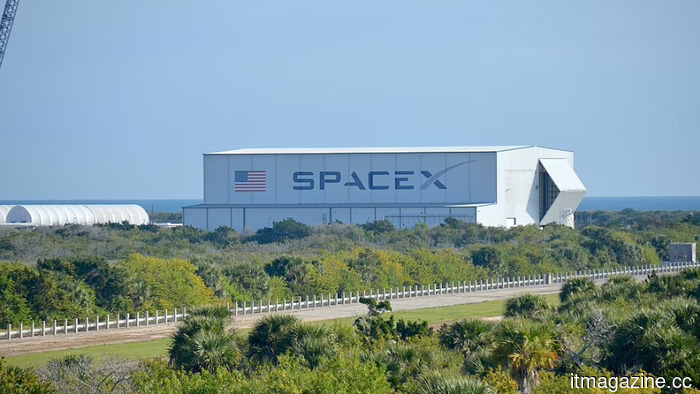 SpaceX leased Colossus 1 to Anthropic due to difficulties in making the data center operate for Grok.
Bloomberg: SpaceX experienced latency problems and chip incompatibilities while linking Colossus 1 to its other data centers. It leased the facility to Anthropic for $1.25 billion per month.
SpaceX leased Colossus 1 to Anthropic due to difficulties in making the data center operate for Grok.
Bloomberg: SpaceX experienced latency problems and chip incompatibilities while linking Colossus 1 to its other data centers. It leased the facility to Anthropic for $1.25 billion per month.
China establishes a photonic computing laboratory to circumvent US chip restrictions.
A laboratory in Shanghai, supported by Jiao Tong University and the startup Lightelligence, is focused on developing light-based AI chips as China looks for alternatives to limited US semiconductors.