

Five cloud security errors that originate at the architectural level.
Nodir Safarov, a Cloud Architect at SOTI Inc., oversees migration and infrastructure automation for thousands of clients worldwide. He highlights the architectural failures causing prevalent gaps in cloud security and outlines the design principles that can avert them.
The pace of enterprise cloud adoption has surged ahead of cloud security measures. As businesses transition essential workloads to platforms like AWS and Azure, many are realizing that their security architecture hasn't kept up with the rapid expansion. This disconnection leads to a widening discrepancy between what companies believe is protected and what truly is.
Most cloud services provide strong native security features. The issue isn't the tools; it's the architecture — specifically, how and when security measures are incorporated into the cloud infrastructure. In too many cases, security is added after systems are already in production, creating vulnerabilities that are costly to fix and often overlooked.
We spoke with Safarov, a seasoned Cloud Architect at SOTI Inc., who leads cloud migration and infrastructure automation for enterprise environments across North America, Europe, and Asia. He frequently observes the same architectural errors resulting in unnecessary cloud security vulnerabilities long before teams acknowledge the risks. Safarov is recognized for integrating security controls directly into infrastructure-as-code and CI/CD processes, allowing teams to consistently implement security parameters from the outset instead of relying on corrections made post-deployment. In our discussion, he stressed the importance of repeatable design patterns, segmentation, least-privilege access, and audit-ready logging as central to resilient cloud solutions. He also noted that standardization through code and automation makes security manageable on an enterprise level.
“The patterns are consistent across organizations of all sizes,” Safarov stated. “These are systemic issues, requiring architectural solutions that cannot be patched later.”
Based on his observations from large-scale deployments, here are five frequent cloud security errors Safarov notes and the design-oriented strategies he suggests to prevent them prior to deployment:
1. **Treating Security as a Post-Deployment Addition**
This error leads to many others. Organizations often build their cloud infrastructure first and add security afterward. By the time security teams evaluate a live environment, the architecture has been constructed around assumptions that conflict with a strong security stance — like overly permissive access controls and unencrypted data stores.
The costs associated with this approach escalate quickly. Retrofitting security into existing architectures requires modifying operational systems, posing risks to stability. In one enterprise scenario Safarov reviewed, an open access rule intended to be temporary had lingered for months, exposing internal APIs to the public internet. The configuration seemed normal based on monitoring metrics but was only discovered during a manual review that fortuitously happened before an incident occurred.
“The ideal time to implement cloud security best practices is before the first deployment,” Safarov advised. “Incorporate it into your blueprints from the start.”
This means integrating security controls directly into infrastructure-as-code templates. In his design of Terraform modules and CI/CD pipelines, security policies, network segmentation, encryption standards, access controls, and logging configurations are included in the code itself. This ensures each deployment using those templates automatically adheres to security protocols, alleviating pressure on engineering teams and ensuring uniformity. Security becomes an inherent part of the process rather than an afterthought.
2. **Neglecting Disaster Recovery Architecture**
High availability and disaster recovery (DR) are crucial components of cloud architecture, yet they are often treated as secondary during the initial build. Organizations mistakenly believe that cloud operation guarantees resilience. This is true, but only when the architecture is intentionally crafted to leverage it.
This assumption is understandable given that cloud providers offer availability zones and redundancy features. However, activating these features requires thoughtful architectural choices. Without intentional DR planning, a single infrastructure failure can take down critical systems without a clear recovery path, resulting in business impacts ranging from lost revenue to regulatory fines, depending on the industry and duration of the outage.
Safarov has seen organizations with documented DR plans that have never been tested against their actual systems. When incidents arise, recovery procedures often rely on configurations that have drifted over time, causing plans to fail at the first attempt.
“Every organization needs a disaster recovery Plan B,” Safarov remarked. “Cloud architects must oversee this planning and execution before incidents occur. The worst time to learn that your recovery strategy exists solely on paper is in the midst of an outage.”
His strategy treats DR as a fundamental architectural requirement alongside performance and scalability. Recovery features are integrated into the base architecture and regularly validated through testing.
3. **Ignoring Cost as an Architectural Factor**
Cloud cost optimization is often viewed as a financial issue, separate from architecture. However, cost is intrinsically linked to architecture. Over-provisioning resources for safety or creating instances without lifecycle policies leads to rapid waste on an enterprise scale.
The financial repercussions are significant and self-reinforcing. Companies that regard cost optimization as an afterthought often find themselves trapped in architectures that are
Other articles
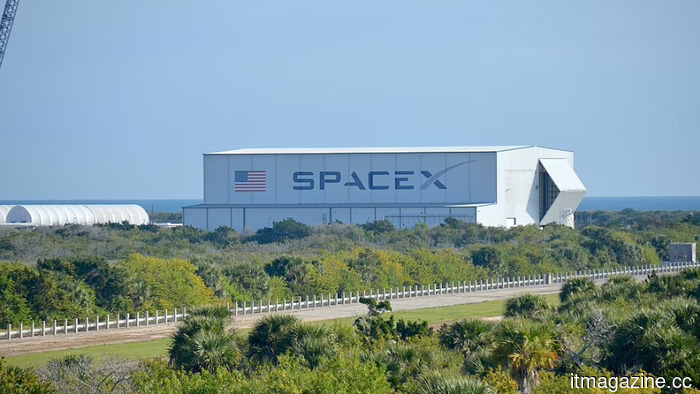 SpaceX leased Colossus 1 to Anthropic due to difficulties in making the data center operate for Grok.
Bloomberg: SpaceX experienced latency problems and chip incompatibilities while linking Colossus 1 to its other data centers. It leased the facility to Anthropic for $1.25 billion per month.
SpaceX leased Colossus 1 to Anthropic due to difficulties in making the data center operate for Grok.
Bloomberg: SpaceX experienced latency problems and chip incompatibilities while linking Colossus 1 to its other data centers. It leased the facility to Anthropic for $1.25 billion per month.
 Amazon's Echo Hub has just transformed into the control center that your smart home has been missing.
Amazon is significantly updating its Echo Hub, enhancing the smart home control panel to be much more functional than in the past. The most notable improvements may not be what you anticipate.
Amazon's Echo Hub has just transformed into the control center that your smart home has been missing.
Amazon is significantly updating its Echo Hub, enhancing the smart home control panel to be much more functional than in the past. The most notable improvements may not be what you anticipate.
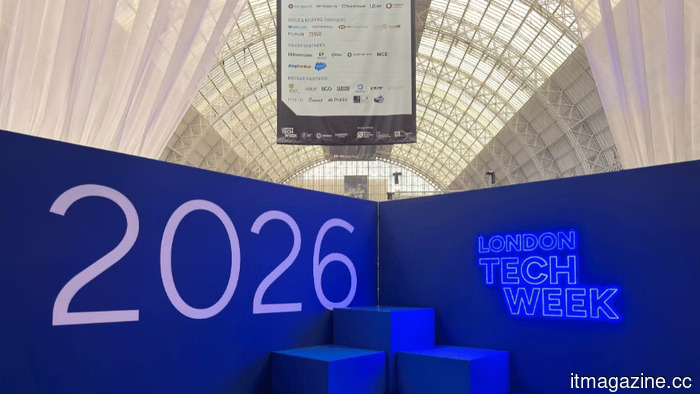 London Tech Week 2026: the AI billions and a royal milestone
London Tech Week 2026 summary: a £1.1 billion hardware initiative for the UK, AMD's £2 billion investment, Nebius's £1.7 billion project, expansion of US giants, and Prince William's inaugural Homewards panel.
London Tech Week 2026: the AI billions and a royal milestone
London Tech Week 2026 summary: a £1.1 billion hardware initiative for the UK, AMD's £2 billion investment, Nebius's £1.7 billion project, expansion of US giants, and Prince William's inaugural Homewards panel.
 Five architectural-level cloud security errors.
Nodir Safarov, Cloud Architect at SOTI Inc., points out five architectural shortcomings that contribute to prevalent cloud security vulnerabilities in enterprises, ranging from patching after deployment to configuration drift, along with the design principles that can help avert them.
Five architectural-level cloud security errors.
Nodir Safarov, Cloud Architect at SOTI Inc., points out five architectural shortcomings that contribute to prevalent cloud security vulnerabilities in enterprises, ranging from patching after deployment to configuration drift, along with the design principles that can help avert them.
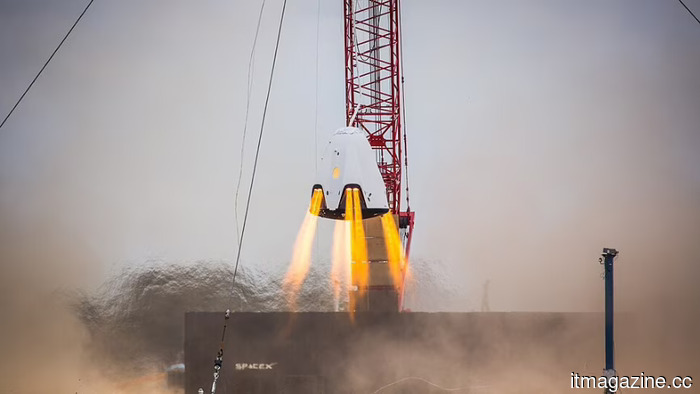 Eighty residents of Texas are suing SpaceX, claiming that the rocket launches are physically damaging their homes.
A class-action lawsuit claims that the launches of SpaceX's Starship resulted in foundation cracks, burst pipes, and warped floors in residences close to Starbase. Housing prices have doubled.
Eighty residents of Texas are suing SpaceX, claiming that the rocket launches are physically damaging their homes.
A class-action lawsuit claims that the launches of SpaceX's Starship resulted in foundation cracks, burst pipes, and warped floors in residences close to Starbase. Housing prices have doubled.
 China establishes a photonic computing laboratory to circumvent US chip restrictions.
A laboratory in Shanghai, supported by Jiao Tong University and the startup Lightelligence, is working on developing light-based AI chips as Beijing looks for alternatives to restricted US semiconductor products.
China establishes a photonic computing laboratory to circumvent US chip restrictions.
A laboratory in Shanghai, supported by Jiao Tong University and the startup Lightelligence, is working on developing light-based AI chips as Beijing looks for alternatives to restricted US semiconductor products.
Five cloud security errors that originate at the architectural level.
Nodir Safarov, Cloud Architect at SOTI Inc., highlights five architectural shortcomings that contribute to prevalent security gaps in enterprise cloud environments, ranging from post-deployment patching to configuration drift, along with the design principles that help avoid these issues.