

China establishes a photonic computing laboratory to circumvent US restrictions on chips.
China has established its first dedicated photonic computing laboratory in Shanghai, a collaboration between Shanghai Jiao Tong University and the startup Lightelligence. This development reflects Beijing's strategy to utilize light-based chips as an alternative to US semiconductor export restrictions that limit access to traditional AI hardware.
The Shanghai Key Laboratory of Integrated Photonic Computing Chips and Systems officially opened on June 11, as reported by the state-affiliated Jiefang Daily. The lab is a partnership between the university and Lightelligence, one of China's top startups in photonic computing. Lightelligence went public on the Hong Kong stock exchange in April, experiencing a significant surge of about 380% on its first trading day, and claims to be the first company globally to achieve large-scale hybrid optical-electronic computing deployment, although this claim has yet to be independently verified.
The Importance of Photons for AI
Traditional AI chips maneuver data through silicon circuits using electrons. In contrast, photonic chips utilize photons, which are light particles that can travel faster and produce considerably less heat.
The potential benefits are considerable. Photonic processors are expected to offer greater bandwidth, reduced latency, and significantly lower energy use—all vital as the training of advanced AI models pushes data center power needs to their limits. Zou Weiwen, the lab’s director and a photonics professor at Shanghai Jiao Tong University, stated that optical computing represents “a vital route for achieving advancements in computing power.” The laboratory will concentrate on photonic chip designs, silicon-photonics integration, optical components, and the necessary algorithms for commercial viability.
A Response to Export Controls
The opening of the lab aligns with Beijing's larger strategy for technological self-sufficiency. Since 2022, Washington has limited China's access to advanced semiconductors and has repeatedly expanded these restrictions, compelling Chinese companies to seek alternatives.
This pursuit has already redirected China’s AI chip approach from general-purpose GPUs to custom silicon solutions. Photonics represents a more drastic shift, potentially allowing Chinese engineers to circumvent lithography limitations by leveraging the nation's existing strengths in fiber optics and laser technology. Chinese officials have highlighted photonics and photonic-electronic hybrid accelerator chips as strategic national priorities. Officials in Shanghai have indicated that they are coordinating funding through various science and technology programs to support this initiative.
Ambitious Goals, Early Stage
Beijing is already investing heavily in AI infrastructure through other avenues, with a reported $295 billion plan to create a nationwide network of data centers, primarily reliant on domestic chips, by 2028.
Nonetheless, photonic computing is not ready for mass production. Zou acknowledged the field confronts "fundamental scientific challenges," including the lack of a mature software and algorithm ecosystem to effectively utilize photonic hardware. The chasm between laboratory potential and commercial practicality is significant. However, as traditional chips become increasingly difficult to obtain and AI workloads rise dramatically, China is evidently prepared to invest in the potential of photonics.
Other articles
 Windows 11 introduces a useful upgrade that allows for simultaneous audio streaming on two devices.
Windows 11 Shared Audio allows two users to listen from a single PC via Bluetooth LE Audio, but you'll require compatible Copilot+ hardware, updated drivers, and suitable accessories for the feature to be accessible.
Windows 11 introduces a useful upgrade that allows for simultaneous audio streaming on two devices.
Windows 11 Shared Audio allows two users to listen from a single PC via Bluetooth LE Audio, but you'll require compatible Copilot+ hardware, updated drivers, and suitable accessories for the feature to be accessible.
 India's Avataar AI has introduced a video model that is priced at $0.005 per second, making it 27 times more affordable than competitors.
Avataar AI has introduced Varya, an open-weight video model tailored for India, priced at $0.005 per second. It depicts Indian attire, cuisine, and festivals that are often overlooked by Western models.
India's Avataar AI has introduced a video model that is priced at $0.005 per second, making it 27 times more affordable than competitors.
Avataar AI has introduced Varya, an open-weight video model tailored for India, priced at $0.005 per second. It depicts Indian attire, cuisine, and festivals that are often overlooked by Western models.
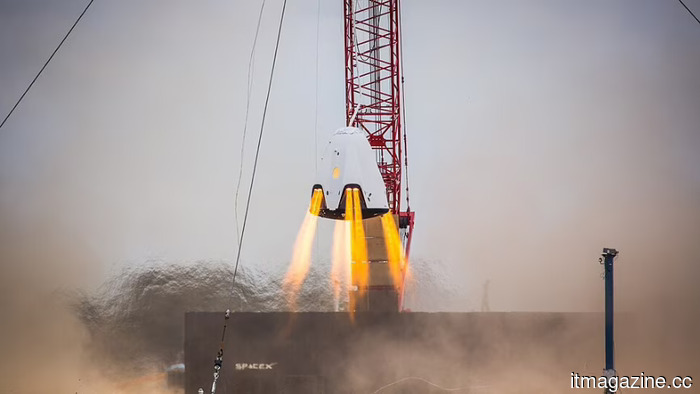 Eighty residents of Texas are suing SpaceX, claiming that the rocket launches are physically damaging their homes.
A class-action lawsuit claims that the launches of SpaceX's Starship resulted in foundation cracks, burst pipes, and warped floors in residences close to Starbase. Housing prices have doubled.
Eighty residents of Texas are suing SpaceX, claiming that the rocket launches are physically damaging their homes.
A class-action lawsuit claims that the launches of SpaceX's Starship resulted in foundation cracks, burst pipes, and warped floors in residences close to Starbase. Housing prices have doubled.
 iOS 27 hands-on: the iPhone upgrade I've been anticipating.
After spending two days with the iOS 27 beta, I believe Apple has finally addressed the issues that made iOS 26 quite frustrating. Here’s what caught my attention.
iOS 27 hands-on: the iPhone upgrade I've been anticipating.
After spending two days with the iOS 27 beta, I believe Apple has finally addressed the issues that made iOS 26 quite frustrating. Here’s what caught my attention.
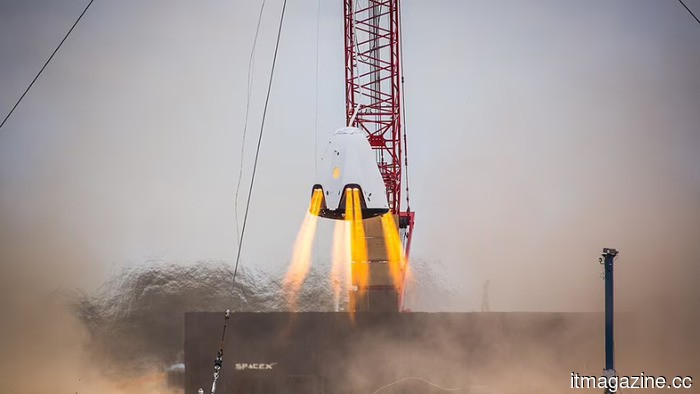 Eighty residents of Texas are filing a lawsuit against SpaceX, claiming that the rocket launches are actually damaging their homes.
A class-action lawsuit claims that the launches of SpaceX's Starship resulted in foundation cracks, broken pipes, and distorted floors in residences near Starbase. Housing prices have increased twofold.
Eighty residents of Texas are filing a lawsuit against SpaceX, claiming that the rocket launches are actually damaging their homes.
A class-action lawsuit claims that the launches of SpaceX's Starship resulted in foundation cracks, broken pipes, and distorted floors in residences near Starbase. Housing prices have increased twofold.
 Spotify is introducing editor-hosted videos to New Music Friday, allowing you to connect with the individuals behind the playlist.
Spotify's New Music Friday will now include short-form videos from its editorial team highlighting selections and artist narratives. This feature is being launched for both free and premium users in the US.
Spotify is introducing editor-hosted videos to New Music Friday, allowing you to connect with the individuals behind the playlist.
Spotify's New Music Friday will now include short-form videos from its editorial team highlighting selections and artist narratives. This feature is being launched for both free and premium users in the US.
China establishes a photonic computing laboratory to circumvent US restrictions on chips.
A laboratory in Shanghai, supported by Jiao Tong University and the startup Lightelligence, plans to develop AI chips that utilize light, as Beijing looks for substitutes for restricted US semiconductors.