
Mercedes-Benz ventures into defense with vehicles designed to combat drones.
Mercedes-Benz is increasingly focusing on defense. The automaker has entered into a memorandum of understanding with TYTAN Technologies, a Munich-based startup specializing in counter-drone technology, to create vehicle-based systems designed to detect and neutralize hostile drones, utilizing its G-Class SUV and Sprinter van as the base. Mercedes refers to the defense sector as “a strategic growth field.”
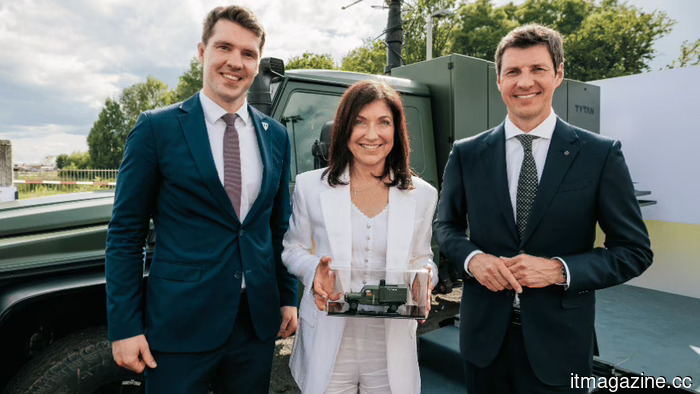
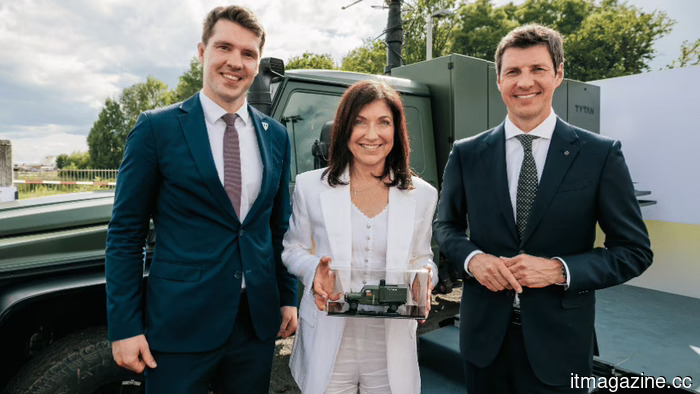
The agreement was unveiled at the ILA Berlin air show, attended by Germany’s economy minister, and combines Mercedes’s vehicle platforms with TYTAN’s sensors, artificial intelligence, and interceptor drones. During the event, the two companies presented a prototype of their collaborative vehicle-mounted system.
Currently, this effort is in the exploratory phase: the agreement outlines a framework to “evaluate possible applications” and consider “later industrial implementation,” while adhering to export-control and defense legal limits, rather than generating a definitive production order.
Transitioning to defense
Mercedes is not starting from scratch; it has developed military and government versions of the G-Class for years. However, it is intensifying its efforts as Europe increases its military capabilities and as its primary car business faces challenges due to weak demand, competition from China, and tariffs. The German government has openly encouraged its industrial base to shift towards defense.
Katherina Reiche, the economy minister who was present for the signing, emphasized the initiative as a means of enhancing “Germany’s technological sovereignty.” Meanwhile, Mercedes board member Michael Schiebe stated that the company would provide “robust and reliable base vehicles” as TYTAN contributes “drone, sensor, and mission technology.”
For TYTAN, a deep-tech company whose interceptors have been deployed in Ukraine, the partnership offers significant industrial strength. “The threat is real; we see daily overflights above critical infrastructure in Germany and Europe,” noted co-founder and CEO Balázs Nagy, advocating for defense measures against drones “not in 2029, but today.” Reports suggest that the company plans to open a factory in Munich aimed at producing thousands of interceptors each month.
This initiative comes at a time of significant growth in the market. Counter-drone systems are among the fastest-growing sectors in defense technology, with analysts predicting the market to expand from approximately $6.6 billion in 2025 to around $20 billion by 2030, as Europe races to establish its own capabilities.
TNW has monitored this increase from Berlin’s Stark to counter-drone experts like Norway’s Stendr, as well as established companies like Rheinmetall entering the space alongside startups.
Although the agreement is currently only a memorandum of understanding, much of the conversation regarding production volumes and timelines reflects the aspirations of the partners rather than any confirmed orders.
Nonetheless, the implications are significant: a company that sold over 2.1 million cars and vans last year is now looking to equip them with drone interception technologies. In present-day Europe, this transition appears less like a mere diversion and more like a strategic precaution.
Other articles
 China's Workers' Daily urges for protections for workers in the AI sector.
China's state-run trade union publication is calling on regulators to safeguard workers amid the rise of AI, warning that 70 million jobs could be at risk and advocating for monitoring of algorithms.
China's Workers' Daily urges for protections for workers in the AI sector.
China's state-run trade union publication is calling on regulators to safeguard workers amid the rise of AI, warning that 70 million jobs could be at risk and advocating for monitoring of algorithms.
 If you're relying on AI tools such as ChatGPT to verify news, there is some negative information for you.
Researchers at MIT caution that an overreliance on AI chatbots such as ChatGPT for verifying news facts could diminish users' skills in independently identifying misinformation.
If you're relying on AI tools such as ChatGPT to verify news, there is some negative information for you.
Researchers at MIT caution that an overreliance on AI chatbots such as ChatGPT for verifying news facts could diminish users' skills in independently identifying misinformation.
 OpenAI and Anthropic caution about the dangers of AI as they strive for an initial public offering (IPO).
Both AI laboratories released papers urging for a global deceleration in the advancement of frontier AI. Additionally, they unveiled new flagship models and submitted applications for IPOs within the same two-week period.
OpenAI and Anthropic caution about the dangers of AI as they strive for an initial public offering (IPO).
Both AI laboratories released papers urging for a global deceleration in the advancement of frontier AI. Additionally, they unveiled new flagship models and submitted applications for IPOs within the same two-week period.
 Mercedes-Benz ventures into defense by developing anti-drone vehicles.
Mercedes-Benz has entered into a Memorandum of Understanding with the Munich-based startup Tytan to develop mobile anti-drone vehicles, aligning with the current trend of European car manufacturers capitalizing on the continent's rearmament surge.
Mercedes-Benz ventures into defense by developing anti-drone vehicles.
Mercedes-Benz has entered into a Memorandum of Understanding with the Munich-based startup Tytan to develop mobile anti-drone vehicles, aligning with the current trend of European car manufacturers capitalizing on the continent's rearmament surge.
Mercedes-Benz ventures into defense with vehicles designed to combat drones.
Mercedes-Benz has entered into a Memorandum of Understanding with the Munich-based startup Tytan to develop mobile anti-drone vehicles, marking the latest initiative by a European car manufacturer to capitalize on the continent's rearmament surge.