

If you're relying on AI tools such as ChatGPT to verify news, there is some negative information for you.
As artificial intelligence increasingly serves as a go-to resource for tasks ranging from academic assignments to workplace inquiries, many individuals are turning to chatbots like ChatGPT, Gemini, Claude, and Grok to verify the accuracy of news stories. However, recent research indicates that this reliance may actually impair people's ability to detect misinformation over time.
A study conducted by the MIT Media Lab found that depending on AI to assess news accuracy can diminish an individual's capability to independently recognize fake or misleading information. The researchers liken this effect to GPS navigation systems, which simplify travel but can gradually lessen a person's innate sense of direction. Similarly, while AI tools may facilitate fact-checking, they risk subtly undermining critical thinking skills.
These findings emerge as AI-driven search tools and chatbots are increasingly being viewed as alternatives to conventional search engines. As AI-generated summaries proliferate online, concerns regarding their accuracy, potential biases, and the dangers of overreliance are becoming increasingly tangible.
AI might hinder users' ability to identify misinformation
MIT researchers indicated that participants who heavily depended on AI assistance demonstrated a decreased ability to assess the credibility of news stories independently. The worry is not merely that AI can make occasional errors, but that users may start to relinquish their judgment to the technology rather than actively evaluating the information themselves.
This concern is bolstered by a rising body of research focused on AI’s involvement in fact-checking. Earlier studies have shown that large language models often struggle to reliably verify information, especially when addressing nuanced subjects, political statements, or rapidly evolving news stories. Researchers have also observed significant variations in performance across different AI models and topics.
Another issue is that AI systems typically deliver answers with confidence, even if those answers are incomplete or incorrect. This can create a misleading sense of trust, particularly when users regard chatbots as authoritative sources rather than as tools requiring additional validation.
The MIT researchers contend that while AI can assist in summarizing information and providing relevant context, it shouldn't replace the importance of independent evaluation and media literacy skills.
The real issue isn’t just accuracy – it’s overreliance
The broader concern raised by the study is dependency. As users increasingly turn to AI for truth determinations, they may become less adept at evaluating sources, verifying evidence, and recognizing misleading narratives independently.
This risk is particularly significant as AI tools become embedded in search engines, social media platforms, browsers, and operating systems. Rather than performing active comparisons of multiple sources, users might be inclined to accept a chatbot’s response as definitive.
Researchers are not claiming that AI lacks a role in fact-checking. In numerous instances, AI can assist users in swiftly gathering information, simplifying complex topics, or pinpointing additional sources worth considering. Nevertheless, the study implies that optimal outcomes occur when AI functions as a research assistant rather than a substitute for human judgment.
The message is clear: AI can aid in exploring news stories, but it may not be the ideal tool for determining truth on your behalf. As chatbots evolve to become more powerful and persuasive, sustaining a healthy level of skepticism may prove as crucial as having access to the technology itself.
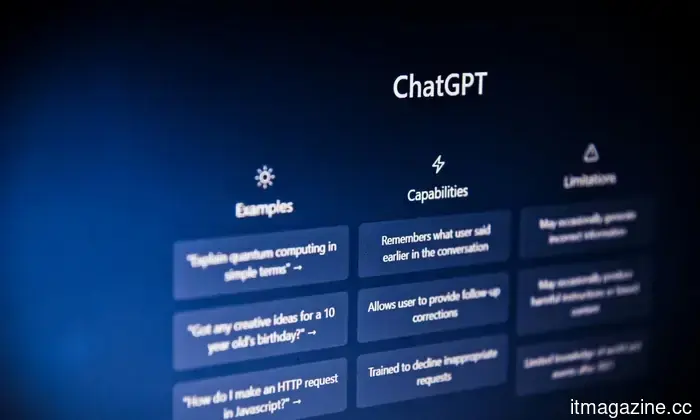

Other articles
 Mercedes-Benz ventures into defense with vehicles designed to combat drones.
Mercedes-Benz has entered into a Memorandum of Understanding with the Munich-based startup Tytan to develop mobile anti-drone vehicles, marking the latest initiative by a European car manufacturer to capitalize on the continent's rearmament surge.
Mercedes-Benz ventures into defense with vehicles designed to combat drones.
Mercedes-Benz has entered into a Memorandum of Understanding with the Munich-based startup Tytan to develop mobile anti-drone vehicles, marking the latest initiative by a European car manufacturer to capitalize on the continent's rearmament surge.
 Research shows that TikTok's "Not Interested" button becomes ineffective in just a few minutes.
A recent study conducted by Northeastern University discovered that TikTok's "Not Interested" button becomes ineffective rapidly, as flagged content reappears on users' feeds within minutes after they cease using it.
Research shows that TikTok's "Not Interested" button becomes ineffective in just a few minutes.
A recent study conducted by Northeastern University discovered that TikTok's "Not Interested" button becomes ineffective rapidly, as flagged content reappears on users' feeds within minutes after they cease using it.
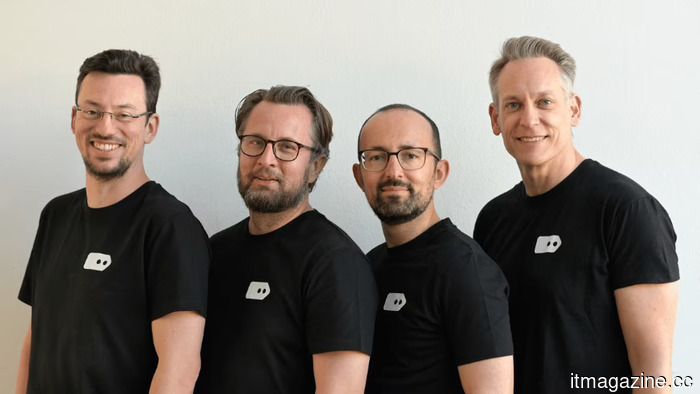 ShopAgentic secures €1.9M for agentic commerce.
The German startup ShopAgentic has secured €1.9 million in funding, co-led by May Ventures and Greenfield Capital, to develop commerce infrastructure for AI shopping agents.
Musk's xAI and SpaceX face a lawsuit regarding noise from their data centre.
Residents of Mississippi have initiated a class action lawsuit with 10,000 participants against Musk's xAI and SpaceX, citing 'inescapable' noise from a $20 billion gas plant that powers AI data centers.
ShopAgentic secures €1.9M for agentic commerce.
The German startup ShopAgentic has secured €1.9 million in funding, co-led by May Ventures and Greenfield Capital, to develop commerce infrastructure for AI shopping agents.
Musk's xAI and SpaceX face a lawsuit regarding noise from their data centre.
Residents of Mississippi have initiated a class action lawsuit with 10,000 participants against Musk's xAI and SpaceX, citing 'inescapable' noise from a $20 billion gas plant that powers AI data centers.
 If you're utilizing AI tools such as ChatGPT to verify news, there's unfortunate news for you.
Researchers from MIT caution that a heavy dependence on AI chatbots such as ChatGPT for fact-checking news could diminish users' skills in independently identifying misinformation.
If you're utilizing AI tools such as ChatGPT to verify news, there's unfortunate news for you.
Researchers from MIT caution that a heavy dependence on AI chatbots such as ChatGPT for fact-checking news could diminish users' skills in independently identifying misinformation.
 Mercedes-Benz ventures into defense by developing anti-drone vehicles.
Mercedes-Benz has entered into a Memorandum of Understanding with the Munich-based startup Tytan to develop mobile anti-drone vehicles, aligning with the current trend of European car manufacturers capitalizing on the continent's rearmament surge.
Mercedes-Benz ventures into defense by developing anti-drone vehicles.
Mercedes-Benz has entered into a Memorandum of Understanding with the Munich-based startup Tytan to develop mobile anti-drone vehicles, aligning with the current trend of European car manufacturers capitalizing on the continent's rearmament surge.
If you're relying on AI tools such as ChatGPT to verify news, there is some negative information for you.
Researchers at MIT caution that an overreliance on AI chatbots such as ChatGPT for verifying news facts could diminish users' skills in independently identifying misinformation.