
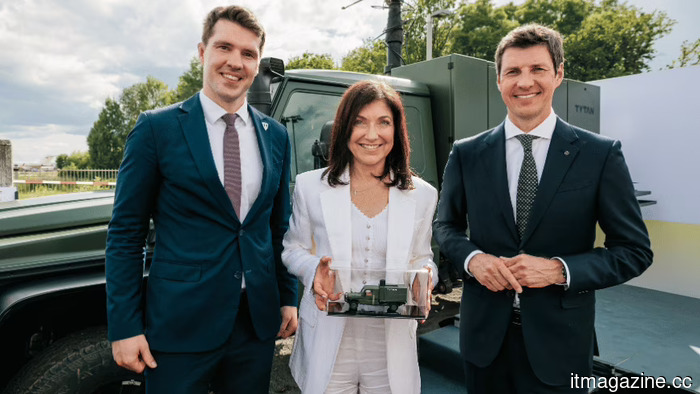
Mercedes-Benz ventures into the defense sector with vehicles designed to counter drones.
Mercedes-Benz is increasingly focusing on defense. The automaker has entered into a memorandum of understanding with TYTAN Technologies, a Munich-based startup specializing in counter-drone technology, to create vehicle-based systems capable of detecting and neutralizing hostile drones using its G-Class SUV and Sprinter van. Mercedes views the defense sector as "a strategic growth field."
The agreement, which was signed at the ILA Berlin air show in the presence of Germany’s economy minister, combines Mercedes’s vehicle platforms with TYTAN’s sensors, artificial intelligence, and interceptor drones. The two companies unveiled a prototype of a collaborative vehicle-mounted system during the event.
For now, this initiative is in the exploratory phase: the agreement establishes a framework to “evaluate possible applications” and pursue “future industrial implementation,” all while adhering to export control and defense law regulations, rather than committing to a concrete production order.
Transitioning into defense is not a new concept for Mercedes, as it has been producing military and governmental versions of the G-Class for years. However, the automaker is intensifying its efforts as Europe increases its defense capabilities and its main automotive business faces challenges from weak demand, competition from China, and tariffs. The German government has been actively encouraging its industrial sector to focus more on defense.
Katherina Reiche, the economy minister who participated in the signing, described the partnership as a means to bolster “Germany’s technological sovereignty.” Mercedes board member Michael Schiebe stated that the company would provide “robust and reliable base vehicles” while TYTAN would contribute “drone, sensor, and mission technology.”
For TYTAN, which is a deep-tech firm that has tested its interceptors in Ukraine, the partnership represents significant industrial potential. “The threat is real; we see daily overflights over German and European critical infrastructure,” remarked co-founder and CEO Balázs Nagy, who aims to counter drone threats “not in 2029, but today.” Reports suggest that the company is planning to open a factory in Munich with the goal of producing thousands of interceptors each month.
The timing coincides with a growing market for counter-drone systems, one of the fastest-expanding sectors in defense technology. Analysts predict that this market will grow from approximately $6.6 billion in 2025 to around $20 billion by 2030, and Europe is racing to develop its own capabilities.
TNW has observed the surge in this area, from companies like Berlin’s Stark to counter-drone specialists such as Norway’s Stendr, as well as established players like Rheinmetall beginning to enter the field alongside startups.
Although the current agreement is merely a memorandum of understanding and much of the discussions about production volumes and timelines reflect the partners’ aspirations rather than actual orders, the symbolism is significant: a company that sold over 2.1 million vehicles last year is now looking to equip them with drone-killing technology, suggesting that in today’s Europe, this shift appears less like a mere diversion and more like a strategic backup plan.
Other articles
 AT&T's daily plans allow you to access cellular services on your iPad, regardless of whether you are an existing customer.
AT&T has introduced the Unlimited Day Pass, a $3 per day unlimited data option for qualifying iPads, which also includes devices not owned by AT&T customers.
Musk's xAI and SpaceX face a lawsuit over noise from their data center.
Residents of Mississippi have initiated a class action with 10,000 participants against Musk's xAI and SpaceX due to 'unavoidable' noise from a $20 billion gas plant that powers AI data centers.
AT&T's daily plans allow you to access cellular services on your iPad, regardless of whether you are an existing customer.
AT&T has introduced the Unlimited Day Pass, a $3 per day unlimited data option for qualifying iPads, which also includes devices not owned by AT&T customers.
Musk's xAI and SpaceX face a lawsuit over noise from their data center.
Residents of Mississippi have initiated a class action with 10,000 participants against Musk's xAI and SpaceX due to 'unavoidable' noise from a $20 billion gas plant that powers AI data centers.
 If you're relying on AI tools such as ChatGPT to verify news, there is some negative information for you.
Researchers at MIT caution that an overreliance on AI chatbots such as ChatGPT for verifying news facts could diminish users' skills in independently identifying misinformation.
If you're relying on AI tools such as ChatGPT to verify news, there is some negative information for you.
Researchers at MIT caution that an overreliance on AI chatbots such as ChatGPT for verifying news facts could diminish users' skills in independently identifying misinformation.
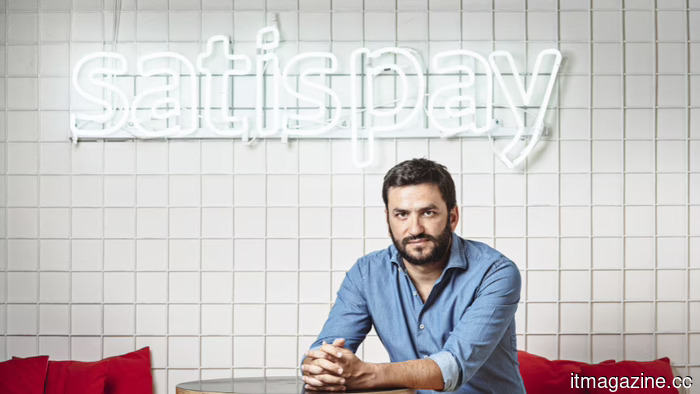 Satispay is said to be aiming for a EUR 120M fundraising for stock trading.
Italian payments unicorn Satispay is said to be seeking to raise as much as EUR 120 million to broaden its services to include stock and ETF trading, savings, and pensions, with a shareholder vote scheduled for 29 June.
OpenAI integrates Visa into ChatGPT for payments through AI agents.
OpenAI is integrating Visa into ChatGPT, allowing AI agents to make purchases and payments at any Visa merchant. This marks its second attempt at entering the commerce sector, though no launch date or pricing details have been announced yet.
Satispay is said to be aiming for a EUR 120M fundraising for stock trading.
Italian payments unicorn Satispay is said to be seeking to raise as much as EUR 120 million to broaden its services to include stock and ETF trading, savings, and pensions, with a shareholder vote scheduled for 29 June.
OpenAI integrates Visa into ChatGPT for payments through AI agents.
OpenAI is integrating Visa into ChatGPT, allowing AI agents to make purchases and payments at any Visa merchant. This marks its second attempt at entering the commerce sector, though no launch date or pricing details have been announced yet.
 OpenAI and Anthropic caution about the dangers of AI as they compete to go public.
Both AI laboratories released papers advocating for a worldwide deceleration in the advancement of frontier AI. Additionally, they both introduced new flagship models and submitted IPO applications within the same two weeks.
OpenAI and Anthropic caution about the dangers of AI as they compete to go public.
Both AI laboratories released papers advocating for a worldwide deceleration in the advancement of frontier AI. Additionally, they both introduced new flagship models and submitted IPO applications within the same two weeks.
Mercedes-Benz ventures into the defense sector with vehicles designed to counter drones.
Mercedes-Benz has entered into a Memorandum of Understanding with the Munich-based startup Tytan to develop mobile anti-drone vehicles, becoming the latest European automaker to pursue the continent's rearmament surge.