

OpenAI and Anthropic caution about the dangers of AI as they strive for an initial public offering (IPO).
**TL;DR** OpenAI and Anthropic have spent the last two weeks releasing papers indicating that the progress of frontier AI is outpacing regulatory measures. During the same period, both companies introduced their most advanced models yet, provided free developer tools to encourage adoption, and submitted confidential paperwork to go public.
In the last two weeks, the leading AI labs have issued research papers, blog entries, and policy suggestions warning that frontier AI is evolving more quickly than it can be managed. At the same time, both companies filed confidential documents to prepare for an IPO.
The contrasting messages are evident. OpenAI and Anthropic are raising alarms about the perils of rapid AI advancement while simultaneously fueling the industry through new model releases, free usage offers, and IPO applications that would create publicly traded entities under pressure to accelerate growth.
**The Warnings**
Last week, Anthropic published a paper titled “When AI Builds Itself,” advocating for a coordinated “slowdown or pause” in frontier model advancement globally. Authored by Marina Favaro and Jack Clark, the paper asserted that AI systems are nearing the stage of recursive self-improvement, where human oversight diminishes significantly.
“Without a mechanism for global coordination, companies and governments will face tough safety decisions driven by competition and geopolitical dynamics,” Anthropic indicated. The company revealed that as of May 2026, over 80% of the code incorporated into its codebase was generated by Claude, its AI model, rather than by human programmers.
On Wednesday, Anthropic CEO Dario Amodei shared a blog post titled “Policy on the AI Exponential,” stating that AI is advancing at “lightning speed,” whereas policy development is “very slow.” He called for enforceable regulations, asserting that “the risks are clearly present,” and transparency alone is no longer sufficient.
OpenAI echoed these sentiments. On Monday, CEO Sam Altman and chief scientist Jakub Pachocki published a blog post titled “Built to Benefit Everyone: Our Plan,” suggesting the establishment of “an international organization that facilitates coordination among leading AI efforts to mitigate catastrophic risks.” They emphasized that this body should possess the authority to decelerate frontier AI development to ensure “societal resilience, safety, and alignment can keep pace.”
These two firms are not isolated in their apprehensions. An internal dispute within the White House over who holds authority to regulate AI has delayed federal policy, creating a gap that neither lab seems willing to wait for Washington to fill.
**The Acceleration**
However, the warnings appear to conflict with the actions of both companies. On Tuesday, Anthropic released Claude Fable 5, a “Mythos-class” model touted as its most capable model made publicly available. It is state-of-the-art across nearly all evaluated benchmarks, particularly excelling in software engineering, knowledge work, vision, and scientific research.
The model includes safeguards that direct sensitive cybersecurity and distillation requests to a less capable model, Claude Opus 4.8, with the protections engaging in fewer than 5% of sessions. Representatives from Anthropic did not address requests for comments regarding the discord between their cautionary warnings and new model launches.
OpenAI released GPT-5.5 in late April, claiming it to be the “smartest and most intuitive” model created to date. This model set new standards in agentic coding, computer usage, and knowledge work. OpenAI representatives did not respond to requests for comments.
Additionally, both labs are promoting rapid adoption through free usage incentives. Anthropic increased Claude Code weekly limits by 50% for paid subscribers until mid-July, while OpenAI provided enterprise customers with two months of complimentary Codex access. These strategies aim to secure developers within each company's ecosystem ahead of what both anticipate will be a pivotal year for AI tooling.
**The IPOs**
A striking depiction of this contradiction is evident in the IPO competition. Anthropic filed its S-1 registration statement confidentially with the SEC on June 1, shortly after completing a $65 billion Series H round that valued the company at approximately $965 billion.
OpenAI followed on June 8 with its own confidential S-1 filing, utilizing Goldman Sachs and Morgan Stanley as lead underwriters. The last private round for OpenAI valued the company at about $852 billion, with analysts suggesting that a public offering could elevate its valuation beyond $1 trillion.
Becoming publicly traded would subject both firms to quarterly earnings expectations, a pressure that historically drives tech companies towards aggressive growth strategies. Reconciling calls for a concerted global slowdown in AI development with the operational dynamics of a publicly traded entity—expected to routinely release new products and meet revenue targets—is challenging.
**The Irony is the Point**
There is, of course, an optimistic perspective. Both labs may sincerely believe that the risks are significant and are leveraging their policy documents to advocate for standards that would also apply to competitors.
In this view, the warnings are not
Other articles
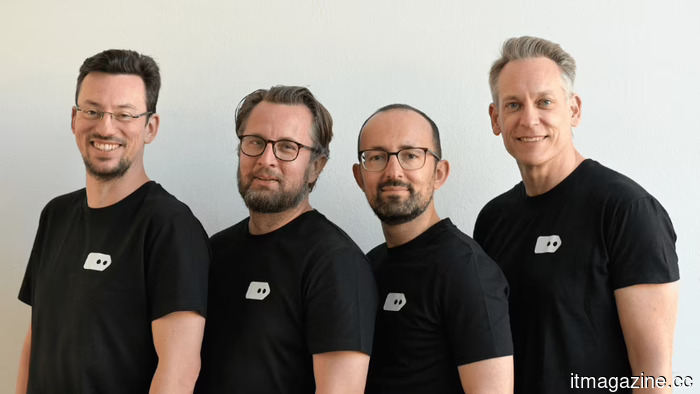 ShopAgentic secures €1.9M in funding for agentic commerce.
The German startup ShopAgentic secured €1.9 million in funding, co-led by May Ventures and Greenfield Capital, to develop commerce infrastructure for AI shopping agents.
ShopAgentic secures €1.9M in funding for agentic commerce.
The German startup ShopAgentic secured €1.9 million in funding, co-led by May Ventures and Greenfield Capital, to develop commerce infrastructure for AI shopping agents.
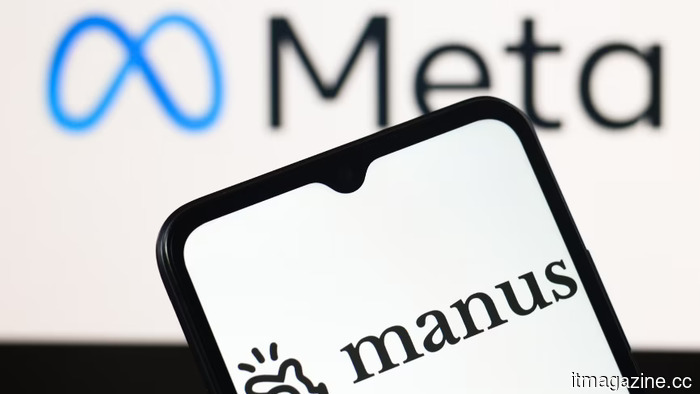 Meta restricts Manus' access to data systems and starts to reverse the agreement.
Meta established a data firewall and instructed employees to wind down Manus after Beijing mandated the reversal of the $2 billion acquisition. The founders are aiming for $1 billion for a buyback.
Meta restricts Manus' access to data systems and starts to reverse the agreement.
Meta established a data firewall and instructed employees to wind down Manus after Beijing mandated the reversal of the $2 billion acquisition. The founders are aiming for $1 billion for a buyback.
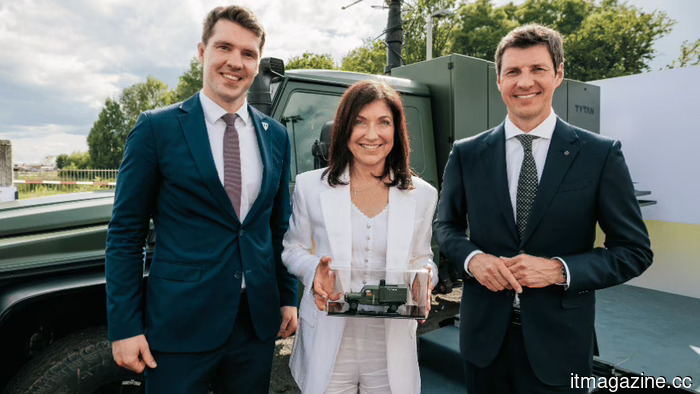 Mercedes-Benz ventures into defense with vehicles designed to combat drones.
Mercedes-Benz has entered into a Memorandum of Understanding with the Munich-based startup Tytan to develop mobile anti-drone vehicles, marking the latest initiative by a European car manufacturer to capitalize on the continent's rearmament surge.
Mercedes-Benz ventures into defense with vehicles designed to combat drones.
Mercedes-Benz has entered into a Memorandum of Understanding with the Munich-based startup Tytan to develop mobile anti-drone vehicles, marking the latest initiative by a European car manufacturer to capitalize on the continent's rearmament surge.
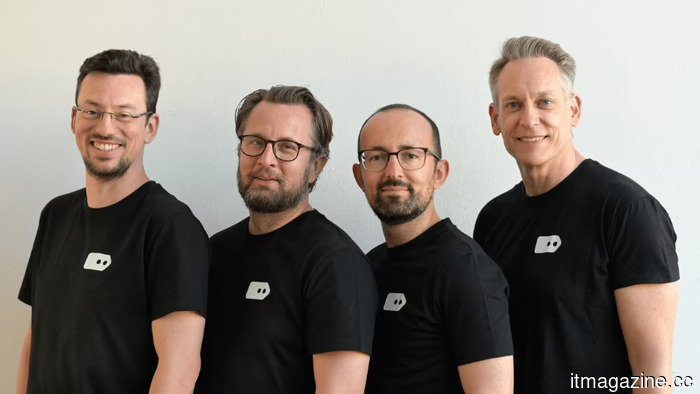 ShopAgentic secures €1.9M for agentic commerce.
The German startup ShopAgentic has secured €1.9 million in funding, co-led by May Ventures and Greenfield Capital, to develop commerce infrastructure for AI shopping agents.
ShopAgentic secures €1.9M for agentic commerce.
The German startup ShopAgentic has secured €1.9 million in funding, co-led by May Ventures and Greenfield Capital, to develop commerce infrastructure for AI shopping agents.
 OpenAI and Anthropic caution about the dangers of AI as they compete to go public.
Both AI laboratories released papers advocating for a worldwide deceleration in the advancement of frontier AI. Additionally, they both introduced new flagship models and submitted IPO applications within the same two weeks.
OpenAI integrates Visa into ChatGPT for payments via AI agents.
OpenAI is integrating Visa into ChatGPT, enabling AI agents to make purchases and payments at any Visa merchant. This marks the company's second attempt at venturing into commerce, though a launch date and pricing details have not yet been announced.
OpenAI and Anthropic caution about the dangers of AI as they compete to go public.
Both AI laboratories released papers advocating for a worldwide deceleration in the advancement of frontier AI. Additionally, they both introduced new flagship models and submitted IPO applications within the same two weeks.
OpenAI integrates Visa into ChatGPT for payments via AI agents.
OpenAI is integrating Visa into ChatGPT, enabling AI agents to make purchases and payments at any Visa merchant. This marks the company's second attempt at venturing into commerce, though a launch date and pricing details have not yet been announced.
OpenAI and Anthropic caution about the dangers of AI as they strive for an initial public offering (IPO).
Both AI laboratories released papers urging for a global deceleration in the advancement of frontier AI. Additionally, they unveiled new flagship models and submitted applications for IPOs within the same two-week period.