
Mercedes-Benz ventures into defense by developing anti-drone vehicles.
Mercedes-Benz is intensifying its focus on defense. The automaker has entered into a memorandum of understanding with TYTAN Technologies, a Munich-based counter-drone startup, to create vehicle-mounted systems capable of detecting and neutralizing hostile drones, utilizing its G-Class SUV and Sprinter van as platforms. Mercedes views the defense sector as “a strategic growth area.”
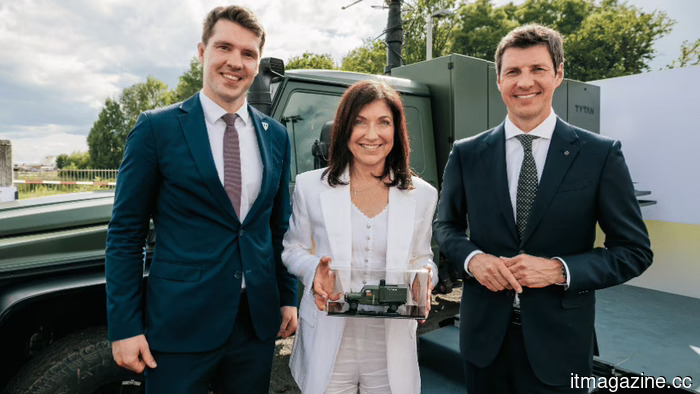
The agreement, signed during the ILA Berlin air show in the presence of Germany's economy minister, combines Mercedes’s vehicle platforms with the sensors, artificial intelligence, and interceptor drones developed by TYTAN. At the event, the two showcased a prototype of a joint vehicle-mounted system.
Currently, the initiative is exploratory: the agreement outlines a framework to “assess potential applications” and work towards “future industrial implementation” within the constraints of export control and defense laws, rather than establishing a firm production contract.
Shifting focus from automotive to defense
Mercedes is not starting from scratch; it has developed military and government variants of the G-Class for many years. However, as Europe increases its defense capabilities and the company’s core automotive business faces challenges such as sluggish demand, competition from China, and tariffs, Mercedes is leaning more heavily into this sector. Berlin has actively encouraged its industrial sector to pivot toward defense.
Katherina Reiche, the economy minister who participated in the signing, described the partnership as a means to enhance “Germany’s technological sovereignty.” Meanwhile, Mercedes board member Michael Schiebe stated that the company would provide “robust and reliable base vehicles” while TYTAN contributes “drone, sensor, and mission technology.”
For TYTAN, a deep-tech company whose interceptors have been tested in Ukraine, the partnership offers industrial strength. “The threat is real; we see overflights above critical infrastructure in Germany and Europe every day,” co-founder and CEO Balázs Nagy stated, emphasizing the need to defend against drones “not in 2029, but today.”
The company is reportedly preparing to open a factory in Munich with a goal of producing thousands of interceptors each month.
The timing aligns with a surge in the counter-drone market, which is one of the fastest-growing segments in defense technology. Analysts predict that this market will expand from approximately $6.6 billion in 2025 to around $20 billion by 2030, with Europe striving to bolster its capabilities.
TNW has noted the growth from Berlin’s Stark to counter-drone specialists like Norway’s Stendr, along with established entities such as Rheinmetall entering the field alongside startups.
While the agreement remains a memorandum of understanding and much of the discussion regarding volumes and timelines reflects the partners’ aspirations rather than confirmed contracts, the significance is undeniable: a company that sold over 2.1 million cars and vans last year now seeks to equip them with drone-neutralizing technology, reflecting a shift that, within today's Europe, seems less a diversion and more a strategic safeguard.
Other articles
 CoreWeave's borrowing costs fell from 10% to 7% within a six-month period.
Applied Digital secured $1.59 billion in high-yield bonds at 7% for a CoreWeave data center, a drop from 10% in November. The AI debt market is quickly adjusting its risk assessments.
CoreWeave's borrowing costs fell from 10% to 7% within a six-month period.
Applied Digital secured $1.59 billion in high-yield bonds at 7% for a CoreWeave data center, a drop from 10% in November. The AI debt market is quickly adjusting its risk assessments.
 Mercedes-Benz ventures into defense with vehicles designed to combat drones.
Mercedes-Benz has entered into a Memorandum of Understanding with the Munich-based startup Tytan to develop mobile anti-drone vehicles, marking the latest initiative by a European car manufacturer to capitalize on the continent's rearmament surge.
Mercedes-Benz ventures into defense with vehicles designed to combat drones.
Mercedes-Benz has entered into a Memorandum of Understanding with the Munich-based startup Tytan to develop mobile anti-drone vehicles, marking the latest initiative by a European car manufacturer to capitalize on the continent's rearmament surge.
 China’s Workers' Daily advocates for protections for workers in the AI sector.
The official newspaper of China's trade union calls on regulators to safeguard workers amidst the rise of AI, cautioning that 70 million jobs are at risk of being displaced and advocating for oversight of algorithms.
China’s Workers' Daily advocates for protections for workers in the AI sector.
The official newspaper of China's trade union calls on regulators to safeguard workers amidst the rise of AI, cautioning that 70 million jobs are at risk of being displaced and advocating for oversight of algorithms.
 Meta disconnects Manus from data systems and starts reversing the agreement.
Meta established a data firewall and instructed employees to wind down Manus after Beijing demanded the reversal of the $2 billion acquisition. The founders are pursuing $1 billion for a buyback.
Meta disconnects Manus from data systems and starts reversing the agreement.
Meta established a data firewall and instructed employees to wind down Manus after Beijing demanded the reversal of the $2 billion acquisition. The founders are pursuing $1 billion for a buyback.
 If you're utilizing AI tools such as ChatGPT to verify news, there's unfortunate news for you.
Researchers from MIT caution that a heavy dependence on AI chatbots such as ChatGPT for fact-checking news could diminish users' skills in independently identifying misinformation.
If you're utilizing AI tools such as ChatGPT to verify news, there's unfortunate news for you.
Researchers from MIT caution that a heavy dependence on AI chatbots such as ChatGPT for fact-checking news could diminish users' skills in independently identifying misinformation.
Mercedes-Benz ventures into defense by developing anti-drone vehicles.
Mercedes-Benz has entered into a Memorandum of Understanding with the Munich-based startup Tytan to develop mobile anti-drone vehicles, aligning with the current trend of European car manufacturers capitalizing on the continent's rearmament surge.