
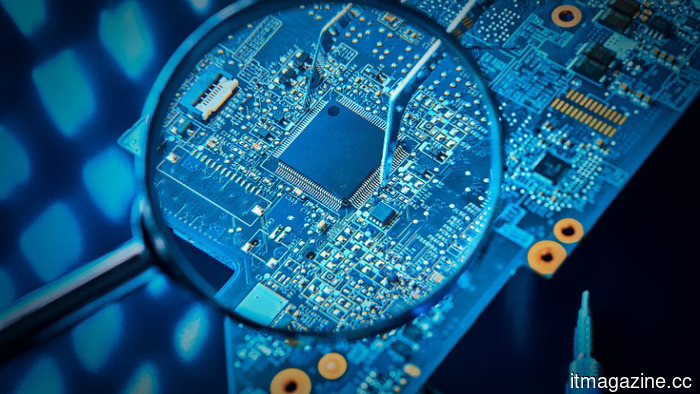
TSMC does not exclude the possibility of increasing prices due to rising chip production costs caused by inflation.
**TL;DR** TSMC's CFO stated that inflation is increasing costs and price hikes are a possibility, while the CEO mentioned that shortages of AI chips are expected to last for years.
Taiwan Semiconductor Manufacturing Company (TSMC), the leading chipmaker globally, informed the BBC that inflation is elevating its costs and did not dismiss the possibility of raising prices. CFO Wendell Huang expressed that while the company would not make sudden drastic price increases, it recognizes the rise in expenses. He noted, “We reflect our value,” highlighting TSMC’s technological dominance and scale in manufacturing.
These statements were made following TSMC’s annual shareholder meeting in Hsinchu, where chairman and CEO CC Wei expressed a desire to increase prices, similar to what competitors in the memory chip sector have done. Wei indicated that the shortage of AI chips would continue for several years and mentioned that despite operating its fabs at full capacity, TSMC struggles to meet customer demand. “We’re doing everything we can, wherever we can, and however we can,” Huang told the BBC.
While TSMC publicly committed to maintaining pricing restraint, it has already started raising prices for its most advanced chips. TrendForce reported in May that the company is considering a 15% price increase on 3nm wafers in the latter half of 2026, with an additional 5 to 10% rise expected in 2027. Previous reports suggested TSMC intended to raise prices on sub-3nm technology by 3 to 10% throughout 2026, with price hikes anticipated into 2029.
TSMC produces the most advanced chips for major companies like Nvidia, AMD, and Apple, controlling over 90% of the market for cutting-edge manufacturing nodes. Any increase in pricing will affect the cost of AI infrastructure and, over time, may influence consumer prices for electronic devices. In the first quarter of 2026, the company reported revenues of $35.9 billion, reflecting a 41% year-on-year increase, with advanced technology processes at 7nm and below making up 74% of wafer revenue.
The demand surge is largely attributed to an AI infrastructure investment wave, with Nvidia alone pledging over $40 billion in equity investments in 2026, and combined capital expenditures from hyperscalers projected to surpass $690 billion this year. This spending directly contributes to TSMC's order book, while the company’s costs are concurrently rising as it expands manufacturing in the U.S., Germany, Japan, and Taiwan.
Huang countered notions that TSMC's global expansion was influenced by political pressures from Washington or Beijing, stating, “We go out of Taiwan to build capacity based on customers’ demand. The customers want us to go there. It’s not the request of government.” TSMC has dedicated $165 billion to its operations in Arizona, which include six fabrication plants, two advanced packaging facilities, and a research and development center.
When asked about the future of advanced chip production, Huang affirmed that the most sophisticated manufacturing would still be based in Taiwan. He suggested that relocating the entire manufacturing ecosystem to the U.S. could take “five or 10 years, or even longer,” a timeline that poses a challenge to U.S. industrial policy goals. The first Arizona fabrication plant is producing 4nm chips, but production of 2nm chips at the site is not anticipated until the end of the decade.
The geopolitical context cannot be overlooked. At a recent summit in Beijing, Chinese President Xi Jinping cautioned that mishandling Taiwan could lead to an “extremely dangerous situation” in U.S.-China relations, while President Trump referred to a $14 billion arms package for Taiwan as a “negotiating chip.” Taiwan is a critical producer of the world's most advanced semiconductors, making TSMC's facilities in Hsinchu exceedingly significant on a global scale.
Huang also rejected claims that the AI surge is merely a bubble, stating, “Our conviction in this AI megatrend is very strong,” based on discussions with customers and the hyperscalers among their largest buyers. He noted, “These companies are financially very strong with a lot of financial resources, so we believe that they’re able to continue to invest.” Nonetheless, whether this confidence will allow clients to absorb higher chip prices without passing on costs to end-users remains to be seen.
Other articles
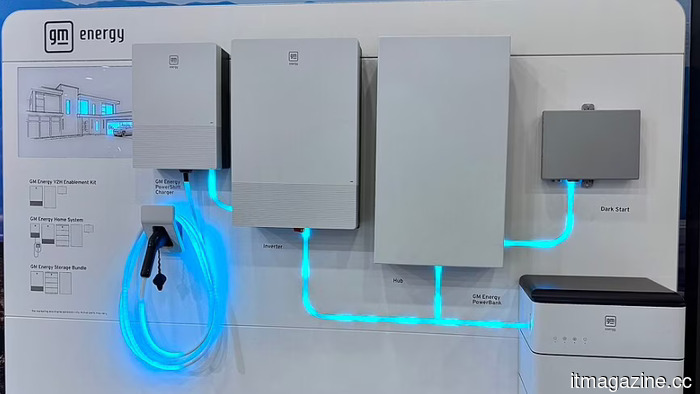 From automobiles to data centers, GM advances into energy storage through three new battery agreements.
GM collaborated with Peak Energy on sodium-ion batteries and broadened its agreement with Redwood Materials to provide energy storage solutions for data centers and the grid.
From automobiles to data centers, GM advances into energy storage through three new battery agreements.
GM collaborated with Peak Energy on sodium-ion batteries and broadened its agreement with Redwood Materials to provide energy storage solutions for data centers and the grid.
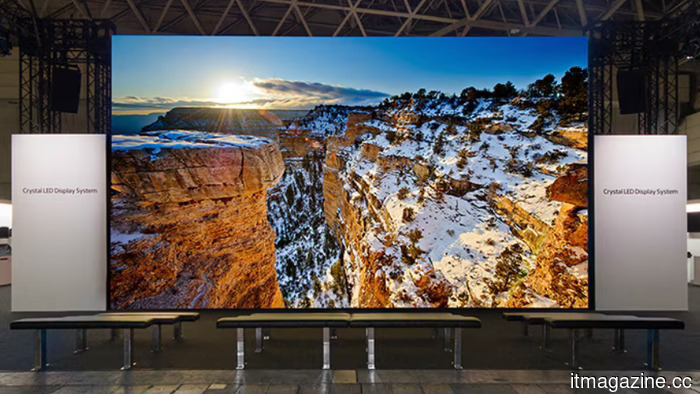 Sony's 135-inch Crystal LED UNIFY is a display designed for boardrooms that can be set up in just one hour.
Sony introduced the Crystal LED UNIFY, a 135-inch dvLED screen designed for boardrooms that can be installed by two individuals within an hour. It is scheduled for release in early 2027.
Sony's 135-inch Crystal LED UNIFY is a display designed for boardrooms that can be set up in just one hour.
Sony introduced the Crystal LED UNIFY, a 135-inch dvLED screen designed for boardrooms that can be installed by two individuals within an hour. It is scheduled for release in early 2027.
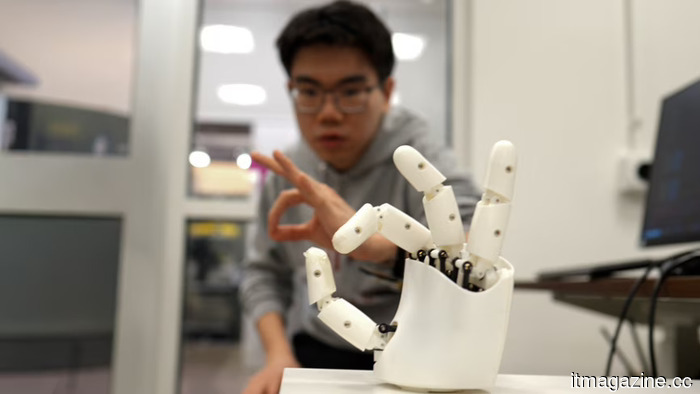 MIT's ultrasound wristband monitors all finger movements and enables you to control a robotic hand instantly.
Engineers at MIT have developed an ultrasound wristband that monitors 22 degrees of hand movement with a latency of 120 milliseconds, allowing for real-time control of robotic hands and sign language.
MIT's ultrasound wristband monitors all finger movements and enables you to control a robotic hand instantly.
Engineers at MIT have developed an ultrasound wristband that monitors 22 degrees of hand movement with a latency of 120 milliseconds, allowing for real-time control of robotic hands and sign language.
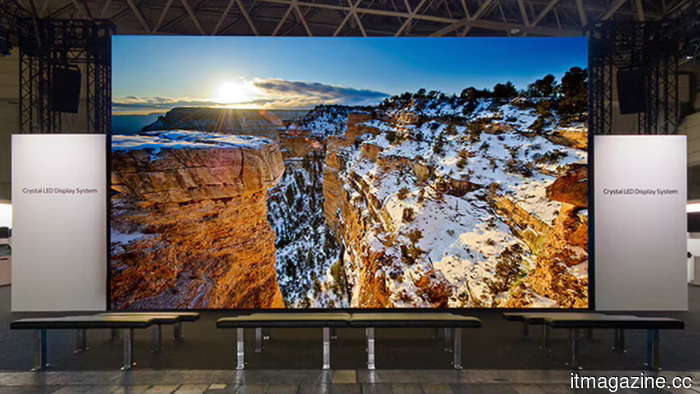 Sony's 135-inch Crystal LED UNIFY is a boardroom display that can be set up in just an hour.
Sony introduced the Crystal LED UNIFY, a 135-inch dvLED screen designed for boardrooms that can be set up by two individuals within an hour. It is scheduled to ship in early 2027.
Salesforce has acquired m3ter to integrate consumption-based billing into Agentforce.
Salesforce is purchasing m3ter, a metering and rating platform located in London that specializes in usage-based billing, to incorporate native consumption pricing into Agentforce.
Sony's 135-inch Crystal LED UNIFY is a boardroom display that can be set up in just an hour.
Sony introduced the Crystal LED UNIFY, a 135-inch dvLED screen designed for boardrooms that can be set up by two individuals within an hour. It is scheduled to ship in early 2027.
Salesforce has acquired m3ter to integrate consumption-based billing into Agentforce.
Salesforce is purchasing m3ter, a metering and rating platform located in London that specializes in usage-based billing, to incorporate native consumption pricing into Agentforce.
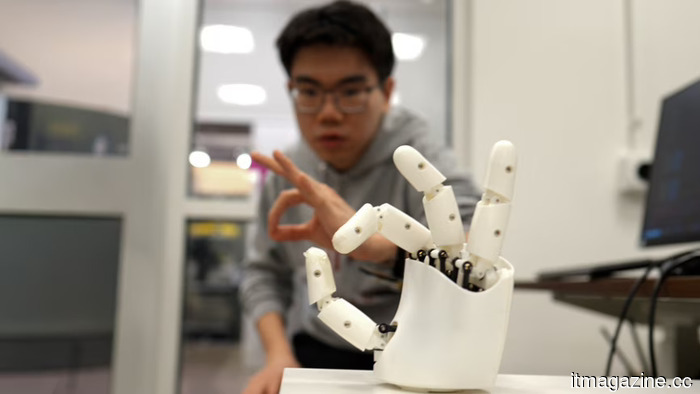 The ultrasound wristband developed by MIT monitors the movements of each finger and enables real-time control of a robotic hand.
MIT engineers developed a wristband that uses ultrasound to monitor 22 degrees of hand movement with a latency of 120ms, allowing for real-time control of robotic hands and sign language.
The ultrasound wristband developed by MIT monitors the movements of each finger and enables real-time control of a robotic hand.
MIT engineers developed a wristband that uses ultrasound to monitor 22 degrees of hand movement with a latency of 120ms, allowing for real-time control of robotic hands and sign language.
TSMC does not exclude the possibility of increasing prices due to rising chip production costs caused by inflation.
The CFO of TSMC informed the BBC that inflation is driving up costs and while the company does not dismiss the possibility of price increases, it has excluded sudden hikes of "fourfold, fivefold."