
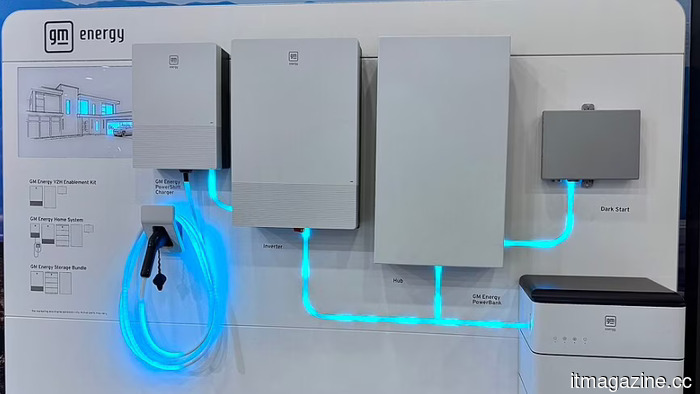
From automobiles to data centers, GM advances into energy storage through three new battery agreements.
GM has partnered with Peak Energy to develop sodium-ion batteries and is expanding its grid storage initiatives with Redwood Materials and LG Energy Solution. This move emphasizes GM's commitment to energy storage, indicating that its $900 million investment in battery technology serves a broader purpose than just powering vehicles.
The partnership with Peak Energy stands out as the most technically ambitious endeavor. GM will co-create sodium-ion battery cells at its Battery Cell Development Center in Warren, Michigan, aiming for trial production by 2028. These sodium-ion cells utilize sodium, iron, and manganese instead of lithium, cobalt, and nickel, making them more affordable and less reliant on supply chains concentrated in China.
To date, no automaker outside of China has engaged in sodium-ion development to this extent, positioning GM as the first Western car manufacturer moving from research phase to actual manufacturing trials. Peak Energy, a Bay Area startup with $100 million in funding, operates a pilot facility in Escondido, California, and is constructing a larger plant projected to produce 10 GWh of cells each year.
GM's investment allows it to leverage Peak Energy's chemical expertise, while Peak Energy benefits from GM's manufacturing know-how and testing capabilities, a crucial exchange since sodium-ion technology has faced challenges transitioning from laboratory to production outside China.
Sodium-ion batteries are not yet suitable for electric vehicles, as their energy density of about 120 to 160 watt-hours per kilogram is significantly lower than the 250 to 300 Wh/kg of lithium-ion batteries used in modern EVs, making them too heavy for automotive applications but ideal for stationary storage where weight is not a concern and cost per kilowatt-hour is crucial.
The collaboration with LG Energy Solution helps bridge the gap until sodium-ion cells are fully developed. GM will provide LFP battery cells made at its Battery Cell Development Center for LG to use in energy storage systems aimed at data centers and utility customers facing increasing electricity demands. LFP chemistry is already established in stationary storage, and GM has been producing these cells as part of a strategy to diversify away from nickel-manganese-cobalt-aluminum chemistry used in its EV batteries.
Additionally, GM is acquiring a 7.2 MWh battery energy storage system from Redwood Materials, which is transitioning from battery recycling to grid-scale energy solutions. This system will be installed at GM's Milford Proving Ground in Michigan to provide backup power and assist with managing peak demand.
Redwood's storage solutions utilize second-life EV batteries, which are cells that no longer meet rigorous automotive performance standards but still have enough capacity for stationary applications. The company operates a 12 MW, 63 MWh microgrid at a data center in Sparks, Nevada, marking it as the largest deployment of second-life batteries in North America.
GM is positioning its energy storage push as a way to monetize its battery manufacturing capabilities that currently serve only its vehicle segment. The Battery Cell Development Center, launched in 2024, was designed to develop and test cell chemistries for GM’s electric vehicles. By including stationary storage as an additional revenue stream, GM aims to broaden its market reach, especially as the growth of EV sales has slowed compared to earlier expectations.
However, this strategy carries risks. GM lacks a proven track record in energy storage and will face competition from established firms like Tesla Energy, Fluence, and BYD’s energy storage division, all of which have extensive deployment experience and established customer relations. Furthermore, sodium-ion technology has yet to prove its commercial viability beyond China, where companies like CATL and BYD have utilized sodium-ion cells in certain applications but have not yet demonstrated the necessary cycle life and durability for utility-scale projects.
GM possesses significant manufacturing capabilities and purchasing power. Since 2022, it has invested $900 million in battery chemistry research and development and operates one of the few dedicated battery cell development facilities in North America, with connections to suppliers across the automotive and energy sectors. The success of their energy storage venture will hinge on effective execution and whether sodium-ion cells can meet cost and performance goals as the Milford system and the LG partnership generate initial real-world data.
Other articles
 Anthropic has launched Claude Fable 5, marking its first Mythos-class model available to the public.
On Tuesday, Anthropic introduced Claude Fable 5, a model of the Mythos class that includes safeguards preventing inquiries related to cybersecurity and biology, with a cost of $10 for every million input tokens.
FCC documents indicate that Valve's Steam Machine might be released prior to June 29.
FCC regulatory documents indicate that Valve's Steam Machine may be shipped prior to June 29, following a trend observed in the Steam Controller's filing.
Anthropic has launched Claude Fable 5, marking its first Mythos-class model available to the public.
On Tuesday, Anthropic introduced Claude Fable 5, a model of the Mythos class that includes safeguards preventing inquiries related to cybersecurity and biology, with a cost of $10 for every million input tokens.
FCC documents indicate that Valve's Steam Machine might be released prior to June 29.
FCC regulatory documents indicate that Valve's Steam Machine may be shipped prior to June 29, following a trend observed in the Steam Controller's filing.
 Two Russian APT groups are taking advantage of a WinRAR vulnerability that was fixed almost a year ago to target Ukraine.
Gamaredon and SHADOW-EARTH-066 are taking advantage of CVE-2025-8088 in WinRAR to capture credentials and documents from Ukrainian targets, almost a year following the release of a patch.
Two Russian APT groups are taking advantage of a WinRAR vulnerability that was fixed almost a year ago to target Ukraine.
Gamaredon and SHADOW-EARTH-066 are taking advantage of CVE-2025-8088 in WinRAR to capture credentials and documents from Ukrainian targets, almost a year following the release of a patch.
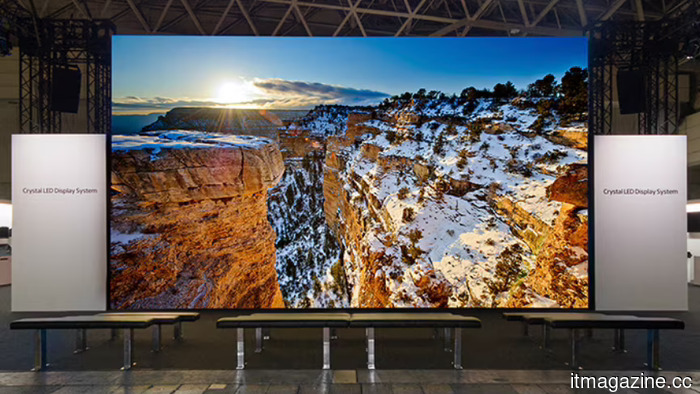 Sony's 135-inch Crystal LED UNIFY is a boardroom screen that can be set up in just one hour.
Sony introduced the Crystal LED UNIFY, a 135-inch dvLED display designed for boardrooms that can be set up by two individuals in one hour. It is scheduled for release in early 2027.
Sony's 135-inch Crystal LED UNIFY is a boardroom screen that can be set up in just one hour.
Sony introduced the Crystal LED UNIFY, a 135-inch dvLED display designed for boardrooms that can be set up by two individuals in one hour. It is scheduled for release in early 2027.
 TSMC does not dismiss the possibility of increasing prices due to rising chip manufacturing costs caused by inflation.
The CFO of TSMC informed the BBC that rising inflation is increasing expenses, and while the company may consider price increases, it has dismissed the possibility of abrupt "fourfold, fivefold" jumps.
TSMC does not dismiss the possibility of increasing prices due to rising chip manufacturing costs caused by inflation.
The CFO of TSMC informed the BBC that rising inflation is increasing expenses, and while the company may consider price increases, it has dismissed the possibility of abrupt "fourfold, fivefold" jumps.
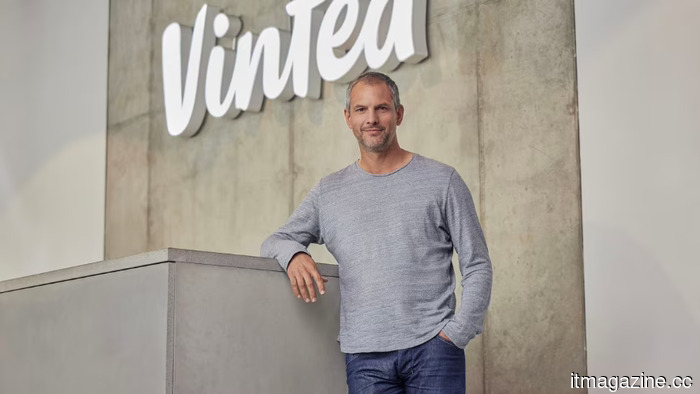 Vinted's CEO states that the US is a
Vinted's CEO Adam Jay states that secondhand shopping is "here to stay," as the Lithuanian marketplace valued at €8 billion expands into the US following a reported revenue of €1.1 billion for 2025.
Vinted's CEO states that the US is a
Vinted's CEO Adam Jay states that secondhand shopping is "here to stay," as the Lithuanian marketplace valued at €8 billion expands into the US following a reported revenue of €1.1 billion for 2025.
From automobiles to data centers, GM advances into energy storage through three new battery agreements.
GM collaborated with Peak Energy on sodium-ion batteries and broadened its agreement with Redwood Materials to provide energy storage solutions for data centers and the grid.