

An application that enables anyone to operate a robot via their phone, without the need for any coding.
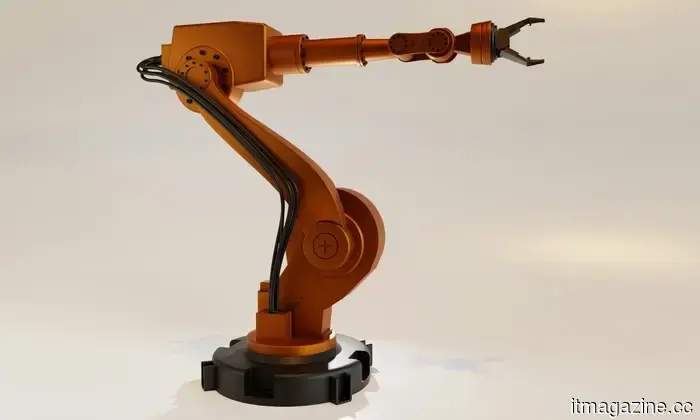
A group of researchers at Georgia Tech has created a new smartphone-based system that could significantly ease how individuals interact with robots. Known as COBALT, this platform enables users with minimal to no computing knowledge to remotely control robotic arms from nearly any location in the world, only requiring a phone and an internet connection.
Developed at Georgia Tech’s People, AI & Robotics (PAIR) Lab, this project turns smartphones into motion controllers for robotic arms. Users just need to tilt their phones in various directions, and the robot replicates those movements in real time. Simple tasks such as grasping, moving, and releasing objects can be executed through basic on-screen controls, making the experience resemble that of a mobile game rather than using industrial machinery.
Ayush Agarwal, a Ph.D. student in Georgia Tech’s School of Interactive Computing and head of the COBALT research team, explained that the system was deliberately designed to be user-friendly for novices rather than specialists. During trials, participants from countries such as India, Indonesia, and Pakistan were able to remotely manipulate robot arms situated in Georgia Tech’s laboratory, even without any prior experience in robotics.
Researchers are optimistic that crowdsourcing could influence the future of robotics.
The overarching ambition behind COBALT goes beyond mere convenience. Researchers view the platform as a potential solution to one of robotics’ most significant hurdles: gathering enough real-world training data to refine AI-driven robotic systems.
Contemporary robots necessitate vast amounts of training data to reliably learn how to execute physical tasks. Assistant Professor Animesh Garg, who oversees the PAIR Lab, stated that simulation alone cannot adequately prepare robots for extensive deployment. Researchers instead envision a crowdsourced network wherein millions of smartphone users contribute operational data passively by interacting remotely with robots.
Garg likened the concept to leveraging the nearly five billion smartphone users globally. By reducing the entry barriers, the team aims to establish a scalable international system that can expedite the learning and automation processes for robots.
This technology also has significant educational potential. Recently, Georgia Tech researchers showcased COBALT to students from Midtown High School in Atlanta, allowing them to remotely control robotic arms with their smartphones. The user-friendly interface could enhance the accessibility of robotics education in classrooms lacking costly equipment or specialized technology.
The prospect of a "gig economy" for robots may not be too distant.
The researchers also foresee COBALT enabling new kinds of remote work opportunities. Garg expressed the potential for a robot-driven gig economy where individuals could operate assistive robots remotely in homes, warehouses, or factories from any part of the globe.
In practical terms, this could mean that a factory robot manages most tasks autonomously but requires human assistance in challenging situations. Instead of needing on-site staff, remote users could briefly take control via their phones before returning the operation to the AI system.
Agarwal mentioned that user studies indicated a preference for smartphones over VR headsets, keyboards, or traditional controllers due to their intuitive nature while still offering high-quality control data. The system also reduces latency by utilizing WebRTC technology, akin to services like Zoom and Google Meet, ensuring that robot movements and live video feeds remain responsive over long distances.
The research paper detailing COBALT will be presented this week at the IEEE International Conference on Robotics and Automation in Vienna, where the team aims to showcase not only the technology itself but also the extensive remote operation network developed around it.
Other articles
 The post-warranty graveyard is becoming crowded with functioning devices.
Software updates are intended to prolong the life of devices, but the issues with the Pixel 4a battery demonstrate how quickly they can push older hardware toward obsolescence.
The post-warranty graveyard is becoming crowded with functioning devices.
Software updates are intended to prolong the life of devices, but the issues with the Pixel 4a battery demonstrate how quickly they can push older hardware toward obsolescence.
 The post-warranty graveyard is becoming populated with functioning devices.
Software updates are intended to prolong the lifespan of devices, but the battery issues with the Pixel 4a illustrate how quickly they can contribute to rendering older hardware obsolete.
The post-warranty graveyard is becoming populated with functioning devices.
Software updates are intended to prolong the lifespan of devices, but the battery issues with the Pixel 4a illustrate how quickly they can contribute to rendering older hardware obsolete.
 Apple might introduce the MacBook Ultra in two sizes featuring a unique OLED display.
Apple's MacBook Ultra may be launched in the third quarter of 2026, featuring a new hybrid OLED display, two size choices, and the most significant redesign of a MacBook in years.
Apple might introduce the MacBook Ultra in two sizes featuring a unique OLED display.
Apple's MacBook Ultra may be launched in the third quarter of 2026, featuring a new hybrid OLED display, two size choices, and the most significant redesign of a MacBook in years.
 The concealed work associated with contemporary tech support is transforming everyone into unpaid workers.
Contemporary tech support promotes self-service as a convenience; however, each interaction with a chatbot and every repetitive explanation contributes to unpaid work.
The concealed work associated with contemporary tech support is transforming everyone into unpaid workers.
Contemporary tech support promotes self-service as a convenience; however, each interaction with a chatbot and every repetitive explanation contributes to unpaid work.
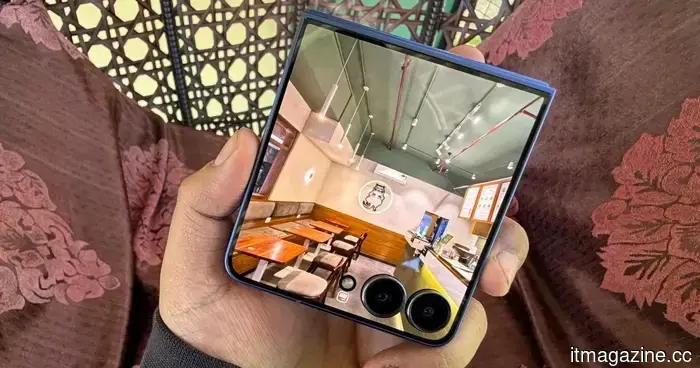 Samsung may once again forgo a charging upgrade for the forthcoming Galaxy Z Flip 8.
The forthcoming Galaxy Z Flip 8 from Samsung may reportedly maintain a 25W charging capability along with a 4,300mAh battery, even as rivals are adopting significantly quicker charging technologies.
Samsung may once again forgo a charging upgrade for the forthcoming Galaxy Z Flip 8.
The forthcoming Galaxy Z Flip 8 from Samsung may reportedly maintain a 25W charging capability along with a 4,300mAh battery, even as rivals are adopting significantly quicker charging technologies.
.jpg) 3 overlooked TV series on Hulu that you should binge-watch this weekend (June 5-7)
This weekend, we have three overlooked Hulu series that cover dark comedy, mind-bending sci-fi, and psychological thriller genres, all of which are worth checking out.
3 overlooked TV series on Hulu that you should binge-watch this weekend (June 5-7)
This weekend, we have three overlooked Hulu series that cover dark comedy, mind-bending sci-fi, and psychological thriller genres, all of which are worth checking out.
An application that enables anyone to operate a robot via their phone, without the need for any coding.
Researchers at Georgia Tech have created COBALT, a smartphone platform that enables users to control robots remotely from any location utilizing straightforward motion controls and Wi-Fi connectivity.