

The concealed work associated with contemporary tech support is transforming everyone into unpaid workers.
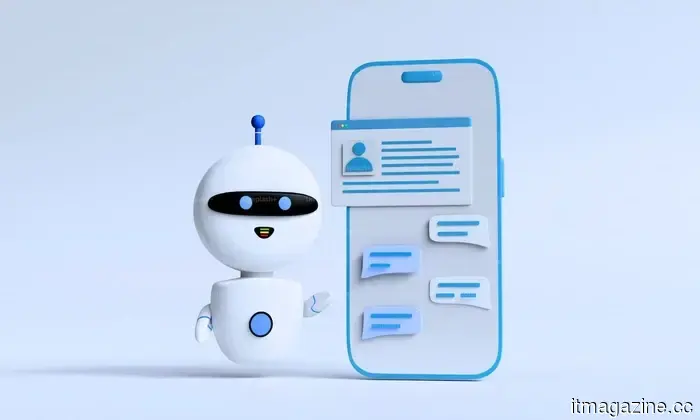
I recently attempted to cancel an order through a well-known food delivery app and inadvertently found myself trapped in a frustrating escape room within a chatbot. I was unable to type out my actual problem and could only select from preset options, none of which were relevant to my situation. I continued to back out and try again, as if the correct answer was hidden behind yet another poor menu choice.
Ultimately, I resorted to Googling how to reach a live representative, feeling foolish for struggling with a simple task. Unsurprisingly, the solution was to simulate a different inquiry. I’m joking, of course; I recognize that customers like me aren’t genuinely foolish. Yet, that experience certainly left me feeling that way.
The consumer effort tax
This is what’s known as the consumer effort tax. It’s the additional burden we bear after we’ve already completed our purchase. It costs us in time, patience, and the silent embarrassment of doing unpaid support tasks for a company that can process your payment in an instant but seems incapable of providing a working solution for your problem.
I’m not the only one stuck in the chatbot quagmire. The Guardian recently referenced data from the National Consumer Rage Survey, indicating that nearly 80% of Americans experienced a service or product issue in 2025, with about two-thirds expressing feelings of “rage” over it. The same report cited research from Groundwork Collaborative estimating that U.S. households lose $165 billion annually due to the “annoyance economy.”
Tech companies often label this solution as self-service. While it sounds helpful and empowering, in reality, it typically means that the company has shifted the responsibility onto the customer, presenting it as convenience.
The chatbot isn’t the worker here
AI support facilitates scaling the process. A chatbot can answer immediately, offer polite apologies, and ultimately provide no real assistance. Research from HubSpot and SurveyMonkey revealed that 53% of consumers dislike or have an aversion to AI in service interactions, while 82% would still choose human support if the results and time spent were comparable.
This aligns with the sensation of being stuck within such systems. It feels less like receiving help and more like being filtered. A 2025 study on customer-service chatbots discusses “gatekeeper aversion,” whereby customers resist chatbot avenues, anticipating an imperfect initial step before possibly reaching a human.
Companies have more palatable terms for this: deflection, containment, automation. Inside a control panel, these terms may appear as success. From the customer’s viewpoint, it often means a company effectively prevented you from connecting with someone who could resolve your issue.
The maze is the product
Poor support seems less coincidental when you realize how much effort is put into making basic exits more challenging. The FTC established a click-to-cancel rule in 2024 to make the cancellation of recurring subscriptions and memberships as straightforward as signing up. This rule seems self-evident, which often indicates that the original design was likely flawed.
The same reasoning applies to customer support. If a company can track how many individuals it diverts, it can also measure the amount of time wasted before anyone actually provides assistance. This information should be transparent, so we can identify which companies have turned customer service into a branded waiting area.
Interestingly, the app doesn’t need to resist this much. My attention is already divided among its buttons, prompts, offers, and nudges. Squandering time on support feels counterproductive. Resolve the issue, allow me to exit, and there will surely be another convenience ready to engage me shortly.

Other articles
 The right to repair is not just a passion for hobbyists. It’s a struggle concerning ownership rights.
The right to repair is often viewed as a concern related to e-waste, but the more pressing issue is ownership. A failing battery shouldn't revert a device that you purchased back into the property of the company.
The right to repair is not just a passion for hobbyists. It’s a struggle concerning ownership rights.
The right to repair is often viewed as a concern related to e-waste, but the more pressing issue is ownership. A failing battery shouldn't revert a device that you purchased back into the property of the company.
![This animated movie, which boasts a 99% score on Rotten Tomatoes, is one of the three underrated films on Apple TV to check out this weekend [June 5-7].](https://itmagazine.cc/thumbs/itmagazine.cc-700/3d/fd/This-animated-film-with-a-99prcnt-RT-score-is-one-of-the-3-underrated-Apple-TV-movies-to-watch-this-weekend-[June-5-7].webp) This animated movie, which boasts a 99% score on Rotten Tomatoes, is one of the three underrated films on Apple TV to check out this weekend [June 5-7].
If you haven't explored Apple TV's movie selection yet, these three distinct yet equally fulfilling films are an excellent way to begin this weekend.
This animated movie, which boasts a 99% score on Rotten Tomatoes, is one of the three underrated films on Apple TV to check out this weekend [June 5-7].
If you haven't explored Apple TV's movie selection yet, these three distinct yet equally fulfilling films are an excellent way to begin this weekend.
 Gemini may soon provide a troubleshooting mode, potentially saving you a trip to the help manuals.
A newly observed Gemini Troubleshooting mode provides users with step-by-step instructions and interactive tools to resolve common issues more effectively.
Gemini may soon provide a troubleshooting mode, potentially saving you a trip to the help manuals.
A newly observed Gemini Troubleshooting mode provides users with step-by-step instructions and interactive tools to resolve common issues more effectively.
 Netflix states that there is no future for theatrical releases within its streaming ecosystem.
Mr. Lin stressed that “Narnia” was an anomaly and asserted that the company's view on movie theaters remains unchanged. “There are filmmakers who still desire theatrical releases. Those are filmmakers we’ve acknowledged we simply won’t collaborate with,” he remarked, showcasing his characteristic candor.
Netflix states that there is no future for theatrical releases within its streaming ecosystem.
Mr. Lin stressed that “Narnia” was an anomaly and asserted that the company's view on movie theaters remains unchanged. “There are filmmakers who still desire theatrical releases. Those are filmmakers we’ve acknowledged we simply won’t collaborate with,” he remarked, showcasing his characteristic candor.
 Robot dogs, surveillance drones, and artificial intelligence cameras: the technology ensuring security at the 2026 World Cup.
The World Cup begins featuring Boston Dynamics' robotic dogs, drones equipped to shoot nets, and numerous AI cameras spread across 16 cities. This is the technology ensuring security.
Robot dogs, surveillance drones, and artificial intelligence cameras: the technology ensuring security at the 2026 World Cup.
The World Cup begins featuring Boston Dynamics' robotic dogs, drones equipped to shoot nets, and numerous AI cameras spread across 16 cities. This is the technology ensuring security.
 The post-warranty graveyard is becoming populated with functioning devices.
Software updates are intended to prolong the lifespan of devices, but the battery issues with the Pixel 4a illustrate how quickly they can contribute to rendering older hardware obsolete.
The post-warranty graveyard is becoming populated with functioning devices.
Software updates are intended to prolong the lifespan of devices, but the battery issues with the Pixel 4a illustrate how quickly they can contribute to rendering older hardware obsolete.
The concealed work associated with contemporary tech support is transforming everyone into unpaid workers.
Contemporary tech support promotes self-service as a convenience; however, each interaction with a chatbot and every repetitive explanation contributes to unpaid work.