
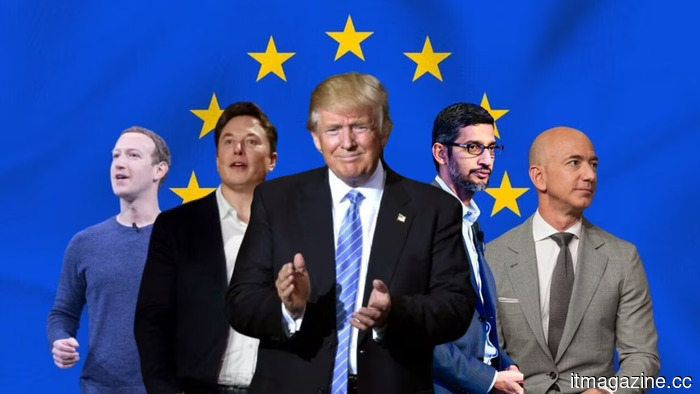
Trump considers a public share in OpenAI, valued at $850 billion, while Sanders advocates for a 50% share.
**Summary**: Trump announces a meeting with AI firms next week to discuss a federal "partnership" allowing Americans to gain equity from the industry. Altman initially proposed this in early 2025, while Sanders advocates for a 50% government stake. Critics warn that government ownership could hinder AI regulation.
On Thursday, President Donald Trump indicated he plans to meet with AI companies at the White House next week to explore what he describes as a federal government “partnership” that would enable the American public to benefit financially from the success of the AI sector. Trump mentioned, “There are ideas where components could be allocated to the American public, effectively making them partners with the companies,” and suggested the program might involve distributing company dividends to citizens.
This idea is not entirely new, as OpenAI CEO Sam Altman first introduced the notion of government stakes in major AI firms to the Trump administration in early 2025 and has recently revisited it. However, Trump’s public support, alongside a more forceful proposal from Senator Bernie Sanders, has brought the issue of who should benefit from AI's economic gains to the forefront of Washington’s contentious debate on AI policy.
Two proposals with significant differences:
Altman’s approach is optional. OpenAI’s policy document from April suggested a “Public Wealth Fund” that would provide a stake in AI-driven economic growth to every citizen. In this scenario, OpenAI might contribute equity to the government to establish the fund, presenting the company as a cooperative participant rather than a target.
In contrast, Sanders' approach is mandatory. The senator unveiled plans for the AI Sovereign Wealth Fund Act, which would impose a one-time 50% tax on the stock of the largest AI companies, to be paid in shares instead of cash. The government would oversee the resulting fund, use its voting shares to secure board positions, and prevent decisions it considers detrimental. This legislation would affect companies such as OpenAI, Anthropic, and xAI. While the bill is widely seen as unlikely to pass, it has prompted discussions about what Washington is prepared to consider regarding AI ownership.
The disparity between the two proposals is significant. Altman’s approach is akin to a gift, whereas Sanders’ proposal resembles a seizure. Trump seems to occupy a middle ground, showing interest in the concept without firmly aligning with either proposal.
The conflict-of-interest concern:
Critics have raised serious concerns regarding any government equity arrangement, including Nat Purser of the advocacy group Public Knowledge, who warned that government involvement might lead to a diminished inclination to enforce safety regulations, as it could jeopardize the value of its own investments.
This concern has practical implications. Just three days before Trump's comments about profit-sharing, he signed an executive order urging AI firms to voluntarily submit their frontier models for government evaluation up to 30 days before public release. The term "voluntarily" carries significant weight in this context. If the government has equity in the firms it is expected to oversee, the motivation to keep testing voluntary could become even stronger.
Currently, Anthropic has stated it is not engaged in discussions with the administration regarding equity grants to the government, and no other company has publicly confirmed involvement.
A precedent, but not exactly:
The Trump administration has previously taken equity stakes in Intel, IBM, and other firms during the president’s second term, but those stakes were linked to specific industrial policy objectives, often associated with subsidies or procurement contracts. An AI equity initiative would differ fundamentally: it would seek to redistribute wealth from a broad sector of companies to the general public, rather than merely securing supply chains.
The legal challenge remains unanswered:
A key issue is how a private AI company might transfer equity to the federal government. OpenAI, valued at over $850 billion by private investors, is in the process of transitioning from a non-profit to a for-profit entity, preparing for an IPO potentially this year. It recently completed a record-breaking funding round co-led by MGX, which is supported by Abu Dhabi’s sovereign wealth fund. Likewise, Anthropic has confidentially filed for an IPO, and xAI has merged with SpaceX, which is poised for a historically significant IPO. All of these companies operate under varying corporate structures, investor bases, and fiduciary responsibilities, making it challenging to establish a universal mechanism for equity transfer.
While Sanders’ proposal uses the tax code, a 50% stock seizure raises clear constitutional challenges. Altman’s voluntary donation model circumvents these issues but relies entirely on companies’ willingness to participate, which means the size of the fund would depend on industry response.
Governor Gavin Newsom of California has taken a different approach. Last month, he announced an executive order exploring mandatory equity grants for workers displaced by AI, a state-level capital pool funded through taxes on AI productivity gains, and voluntary profit-sharing programs incentivized by tax breaks. None of these plans necessitate the federal government holding shares directly.
What lies ahead:
Trump stated the meeting with AI companies is set for “next week,”
Other articles
 The top 10 press release distribution services for 2026.
Transitioning from AI-indexed wire distribution to specialized editorial reviews, these press release services provide genuine publisher placements without the outdated wire costs.
The top 10 press release distribution services for 2026.
Transitioning from AI-indexed wire distribution to specialized editorial reviews, these press release services provide genuine publisher placements without the outdated wire costs.
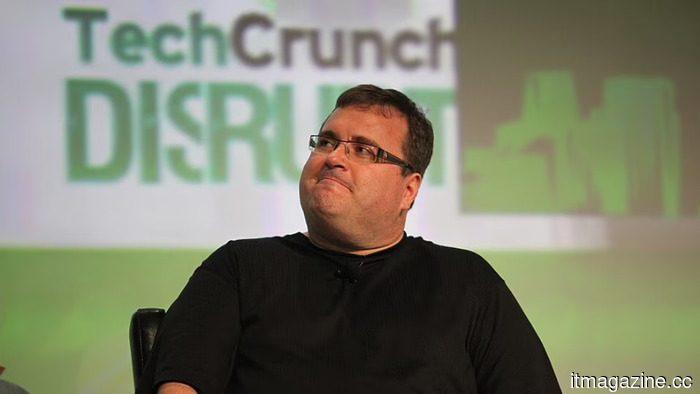 Reid Hoffman steps down from the Microsoft board to enter 'founder mode' with the AI drug company Manus.
Reid Hoffman, co-founder of LinkedIn, is resigning from Microsoft's board after almost ten years in order to concentrate on Manus, his AI-driven drug discovery startup.
Reid Hoffman steps down from the Microsoft board to enter 'founder mode' with the AI drug company Manus.
Reid Hoffman, co-founder of LinkedIn, is resigning from Microsoft's board after almost ten years in order to concentrate on Manus, his AI-driven drug discovery startup.
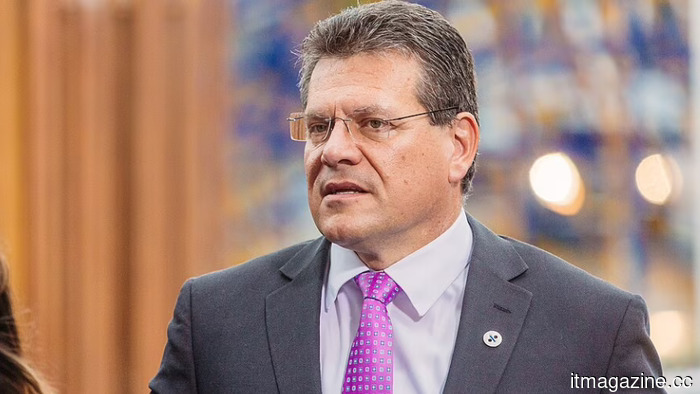 The EU trade commissioner is advocating for a new mechanism to reduce Europe’s reliance on Chinese semiconductors and rare earth minerals.
Maroš Šefčovič advocated for a "diversification instrument" based on the Energy Union to reduce industry reliance on single suppliers in critical sectors.
The EU trade commissioner is advocating for a new mechanism to reduce Europe’s reliance on Chinese semiconductors and rare earth minerals.
Maroš Šefčovič advocated for a "diversification instrument" based on the Energy Union to reduce industry reliance on single suppliers in critical sectors.
 A former executive from IBM's cybersecurity division alleges that the company concealed breaches related to Chinese hacking.
A whistleblower lawsuit claims that IBM hid incidents of breaches by Chinese hackers, who attacked its network over 56,000 times, and failed to inform the US government.
A former executive from IBM's cybersecurity division alleges that the company concealed breaches related to Chinese hacking.
A whistleblower lawsuit claims that IBM hid incidents of breaches by Chinese hackers, who attacked its network over 56,000 times, and failed to inform the US government.
 GM invests $900 million in LMR battery technology to reduce electric vehicle costs.
GM's newly established Battery Cell Development Centre connects laboratory research and development with manufacturing for LMR cells, which may reduce EV battery expenses by $6,000 and be available for trucks by 2028.
GM invests $900 million in LMR battery technology to reduce electric vehicle costs.
GM's newly established Battery Cell Development Centre connects laboratory research and development with manufacturing for LMR cells, which may reduce EV battery expenses by $6,000 and be available for trucks by 2028.
Trump considers a public share in OpenAI, valued at $850 billion, while Sanders advocates for a 50% share.
Trump is set to meet with AI companies regarding a proposal to provide Americans with equity in firms such as the $850 billion OpenAI. He has already invested in Intel and IBM. Sanders is advocating for a 50% share. Currently, there is no legal framework in place for this.