
GM invests $900 million in LMR battery technology to reduce electric vehicle costs.
TL;DR: GM has launched a 500,000-square-foot Battery Cell Development Centre to link research and development with production for its new LMR battery chemistry. If successful, LMR could lower EV battery costs by $6,000 per vehicle and be available for trucks by 2028.
Tucked away within the General Motors Warren Tech Center near Detroit are two unremarkable off-white buildings that shelter the company's most significant investment in recent years. The new Battery Cell Development Centre, covering 500,000 square feet, is central to GM’s strategy to introduce a new generation of more affordable EV batteries one year ahead of schedule.
The battery chemistry in focus is LMR, or lithium-manganese-rich. GM states that it is nearly as energy-dense as the nickel-manganese-cobalt (NMC) cells used in its current electric vehicles, yet at a cost comparable to the lithium-iron-phosphate (LFP) cells found in lower-priced models like the Chevrolet Bolt. In a vehicle like the Silverado EV, GM claims that LMR would maintain most of the vehicle's 400-plus mile range while reducing the battery cost by at least $6,000, making the price of a mid-range model comparable to that of gasoline-powered counterparts.
Reasons behind GM's need for new battery chemistry
GM's rollout of electric vehicles has been uneven. Last year, the company took a $1.6 billion charge as it restructured production, laid off thousands of employees, and reportedly postponed updates for its full-size electric trucks and SUVs. The overall US EV market has become less robust, and at least a dozen EV models were discontinued in 2026 due to tariffs and the expiration of federal tax credits affecting the market landscape.
The core issue is cost. GM heavily invested in NMC chemistry through its Ultium platform, but escalating material prices and China’s control over vital minerals have kept EV prices high. While NMC won’t be eliminated, it will be limited to high-end vehicles at GM. LFP is more affordable but offers lower energy density, which restricts range. LMR presents a compromise: approximately 35% nickel and 65% manganese, with negligible cobalt, and reportedly 33% greater energy density than LFP at a similar price point.
“That is truly going to be our core offering,” stated Kurt Kelty, GM’s vice president of battery and sustainability and a former Tesla battery chief, in an interview with TechCrunch. “That will be our primary product line.”
Connecting research to production
Innovating new chemistry is one thing; producing it at scale is another. GM has the Wallace Battery Cell Innovation Centre for small-scale research and development (30 to 50 cells daily), as well as a 2.8-million-square-foot Ultium gigafactory in Tennessee, which manufactures approximately 300,000 cells annually. What they needed was a means to link these two facilities.
The Battery Cell Development Centre addresses this gap. Once fully operational, it is expected to produce around 2,500 cells daily, translating to roughly half a gigawatt-hour per year. This facility is significantly larger than the nearby Wallace Centre but considerably smaller than the Tennessee factory. A test run here costs about $200,000, which is much lower than at the full-scale factory.
“The BCDC is designed to bridge the gap,” said Mo Gallegos, head of the facility, in a conversation with TechCrunch. The equipment is nearly identical to that on the production line, easing the transition. “The handoff shouldn’t be too challenging,” Kelty emphasized.
Use of AI and digital twins
GM is employing artificial intelligence and a complete digital twin model of the facility to shorten development timelines. The company has logged over 150 million CPU hours of physics-based simulations for LMR alone, which far exceeds the total CPU hours typically used in engine programs throughout their entire development phases, according to Radu Theyyunni, GM’s director of global virtual electrification.
The digital twin replicates the BCDC in intricate detail, including equipment control panels, wiring, and mixing tank blades. Before TechCrunch’s reporter visited the site, the team provided a virtual reality tour of the twin. GM has utilized this technology to verify equipment clearances, simulate control systems, and reduce debugging and ramp-up periods. The company claims these simulations have resulted in significant cost savings, though it did not disclose an exact figure.
Facing competitive pressures
GM requires all the speed it can muster. Competitors like BYD and CATL are already mass-producing competitive, lower-cost cells, and the global EV market saw a 20% growth last year, even as the US market stagnated. Several automakers are also pursuing solid-state battery technology as the next breakthrough, with Toyota, Nissan, and BMW all aiming for commercial availability by the end of the decade.
LMR represents a different approach. Rather than pursuing a revolutionary chemistry, like that promised by solid-state
Other articles
 Google will pay SpaceX $920 million per month for AI computing resources.
Google is set to pay SpaceX $920 million each month for 110,000 Nvidia GPUs until 2029, marking the second significant computing agreement prior to SpaceX's anticipated record $75 billion IPO, which is valued at $1.75 trillion.
Google will pay SpaceX $920 million per month for AI computing resources.
Google is set to pay SpaceX $920 million each month for 110,000 Nvidia GPUs until 2029, marking the second significant computing agreement prior to SpaceX's anticipated record $75 billion IPO, which is valued at $1.75 trillion.
 Google will pay SpaceX $920 million per month for AI computing services.
Google is set to pay SpaceX $920 million each month for 110,000 Nvidia GPUs until 2029, marking the second significant computing agreement prior to SpaceX's unprecedented $75 billion IPO with a valuation of $1.75 trillion.
Google will pay SpaceX $920 million per month for AI computing services.
Google is set to pay SpaceX $920 million each month for 110,000 Nvidia GPUs until 2029, marking the second significant computing agreement prior to SpaceX's unprecedented $75 billion IPO with a valuation of $1.75 trillion.
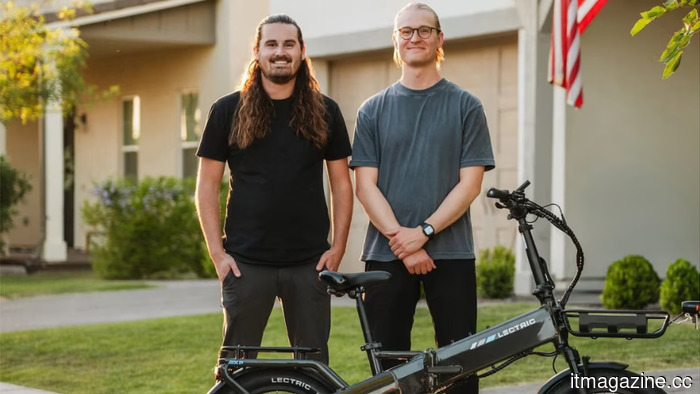 Lectric excels as venture capital-backed e-bike competitors face bankruptcy.
Last month, Lectric eBikes sold 30,000 bicycles and introduced three new brands, all without relying on venture capital, while Rad Power and VanMoof failed after securing hundreds of millions in funding.
Lectric excels as venture capital-backed e-bike competitors face bankruptcy.
Last month, Lectric eBikes sold 30,000 bicycles and introduced three new brands, all without relying on venture capital, while Rad Power and VanMoof failed after securing hundreds of millions in funding.
 Trump considers a public share in OpenAI, valued at $850 billion, while Sanders advocates for a 50% share.
Trump is set to meet with AI companies regarding a proposal to provide Americans with equity in firms such as the $850 billion OpenAI. He has already invested in Intel and IBM. Sanders is advocating for a 50% share. Currently, there is no legal framework in place for this.
Trump considers a public share in OpenAI, valued at $850 billion, while Sanders advocates for a 50% share.
Trump is set to meet with AI companies regarding a proposal to provide Americans with equity in firms such as the $850 billion OpenAI. He has already invested in Intel and IBM. Sanders is advocating for a 50% share. Currently, there is no legal framework in place for this.
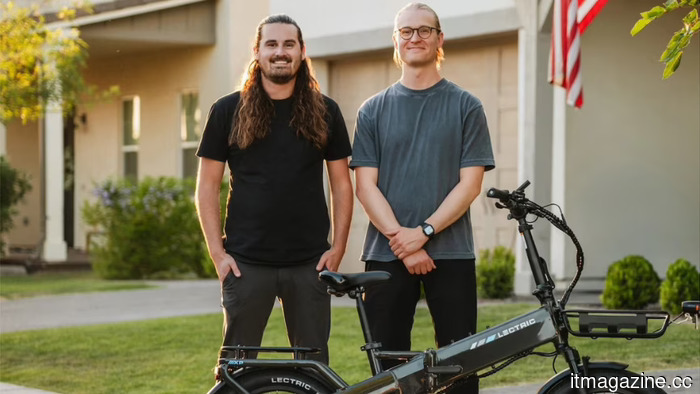 Lectric flourishes as venture capital-backed e-bike competitors face bankruptcy.
Lectric eBikes sold 30,000 bikes in the previous month and introduced three new brands, all without relying on venture capital, while Rad Power and VanMoof faced collapse despite having raised hundreds of millions.
Lectric flourishes as venture capital-backed e-bike competitors face bankruptcy.
Lectric eBikes sold 30,000 bikes in the previous month and introduced three new brands, all without relying on venture capital, while Rad Power and VanMoof faced collapse despite having raised hundreds of millions.
 The top 10 press release distribution services for 2026.
Transitioning from AI-indexed wire distribution to specialized editorial reviews, these press release services provide genuine publisher placements without the outdated wire costs.
The top 10 press release distribution services for 2026.
Transitioning from AI-indexed wire distribution to specialized editorial reviews, these press release services provide genuine publisher placements without the outdated wire costs.
GM invests $900 million in LMR battery technology to reduce electric vehicle costs.
GM's newly established Battery Cell Development Centre connects laboratory research and development with manufacturing for LMR cells, which may reduce EV battery expenses by $6,000 and be available for trucks by 2028.