
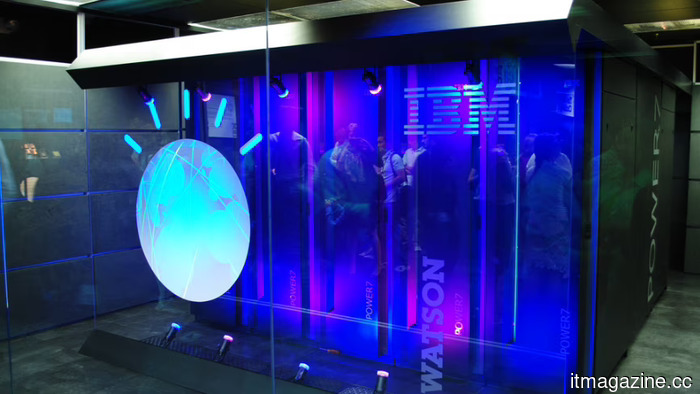
A former executive from IBM's cybersecurity division alleges that the company concealed breaches related to Chinese hacking.
TL;DR: A former vice president of threat intelligence at IBM claims the company concealed breaches by Chinese state hackers from 2013 to 2016 and did not inform federal authorities. The lawsuit is currently in court.
William Barlow, who was IBM's vice president of threat intelligence until August 2019, has accused the company of hiding several data breaches linked to Chinese state-affiliated hackers. In a whistleblower lawsuit made public this week, he asserted that IBM was aware of the breaches but intentionally chose not to inform U.S. officials.
The lawsuit was initially filed confidentially in 2020 and focuses on a hacking operation by APT 10, a group connected to the Chinese government, whose members were indicted in 2018. Christopher Wray, the then-FBI Director, remarked that the group's targets represented a "Who’s Who" of the global economy.
Barlow claimed that an internal investigation at IBM identified over 56,000 possible intrusions by APT 10 from 2013 to 2016, indicating a significant breach. An internal report referenced in the lawsuit revealed that hackers accessed nearly 400 compromised accounts and almost 200 systems across various IBM business segments.
The breaches affected 18 countries and multiple IBM products, with hackers also penetrating data IBM held in collaboration with AT&T, which is mentioned in the lawsuit.
In March 2017, intelligence representatives from the Five Eyes alliance alerted IBM to the breach, leading to an internal probe. However, IBM was unable to fully determine the extent of the damage due to a lack of logging regarding network access—a fundamental security measure.
Despite these findings, it is alleged that IBM did not report the breaches to relevant authorities. This concealment is notably concerning given that the U.S. government is one of its largest clients and IBM serves as a key cybersecurity provider for federal departments.
Barlow described IBM's core network infrastructure as "archaic," allowing hackers to "roam almost anywhere undetected."
The breaches also impacted areas beyond IBM's main network. Barlow alleged that Trusteer, a cybersecurity firm acquired by IBM in 2013, was breached in 2018, and that Truven, a healthcare data company IBM purchased in 2016 for $2.6 billion, experienced multiple breaches after the acquisition.
In both instances, he accused IBM of inadequate investigation and failure to disclose the breaches.
IBM's spokesperson Miki Carver chose not to respond to specific inquiries but stated to TechCrunch, "This complaint was filed six years ago, and the U.S. Department of Justice declined to intervene. IBM is confident that our actions followed the letter of the law."
The DOJ's decision not to intervene does not conclude the case. A federal judge in New York has ordered the lawsuit to be unsealed. Barlow's attorney, Jason Brown, expressed to TechCrunch that his firm is "looking forward to aggressively litigating the matter," adding, "You can’t sell cybersecurity to the federal government while allegedly having these security problems within your own company."
The case highlights an ongoing issue in corporate cybersecurity: breaches that go unreported. For example, Uber paid $148 million in 2018 after concealing a breach from 2016 that affected 57 million users, and the United Nations faced backlash for hiding a breach of its Geneva and Vienna offices.
In response to the alleged breaches at IBM, new SEC regulations now require public companies to disclose significant cybersecurity incidents within four business days, though enforcement of these rules remains inconsistent.
Other articles
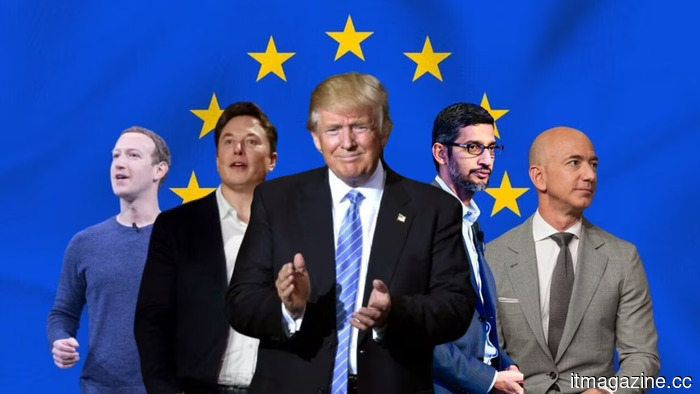 Trump considers a public share in OpenAI, valued at $850 billion, while Sanders advocates for a 50% share.
Trump is set to meet with AI companies regarding a proposal to provide Americans with equity in firms such as the $850 billion OpenAI. He has already invested in Intel and IBM. Sanders is advocating for a 50% share. Currently, there is no legal framework in place for this.
An AI agent discovered 21 zero-day vulnerabilities in FFmpeg for $1,000. Chrome recently addressed a historic total of 429 bugs.
An autonomous AI agent from a startup discovered 21 zero-day vulnerabilities in FFmpeg for about $1,000. In contrast, Chrome 149 addressed an unprecedented 429 vulnerabilities in one release.
Trump considers a public share in OpenAI, valued at $850 billion, while Sanders advocates for a 50% share.
Trump is set to meet with AI companies regarding a proposal to provide Americans with equity in firms such as the $850 billion OpenAI. He has already invested in Intel and IBM. Sanders is advocating for a 50% share. Currently, there is no legal framework in place for this.
An AI agent discovered 21 zero-day vulnerabilities in FFmpeg for $1,000. Chrome recently addressed a historic total of 429 bugs.
An autonomous AI agent from a startup discovered 21 zero-day vulnerabilities in FFmpeg for about $1,000. In contrast, Chrome 149 addressed an unprecedented 429 vulnerabilities in one release.
 Google will pay SpaceX $920 million per month for AI computing services.
Google is set to pay SpaceX $920 million each month for 110,000 Nvidia GPUs until 2029, marking the second significant computing agreement prior to SpaceX's unprecedented $75 billion IPO with a valuation of $1.75 trillion.
Google will pay SpaceX $920 million per month for AI computing services.
Google is set to pay SpaceX $920 million each month for 110,000 Nvidia GPUs until 2029, marking the second significant computing agreement prior to SpaceX's unprecedented $75 billion IPO with a valuation of $1.75 trillion.
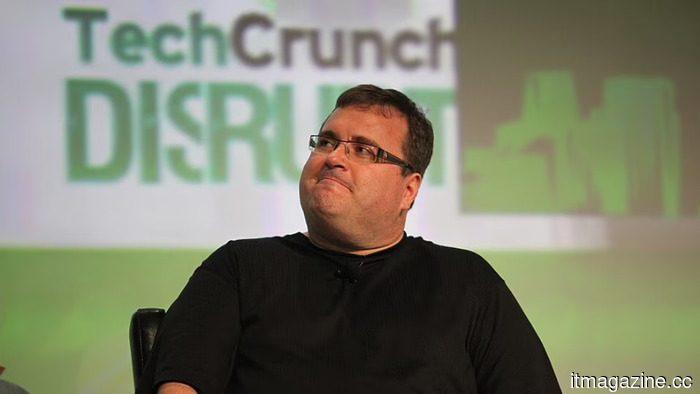 Reid Hoffman steps down from the Microsoft board to enter 'founder mode' with the AI drug company Manus.
Reid Hoffman, co-founder of LinkedIn, is resigning from Microsoft's board after almost ten years in order to concentrate on Manus, his AI-driven drug discovery startup.
Reid Hoffman steps down from the Microsoft board to enter 'founder mode' with the AI drug company Manus.
Reid Hoffman, co-founder of LinkedIn, is resigning from Microsoft's board after almost ten years in order to concentrate on Manus, his AI-driven drug discovery startup.
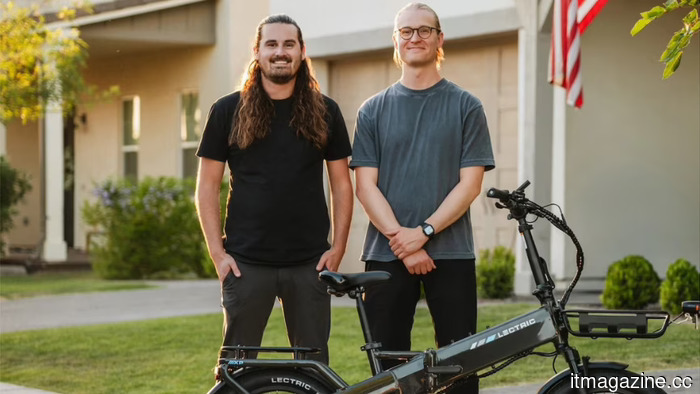 Lectric flourishes as venture capital-backed e-bike competitors face bankruptcy.
Lectric eBikes sold 30,000 bikes in the previous month and introduced three new brands, all without relying on venture capital, while Rad Power and VanMoof faced collapse despite having raised hundreds of millions.
Lectric flourishes as venture capital-backed e-bike competitors face bankruptcy.
Lectric eBikes sold 30,000 bikes in the previous month and introduced three new brands, all without relying on venture capital, while Rad Power and VanMoof faced collapse despite having raised hundreds of millions.
 GM invests $900 million in LMR battery technology to reduce electric vehicle costs.
GM's newly established Battery Cell Development Centre connects laboratory research and development with manufacturing for LMR cells, which may reduce EV battery expenses by $6,000 and be available for trucks by 2028.
GM invests $900 million in LMR battery technology to reduce electric vehicle costs.
GM's newly established Battery Cell Development Centre connects laboratory research and development with manufacturing for LMR cells, which may reduce EV battery expenses by $6,000 and be available for trucks by 2028.
A former executive from IBM's cybersecurity division alleges that the company concealed breaches related to Chinese hacking.
A whistleblower lawsuit claims that IBM hid incidents of breaches by Chinese hackers, who attacked its network over 56,000 times, and failed to inform the US government.