

Google will pay SpaceX $920 million per month for AI computing services.
**TL;DR** Google will pay SpaceX $920 million monthly for access to 110,000 Nvidia GPUs through mid-2029, marking SpaceX's second substantial compute agreement ahead of its anticipated $75 billion IPO. Google labeled this arrangement as a bridge capacity to meet rising Gemini Enterprise demand.
SpaceX has secured its second significant compute agreement in a month, this time with Google. According to a regulatory disclosure made on Friday, Google will pay SpaceX $920 million per month from October 2026 until June 2029 for approximately 110,000 Nvidia GPUs, CPUs, memory, and associated components. This contract amounts to an estimated total of around $30 billion over its duration.
The deal comes just one week before SpaceX's stock is expected to be traded on Nasdaq. The company is looking to raise about $75 billion with a valuation of approximately $1.75 trillion, which would set the record for the largest IPO to date.
**The Second Colossus Agreement**
The agreement mirrors the one SpaceX made with Anthropic in late May, where Anthropic committed to pay $1.25 billion monthly through 2029 for the full output of Colossus 1, the Memphis data center initially created by xAI for its chatbot, Grok, prior to the AI firm's merger with SpaceX in February.
Google's deal covers around half of the compute capacity that Anthropic has at Colossus 1. SpaceX has not specified which data center Google will utilize, though CEO Elon Musk has suggested that the Colossus 2 facility would be dedicated to xAI’s projects.
Both agreements include 90-day cancellation terms post-December 31, 2026. Google's access will increase through September at a reduced rate. Should SpaceX fail to provide the agreed GPU capacity by September 30, 2026, Google can terminate immediately after a one-month grace period or accept whatever hardware is available at a proportionately reduced cost.
**Why Google Needs This**
This deal is noteworthy because Google does not lack computing resources. It is often cited as the world's largest single owner of AI computing power, largely due to its custom TPU chips. The company has already allocated over $180 billion for capital expenditures this year and anticipates that amount to "significantly increase" in 2027. Alphabet has recently announced an $80 billion equity sale to support this spending.
A Google spokesperson described the SpaceX arrangement as a short-term measure. “This is a timely agreement to ensure we have bridge capacity to meet surging customer demand for our agent platform, Gemini Enterprise, which has exceeded our expectations,” the company stated.
This indicates that Gemini Enterprise is using GPU resources at a faster rate than Google's own data center expansion can accommodate. For a company investing $180 billion annually in infrastructure, needing to lease Nvidia GPUs from a rocket firm represents a notable acknowledgment of demand exceeding supply.
**From Rockets to Revenue**
For SpaceX, these compute agreements are turning a prior cost center into a revenue source. xAI developed Colossus to train Grok, but reported usage of the chatbot has decreased. Instead of letting the GPUs remain unused, SpaceX is renting them to two companies with urgent computing needs: Anthropic, which faced significant capacity constraints before the deal, and Google, which is expanding its own infrastructure but cannot keep pace.
With the agreements with Anthropic and Google, SpaceX is now generating roughly $2.17 billion monthly in compute revenue, equating to about $26 billion annually. This figure will be a focal point in the IPO prospectus. Google is also a long-term investor in SpaceX, with a stake expected to exceed $100 billion post-listing. Furthermore, the companies are reportedly discussing plans to construct orbital data centers, a key aspect of SpaceX’s goals following its IPO.
The overall scenario is striking: the world’s leading search engine is renting Nvidia GPUs from the world’s largest rocket enterprise due to a demand for AI computing that has surpassed even the most rapid infrastructure expansions. Whether this demand is sustainable or represents the peak of a cycle that will eventually adjust remains a question concerning SpaceX’s $1.75 trillion valuation.
Other articles
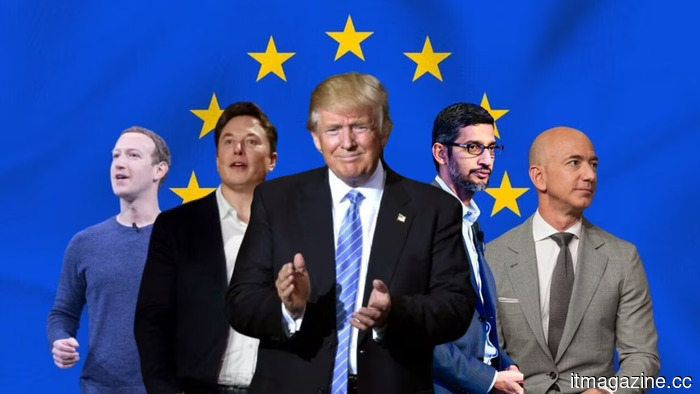 Trump considers a public share in OpenAI, valued at $850 billion, while Sanders advocates for a 50% share.
Trump is set to meet with AI companies regarding a proposal to provide Americans with equity in firms such as the $850 billion OpenAI. He has already invested in Intel and IBM. Sanders is advocating for a 50% share. Currently, there is no legal framework in place for this.
Trump considers a public share in OpenAI, valued at $850 billion, while Sanders advocates for a 50% share.
Trump is set to meet with AI companies regarding a proposal to provide Americans with equity in firms such as the $850 billion OpenAI. He has already invested in Intel and IBM. Sanders is advocating for a 50% share. Currently, there is no legal framework in place for this.
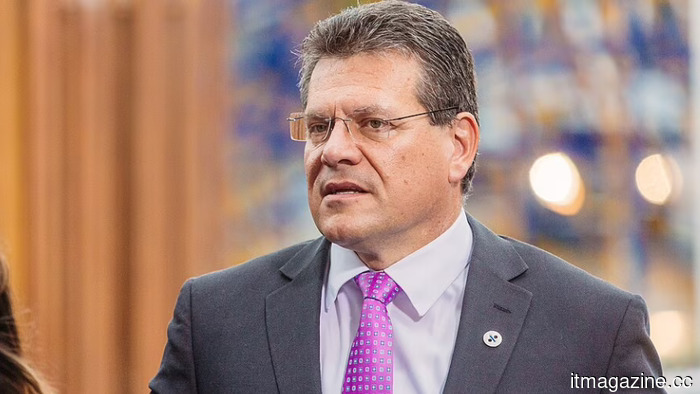 The EU trade commissioner is advocating for a new mechanism to reduce Europe’s reliance on Chinese semiconductors and rare earth minerals.
Maroš Šefčovič advocated for a "diversification instrument" based on the Energy Union to reduce industry reliance on single suppliers in critical sectors.
The EU trade commissioner is advocating for a new mechanism to reduce Europe’s reliance on Chinese semiconductors and rare earth minerals.
Maroš Šefčovič advocated for a "diversification instrument" based on the Energy Union to reduce industry reliance on single suppliers in critical sectors.
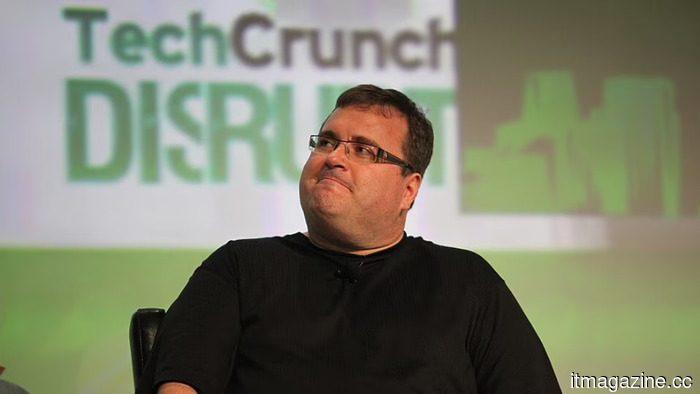 Reid Hoffman steps down from the Microsoft board to enter 'founder mode' with the AI drug company Manus.
Reid Hoffman, co-founder of LinkedIn, is resigning from Microsoft's board after almost ten years in order to concentrate on Manus, his AI-driven drug discovery startup.
Reid Hoffman steps down from the Microsoft board to enter 'founder mode' with the AI drug company Manus.
Reid Hoffman, co-founder of LinkedIn, is resigning from Microsoft's board after almost ten years in order to concentrate on Manus, his AI-driven drug discovery startup.
 Google will pay SpaceX $920 million per month for AI computing resources.
Google is set to pay SpaceX $920 million each month for 110,000 Nvidia GPUs until 2029, marking the second significant computing agreement prior to SpaceX's anticipated record $75 billion IPO, which is valued at $1.75 trillion.
Google will pay SpaceX $920 million per month for AI computing resources.
Google is set to pay SpaceX $920 million each month for 110,000 Nvidia GPUs until 2029, marking the second significant computing agreement prior to SpaceX's anticipated record $75 billion IPO, which is valued at $1.75 trillion.
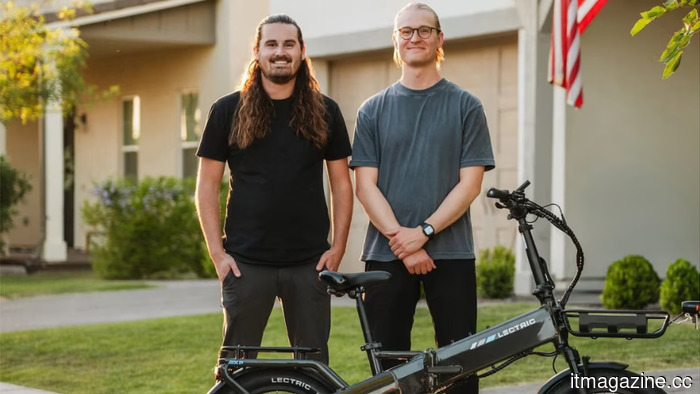 Lectric excels as venture capital-backed e-bike competitors face bankruptcy.
Last month, Lectric eBikes sold 30,000 bicycles and introduced three new brands, all without relying on venture capital, while Rad Power and VanMoof failed after securing hundreds of millions in funding.
Lectric excels as venture capital-backed e-bike competitors face bankruptcy.
Last month, Lectric eBikes sold 30,000 bicycles and introduced three new brands, all without relying on venture capital, while Rad Power and VanMoof failed after securing hundreds of millions in funding.
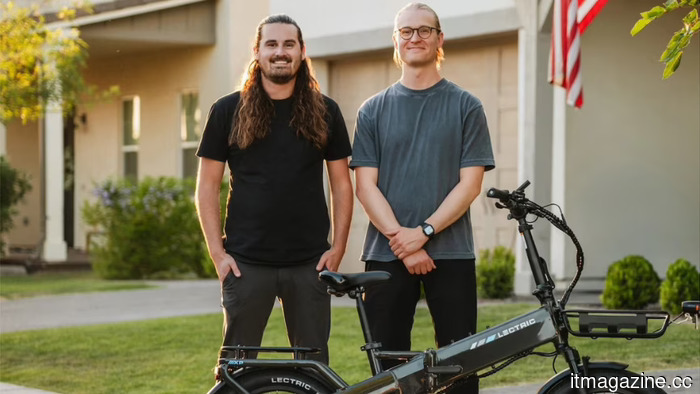 Lectric flourishes as venture capital-backed e-bike competitors face bankruptcy.
Lectric eBikes sold 30,000 bikes in the previous month and introduced three new brands, all without relying on venture capital, while Rad Power and VanMoof faced collapse despite having raised hundreds of millions.
Lectric flourishes as venture capital-backed e-bike competitors face bankruptcy.
Lectric eBikes sold 30,000 bikes in the previous month and introduced three new brands, all without relying on venture capital, while Rad Power and VanMoof faced collapse despite having raised hundreds of millions.
Google will pay SpaceX $920 million per month for AI computing services.
Google is set to pay SpaceX $920 million each month for 110,000 Nvidia GPUs until 2029, marking the second significant computing agreement prior to SpaceX's unprecedented $75 billion IPO with a valuation of $1.75 trillion.