
GM invests $900 million in LMR battery technology to reduce EV expenses.
TL;DRGM has established a 500,000-square-foot Battery Cell Development Centre to connect research and development with production for its new LMR battery chemistry. If successful, LMR could reduce EV battery costs by $6,000 per vehicle and be available in trucks by 2028.
Tucked away in the General Motors’ Warren Tech Center near Detroit are two unremarkable off-white buildings that represent the company’s most significant investment in recent years. The new Battery Cell Development Centre, covering 500,000 square feet, is central to GM’s strategy to launch a new generation of more affordable EV batteries a year earlier than originally planned.
The battery chemistry at the forefront is LMR, or lithium-manganese-rich. GM asserts it is nearly as energy-dense as the nickel-manganese-cobalt (NMC) cells utilized in its current EV lineup but at a cost similar to the lithium-iron-phosphate (LFP) cells found in economy models like the Chevrolet Bolt. In vehicles like the Silverado EV, GM claims LMR would maintain most of the 400-plus mile range while reducing battery costs by at least $6,000. This would make the price of a mid-range model comparable to that of a gas-powered equivalent.
The need for new chemistry
GM’s electric vehicle rollout has been uneven. Last year, the automaker incurred a $1.6 billion charge as it adjusted production capacity, laid off numerous employees, and reportedly postponed the update of its full-size electric trucks and SUVs. The overall US EV market has weakened, with at least a dozen EV models set to be discontinued by 2026 as tariffs and the end of federal tax credits alter the landscape.
The core issue is cost. GM invested heavily in NMC chemistry for its Ultium platform, but rising materials costs and China's dominance in crucial minerals have kept EV prices stubbornly high. While NMC won't vanish, it will be limited to high-end vehicles at GM. LFP is less expensive but offers reduced energy density, limiting range. LMR provides a balanced approach: approximately 35% nickel and 65% manganese, with virtually no cobalt, and reportedly 33% more energy density than LFP at a similar price.
“That is really going to be our bread and butter,” said Kurt Kelty, GM’s vice president of battery and sustainability and a former battery chief at Tesla, in an interview with TechCrunch. “That is going to be our main product line.”
Connecting lab to factory
Developing a battery chemistry is one challenge; manufacturing it in large quantities is another. GM has the Wallace Battery Cell Innovation Centre for small-scale R&D (30 to 50 cells daily) and a 2.8 million-square-foot Ultium gigafactory in Tennessee that produces about 300,000 cells annually. What was lacking was a method to link these two facilities.
The Battery Cell Development Centre addresses this need. Once fully operational, it will generate around 2,500 cells per day, equating to approximately half a gigawatt-hour per year. This facility is significantly larger than the nearby Wallace Centre but still smaller than the Tennessee plant. A test run costs about $200,000, significantly less than at the full-scale factory.
“The BCDC is meant to bridge that gap,” Mo Gallegos, the facility's director, told TechCrunch. The equipment is almost identical to the production line, which should facilitate the transition. “It shouldn’t be as hard of a handoff,” Kelty noted.
Utilizing AI and digital twins
GM is employing AI models and a comprehensive digital twin of the facility to accelerate development timelines. The company has logged over 150 million CPU hours of physics-based simulation for LMR alone, surpassing the total usage of many engine programs throughout their entire development period, according to Radu Theyyunni, GM’s director of global virtual electrification.
The digital twin mirrors the BCDC, including equipment control boards, wiring, and mixing tank blades. Before a TechCrunch reporter visited the building, the team guided him through the virtual model using VR technology. GM has utilized this twin to verify equipment clearances, simulate control systems, and reduce debugging and ramp-up times. The company claims these simulations have saved millions, though it has chosen not to disclose specific figures.
The competitive landscape
GM is in urgent need of speed. Competitors like BYD and CATL are already producing cheaper, competitive cells on a large scale, while the global EV market expanded by 20% last year, even as growth in the US stalled. Numerous automakers are exploring solid-state battery technology as the next significant advancement, with Toyota, Nissan, and BMW all aiming for commercialization by the decade's end.
LMR represents a different strategy. Instead of pursuing the revolutionary chemistry that solid-state technology promises, GM is focusing on developing a cell that offers sufficient energy density and low enough costs to make mass-market EVs competitive
Other articles
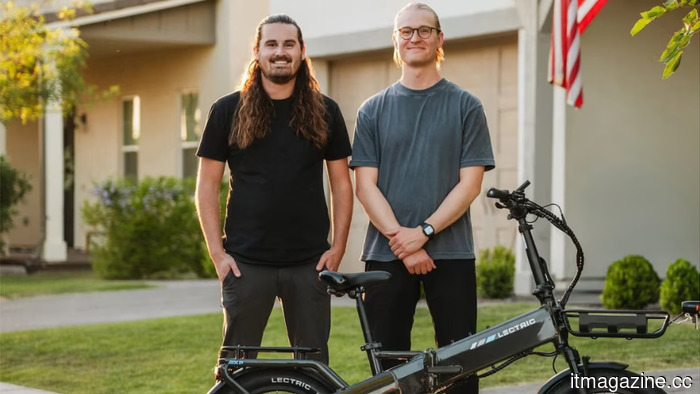 Lectric excels as venture capital-backed e-bike competitors face bankruptcy.
Last month, Lectric eBikes sold 30,000 bicycles and introduced three new brands, all without relying on venture capital, while Rad Power and VanMoof failed after securing hundreds of millions in funding.
Lectric excels as venture capital-backed e-bike competitors face bankruptcy.
Last month, Lectric eBikes sold 30,000 bicycles and introduced three new brands, all without relying on venture capital, while Rad Power and VanMoof failed after securing hundreds of millions in funding.
 Reid Hoffman steps down from the Microsoft board to enter 'founder mode' with the AI drug company Manus.
Reid Hoffman, co-founder of LinkedIn, is resigning from Microsoft's board after almost ten years in order to concentrate on Manus, his AI-driven drug discovery startup.
Reid Hoffman steps down from the Microsoft board to enter 'founder mode' with the AI drug company Manus.
Reid Hoffman, co-founder of LinkedIn, is resigning from Microsoft's board after almost ten years in order to concentrate on Manus, his AI-driven drug discovery startup.
 GM invests $900 million in LMR battery technology to reduce electric vehicle costs.
GM's newly established Battery Cell Development Centre connects laboratory research and development with manufacturing for LMR cells, which may reduce EV battery expenses by $6,000 and be available for trucks by 2028.
GM invests $900 million in LMR battery technology to reduce electric vehicle costs.
GM's newly established Battery Cell Development Centre connects laboratory research and development with manufacturing for LMR cells, which may reduce EV battery expenses by $6,000 and be available for trucks by 2028.
 Trump considers a public share in OpenAI, valued at $850 billion, while Sanders advocates for a 50% share.
Trump is set to meet with AI companies regarding a proposal to provide Americans with equity in firms such as the $850 billion OpenAI. He has already invested in Intel and IBM. Sanders is advocating for a 50% share. Currently, there is no legal framework in place for this.
Trump considers a public share in OpenAI, valued at $850 billion, while Sanders advocates for a 50% share.
Trump is set to meet with AI companies regarding a proposal to provide Americans with equity in firms such as the $850 billion OpenAI. He has already invested in Intel and IBM. Sanders is advocating for a 50% share. Currently, there is no legal framework in place for this.
 The top 10 press release distribution services for 2026.
Transitioning from AI-indexed wire distribution to specialized editorial reviews, these press release services provide genuine publisher placements without the outdated wire costs.
The top 10 press release distribution services for 2026.
Transitioning from AI-indexed wire distribution to specialized editorial reviews, these press release services provide genuine publisher placements without the outdated wire costs.
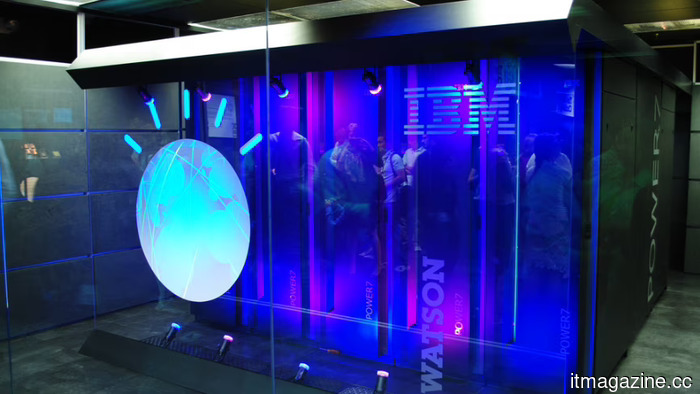 A former executive from IBM's cybersecurity division alleges that the company concealed breaches related to Chinese hacking.
A whistleblower lawsuit claims that IBM hid incidents of breaches by Chinese hackers, who attacked its network over 56,000 times, and failed to inform the US government.
A former executive from IBM's cybersecurity division alleges that the company concealed breaches related to Chinese hacking.
A whistleblower lawsuit claims that IBM hid incidents of breaches by Chinese hackers, who attacked its network over 56,000 times, and failed to inform the US government.
GM invests $900 million in LMR battery technology to reduce EV expenses.
GM's newly established Battery Cell Development Centre connects laboratory research and development with manufacturing for LMR cells, potentially reducing EV battery expenses by $6,000 and making them available for trucks by 2028.