
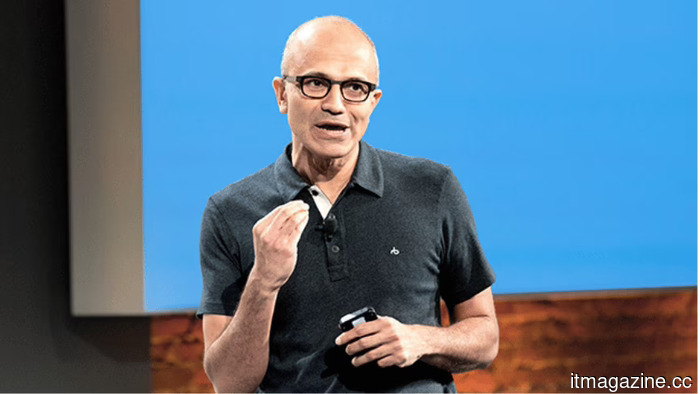
Microsoft excludes a crucial compensation question from employee survey findings.
**Summary**: Microsoft has excluded its longstanding “good deal” compensation question from the primary findings of its latest employee survey, prompting scrutiny from workers on internal forums. Many employees expressed concern about the disconnect between positive survey results and widespread discontent within the company.
For years, a specific question in Microsoft’s internal employee survey acted as a dependable indicator of employee sentiment. It inquired whether employees felt they were receiving a “good deal at Microsoft,” framed as “a reasonable balance between what I contribute to Microsoft and what I receive in return.” When the scores fell significantly, the company typically responded with notable salary increases.
However, in the latest employee sentiment survey results released by Microsoft, that question was absent from the main report, as was a question regarding trust in executive leadership. Employees raised this issue on an internal message board, as reported by Business Insider, with some demanding clarity about the removal.
“Can you please clarify if the question has been eliminated and the reasons behind it?” one employee queried, receiving over 200 reactions. Another responded humorously with a meme referencing A Few Good Men: “You can’t handle the truth!”
**Official Response**: A Microsoft employee, identified as the “Head of Employee Listening,” clarified on the internal forum that the questions had not been removed but were simply posed in different surveys directed at smaller employee groups “to cover more topics without lengthening the surveys,” a statement corroborated by Microsoft.
This explanation has not been well-received. Historically, the “good deal” question has been a prominent metric. Moving it to a subset survey, regardless of methodological justification, obscures a critical figure that employees could reference when compensation felt insufficient.
This question has a history. In 2022, following low scores on this metric, Microsoft implemented company-wide salary increases and boosted stock awards. By 2023, however, the situation had changed dramatically: the company froze salaries, laid off 10,000 workers, and shifted its focus toward AI.
**Survey Results**: The broader survey, which included responses from 71% of employees and approximately 265,000 comments, mostly depicted a favorable environment. Employees expressed feeling included in their teams, motivated by their jobs, and in agreement with Microsoft’s culture. The highest-rated statement, receiving a score of 88, was “I prioritise addressing security challenges in my role,” according to HR Grapevine.
Yet, some employees felt the survey results didn’t accurately reflect their experiences. “It seems like employees essentially have zero concerns about the company,” one commenter expressed, which garnered over 70 reactions, “but in every public forum, AMA, petition, etc., thousands of employees are voicing concerns about Microsoft’s contracts with the Israeli military, ICE, US military, and so forth.”
The disparity between survey results and employees’ real experiences is not exclusive to Microsoft. Nonetheless, in a year where the company has offered voluntary retirement to 7% of its US workforce, tightened performance standards, and invested tens of billions in AI, this discrepancy feels particularly poignant.
**The Unanswered Compensation Question**: Under CEO Satya Nadella, Microsoft has invested over $80 billion in AI data centers and computing capacity, spending $37.5 billion in capital expenditures in a single quarter. Nadella has characterized the company’s workforce of over 220,000 as a “massive disadvantage” in the AI competition.
This narrative communicates specific insights to employees regarding their standing in the company's priorities. When the one survey question intended to gauge feelings about fair compensation is no longer visible to the broader workforce, the implications are unmistakable.
Across the tech industry, a similar trend is evident: record profits, extensive AI investments, and a workforce expected to do more amidst uncertainty about their own rewards. Microsoft may still be querying the “good deal” question in some format with a subset of employees, but by omitting it from widely accessible results, the company has effectively addressed the matter.
Other articles
 Uber reduces its HR department by 23% following the appointment of new president Hazelbaker.
Uber has reduced its workforce in the People and Places divisions by 23% under the leadership of new president Jill Hazelbaker. The company has stated that these layoffs are not connected to AI.
Uber reduces its HR department by 23% following the appointment of new president Hazelbaker.
Uber has reduced its workforce in the People and Places divisions by 23% under the leadership of new president Jill Hazelbaker. The company has stated that these layoffs are not connected to AI.
 The widely used Codex npm package misappropriated developer tokens for an entire month.
The codexui-android npm package covertly transmitted OpenAI Codex authentication tokens to an attacker's server for a month, impacting 29,000 downloads each week.
The widely used Codex npm package misappropriated developer tokens for an entire month.
The codexui-android npm package covertly transmitted OpenAI Codex authentication tokens to an attacker's server for a month, impacting 29,000 downloads each week.
 Tesla Solar Panels Are Created to Suit the Energy Needs of Contemporary Homes
Tesla is marketing residential solar as a more intelligent, interconnected home technology experience, featuring sleek solar panels, integrated Powerwall storage, app-based controls, and a simplified installation process tailored for contemporary homes.
Tesla Solar Panels Are Created to Suit the Energy Needs of Contemporary Homes
Tesla is marketing residential solar as a more intelligent, interconnected home technology experience, featuring sleek solar panels, integrated Powerwall storage, app-based controls, and a simplified installation process tailored for contemporary homes.
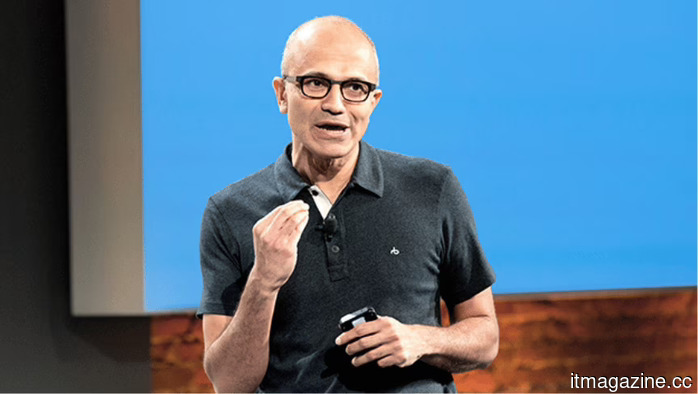 Microsoft excludes crucial compensation inquiries from employee survey findings.
Microsoft removed the question about its "good deal" compensation from the primary survey results. Employees are expressing their concerns on internal forums.
Microsoft excludes crucial compensation inquiries from employee survey findings.
Microsoft removed the question about its "good deal" compensation from the primary survey results. Employees are expressing their concerns on internal forums.
 Under the new president Hazelbaker, Uber has reduced its HR division by 23%.
Uber reduces 23% of its People and Places positions following the appointment of new president Jill Hazelbaker. The company asserts that these layoffs are not connected to AI.
Under the new president Hazelbaker, Uber has reduced its HR division by 23%.
Uber reduces 23% of its People and Places positions following the appointment of new president Jill Hazelbaker. The company asserts that these layoffs are not connected to AI.
 Anthropic selects Morgan Stanley and Goldman Sachs to spearhead its IPO.
Anthropic has chosen Morgan Stanley and Goldman Sachs to assist with its IPO, aiming for an October launch at a valuation of $965 billion. Meanwhile, SpaceX's filing discloses a monthly computing agreement worth $1.25 billion with Anthropic.
Anthropic selects Morgan Stanley and Goldman Sachs to spearhead its IPO.
Anthropic has chosen Morgan Stanley and Goldman Sachs to assist with its IPO, aiming for an October launch at a valuation of $965 billion. Meanwhile, SpaceX's filing discloses a monthly computing agreement worth $1.25 billion with Anthropic.
Microsoft excludes a crucial compensation question from employee survey findings.
Microsoft omitted its "good deal" compensation inquiry from the primary survey results. Employees are expressing their dissatisfaction on internal forums.