
Tesla Solar Panels Are Created to Suit the Energy Needs of Contemporary Homes
How we supply power to our homes has emerged as a crucial topic in consumer technology. This discussion has shifted from a broad, policy-focused approach to a more personal perspective. People are seeking homes that are smarter, better able to withstand outages, less impacted by rising electricity prices, and more capable of independently supporting daily life.
The rising interest in residential solar energy highlights this significant change. What was previously viewed as an environmental choice or a long-term savings strategy is now assessed from a completely different perspective. Reliability is crucial. Ownership ease is important. Aesthetics are significant. Integration with other smart home technologies is even more critical.
Tesla Solar Panels are designed with these expectations in mind, offering the same simplicity, transparency, and seamless integration that consumers associate with modern technology in how a home generates and controls its energy.
Tesla constructs its solar panels to endure whatever weather conditions may arise.
Most solar systems function well under ideal circumstances. However, actual rooftops rarely provide those perfect conditions. Shade changes throughout the day, debris builds up over time, chimneys obstruct sunlight, and weather conditions fluctuate with the seasons.
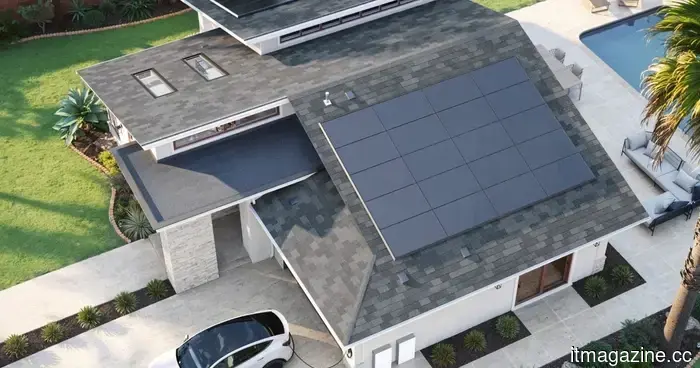
Tesla's solar panels are specifically designed to ensure consistent energy production under real-world scenarios. With three times the power zones of standard systems, shading or debris affects only a smaller area of the panel array, rather than diminishing the entire system's output. For homeowners, this translates to more stable energy generation throughout the day, even in less-than-ideal rooftop conditions.
Consistency is vital as residential solar is increasingly viewed as essential home infrastructure rather than merely an upgrade. Homeowners expect systems that function reliably without the necessity of optimal conditions.
Tesla is incorporating consumer-tech design standards into residential solar.
One of the ongoing critiques of residential solar is not related to performance. Traditional installations often involved bulky rails, elevated panels, and visible hardware that seemed out of place on homes.
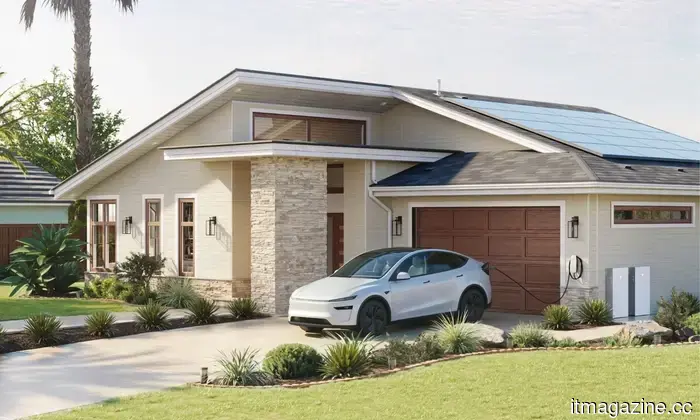
Tesla adopts a more refined method. Its low-profile panels are designed to sit flush with the roofline and feature a sleek all-black appearance that minimizes visual clutter and naturally integrates with contemporary architecture, enhancing rather than detracting from the home's overall look.
This philosophy extends to the installation process. Tesla manages design, permits, installation, and activation directly, providing homeowners with a single point of contact throughout the entire experience instead of needing to coordinate with various contractors.
For many homeowners, this streamlined ownership experience may be as crucial as the technology itself. The adoption of residential solar has stalled not due to disinterest in clean energy but rather because of the complexities traditionally associated with installation and ongoing maintenance.
The dialogue surrounding solar energy is no longer solely focused on reducing electricity expenses.
As homeowners increasingly seek greater control over energy production and usage within their homes, long-term reliability has also become a key consideration, especially for consumers who view solar as a foundational technological investment intended to last for many years.
Tesla Solar Panels come with a 25-year warranty covering both performance and manufacturing defects, emphasizing a focus on long-term ownership rather than just short-term savings.
The larger picture becomes clear when the ecosystem collaborates.
Residential solar is just the beginning. Tesla's comprehensive energy ecosystem combines solar generation, battery storage, home charging, and energy monitoring, all accessible through a single app.
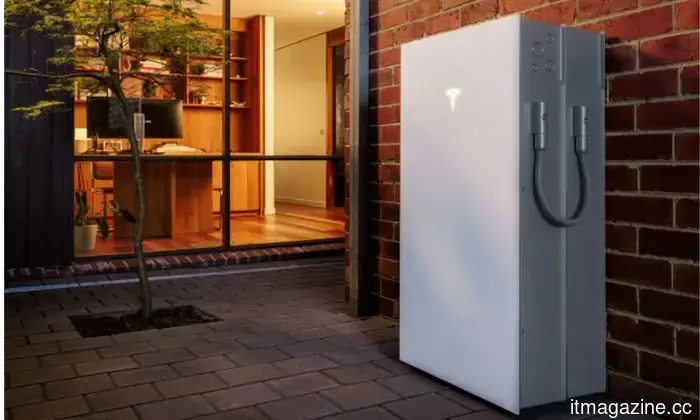
Through the Tesla app, homeowners can oversee solar production, monitor savings, and control their energy consumption from anywhere. Adding a Powerwall home battery further enhances this capability, allowing for the storage of extra solar energy created during the day for use during outages or times of high electricity demand.
For Tesla vehicle owners, this stored energy can also be utilized for home charging. Solar charges it, Powerwall stores it, the app manages it, and the vehicle consumes it. This is where Tesla's approach distinguishes itself from traditional solar providers, functioning less as separate products and more as a cohesive experience centered around convenience, visibility, and long-term control.
Tesla's current Next Million Powerwall Rebate also provides eligible customers with savings of up to $1,000 when pairing solar with Powerwall.
Visit Tesla to learn more about pricing, rebate eligibility, and the complete home energy ecosystem.
This content is sponsored by the indicated brands. Digital Trends collaborates closely with advertisers to showcase their products and services to our readers. While this article is informational and not opinion-based, it has undergone thorough fact-checking by our team to ensure accuracy. Our dedicated partnerships team, not external advertisers, creates all branded content in-house. For additional information on our approach to branded content, click here.
Other articles
 Under the new president Hazelbaker, Uber has reduced its HR division by 23%.
Uber reduces 23% of its People and Places positions following the appointment of new president Jill Hazelbaker. The company asserts that these layoffs are not connected to AI.
Under the new president Hazelbaker, Uber has reduced its HR division by 23%.
Uber reduces 23% of its People and Places positions following the appointment of new president Jill Hazelbaker. The company asserts that these layoffs are not connected to AI.
 Anthropic selects Morgan Stanley and Goldman Sachs to spearhead its IPO.
Anthropic has chosen Morgan Stanley and Goldman Sachs to assist with its IPO, aiming for an October launch at a valuation of $965 billion. Meanwhile, SpaceX's filing discloses a monthly computing agreement worth $1.25 billion with Anthropic.
Anthropic selects Morgan Stanley and Goldman Sachs to spearhead its IPO.
Anthropic has chosen Morgan Stanley and Goldman Sachs to assist with its IPO, aiming for an October launch at a valuation of $965 billion. Meanwhile, SpaceX's filing discloses a monthly computing agreement worth $1.25 billion with Anthropic.
 The widely used Codex npm package misappropriated developer tokens for an entire month.
The codexui-android npm package covertly transmitted OpenAI Codex authentication tokens to an attacker's server for a month, impacting 29,000 downloads each week.
The widely used Codex npm package misappropriated developer tokens for an entire month.
The codexui-android npm package covertly transmitted OpenAI Codex authentication tokens to an attacker's server for a month, impacting 29,000 downloads each week.
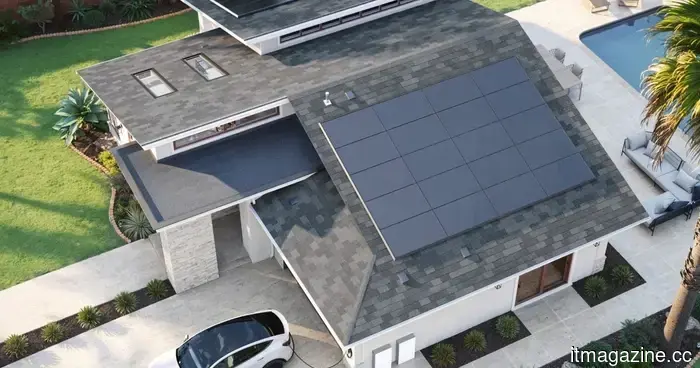 Tesla Solar Panels Are Created to Suit the Energy Needs of Contemporary Homes
Tesla is marketing residential solar as a more intelligent and connected home technology solution, featuring low-profile solar panels, integrated Powerwall storage, app-based management, and a simplified installation procedure tailored for contemporary homes.
Tesla Solar Panels Are Created to Suit the Energy Needs of Contemporary Homes
Tesla is marketing residential solar as a more intelligent and connected home technology solution, featuring low-profile solar panels, integrated Powerwall storage, app-based management, and a simplified installation procedure tailored for contemporary homes.
 Amazon's newest visual search enhancement introduces Lens Live and the Circle feature to your app's Search functionality.
Amazon has introduced eight new visual search functions, which include Lens Live, Circle to Search, Visual Suggestions, and real-time AI-generated images in the search bar, all of which are accessible on both iOS and Android platforms.
Amazon's newest visual search enhancement introduces Lens Live and the Circle feature to your app's Search functionality.
Amazon has introduced eight new visual search functions, which include Lens Live, Circle to Search, Visual Suggestions, and real-time AI-generated images in the search bar, all of which are accessible on both iOS and Android platforms.
 Hackers requested Meta’s AI chatbot to release Instagram accounts, and it complied.
Hackers took control of prominent Instagram accounts by requesting Meta’s AI support chatbot to alter account email addresses without verifying identities. Although Meta claims to have resolved the issue, reports suggest that attacks persisted even after the company's announcement.
Hackers requested Meta’s AI chatbot to release Instagram accounts, and it complied.
Hackers took control of prominent Instagram accounts by requesting Meta’s AI support chatbot to alter account email addresses without verifying identities. Although Meta claims to have resolved the issue, reports suggest that attacks persisted even after the company's announcement.
Tesla Solar Panels Are Created to Suit the Energy Needs of Contemporary Homes
Tesla is marketing residential solar as a more intelligent, interconnected home technology experience, featuring sleek solar panels, integrated Powerwall storage, app-based controls, and a simplified installation process tailored for contemporary homes.