
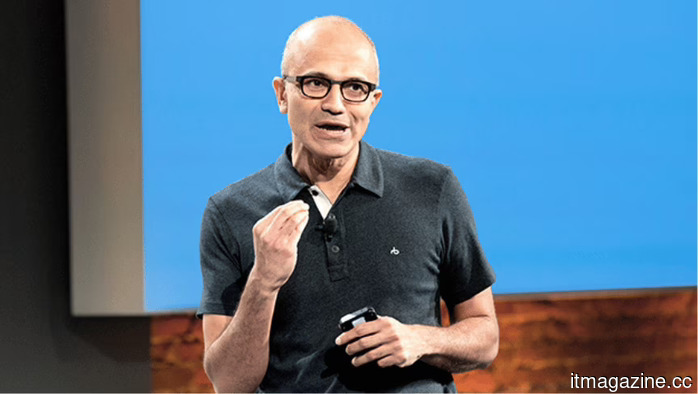
Microsoft excludes crucial compensation inquiries from employee survey findings.
**Summary**: Microsoft has omitted its longstanding "good deal" compensation question from the primary findings of its recent employee survey. Staff are questioning this decision in internal forums, highlighting a disparity between positive survey results and prevalent dissatisfaction among employees.
For years, a specific question in Microsoft's internal employee survey effectively gauged employee sentiment regarding compensation. It asked if employees felt they were receiving a "good deal at Microsoft," which was defined as a fair balance between their contributions and returns. Low scores on this question historically prompted the company to implement substantial pay increases.
When Microsoft published the results of its latest employee surveys, this particular question was absent from the main report, along with a question regarding employee confidence in leadership. Employees expressed their concerns on an internal messaging platform, as reported by Business Insider, which obtained copies of these discussions.
One employee requested clarity regarding the removal of the question, which garnered over 200 supportive reactions. Another humorously referenced the movie A Few Good Men, saying, "You can’t handle the truth!"
**Official Response**: The "Head of Employee Listening" at Microsoft responded on the internal forum, clarifying that the questions had not been eliminated but were being asked in different surveys targeting smaller employee groups to cover more topics without lengthening the surveys, a statement that Microsoft confirmed.
However, this explanation was met with skepticism. The "good deal" question had historically been a key metric for the company. Its absence from the main results diminishes a critical indicator that employees used to assess their compensation satisfaction.
Historically, when scores on this question dropped, Microsoft responded with company-wide salary increases and heightened stock awards. In contrast, by 2023, the company's approach had changed, with salary freezes, job cuts numbering 10,000, and a shift in resources toward AI initiatives.
**Survey Discrepancy**: The broader survey results, representing 71% of employees and around 265,000 comments, appeared predominantly positive. Employees felt included in teams, motivated by their work, and aligned with Microsoft’s culture, with high scores for statements like, "I prioritize addressing security challenges in my role."
Nevertheless, some employees noted that the survey results did not reflect the sentiments expressed in various public forums regarding concerns over Microsoft’s contracts with entities like the Israeli military and ICE.
This disconnect between survey data and actual experiences is not isolated to Microsoft. However, given the company’s recent layoffs and heightened expectations, the disparity is especially pronounced.
**Compensation Concerns**: Under CEO Satya Nadella, Microsoft has invested over $80 billion in AI-related infrastructure and reported substantial capital expenditures. Nadella has characterized the company’s large workforce as a “massive disadvantage” in competing in the AI sector.
This portrayal impacts employee perceptions regarding their value within the company. The removal of the compensation question from the visible survey results sends a clear message about the company's priorities. Across the tech sector, similar trends of high revenues and heavy AI investments coexist with a workforce that is uncertain about their returns for increased demands. While Microsoft may still be querying some employees about feeling compensated, by excluding this question from the visible results, they have effectively answered it.
Other articles
 Alphabet secures a record $85 billion in equity for AI infrastructure.
Alphabet's $85 billion equity sale, which includes $10 billion from Berkshire Hathaway, marks the largest stock offering in history, designated for AI capital expenditures.
Alphabet secures a record $85 billion in equity for AI infrastructure.
Alphabet's $85 billion equity sale, which includes $10 billion from Berkshire Hathaway, marks the largest stock offering in history, designated for AI capital expenditures.
 Microsoft excludes a crucial compensation question from employee survey findings.
Microsoft omitted its "good deal" compensation inquiry from the primary survey results. Employees are expressing their dissatisfaction on internal forums.
Microsoft excludes a crucial compensation question from employee survey findings.
Microsoft omitted its "good deal" compensation inquiry from the primary survey results. Employees are expressing their dissatisfaction on internal forums.
 The widely used Codex npm package misappropriated developer tokens for a duration of one month.
The codexui-android npm package covertly transmitted OpenAI Codex authentication tokens to an attacker's server for an entire month, impacting 29,000 weekly downloads.
The widely used Codex npm package misappropriated developer tokens for a duration of one month.
The codexui-android npm package covertly transmitted OpenAI Codex authentication tokens to an attacker's server for an entire month, impacting 29,000 weekly downloads.
 A vulnerability in GitHub.dev allows attackers to steal OAuth tokens with a single click.
A vulnerability in VS Code on GitHub.dev allows attackers to obtain complete GitHub OAuth tokens through a single malicious link, which could expose all private repositories.
A vulnerability in GitHub.dev allows attackers to steal OAuth tokens with a single click.
A vulnerability in VS Code on GitHub.dev allows attackers to obtain complete GitHub OAuth tokens through a single malicious link, which could expose all private repositories.
 Microsoft excludes important compensation question from employee survey findings.
Microsoft left out its "good deal" compensation question from the main survey findings. Employees are expressing their concerns on internal forums.
Microsoft excludes important compensation question from employee survey findings.
Microsoft left out its "good deal" compensation question from the main survey findings. Employees are expressing their concerns on internal forums.
 Anthropic selects Morgan Stanley and Goldman Sachs to spearhead its IPO.
Anthropic has chosen Morgan Stanley and Goldman Sachs to assist with its IPO, aiming for an October launch at a valuation of $965 billion. Meanwhile, SpaceX's filing discloses a monthly computing agreement worth $1.25 billion with Anthropic.
Anthropic selects Morgan Stanley and Goldman Sachs to spearhead its IPO.
Anthropic has chosen Morgan Stanley and Goldman Sachs to assist with its IPO, aiming for an October launch at a valuation of $965 billion. Meanwhile, SpaceX's filing discloses a monthly computing agreement worth $1.25 billion with Anthropic.
Microsoft excludes crucial compensation inquiries from employee survey findings.
Microsoft removed the question about its "good deal" compensation from the primary survey results. Employees are expressing their concerns on internal forums.