
Gigaton secures $26 million to replace the control software utilized in heavy industry.
A cement kiln is among the most demanding machines in the industrial sector. Operating at temperatures of fourteen hundred degrees, it’s not easily halted, and the software managing its fuel and oxygen mix often predates the engineers responsible for it. Gigaton aims to discard this software and replace it with AI for kiln operation. On June 3, the company secured $26M in funding to scale this initiative.
The Series A funding is led by Plural, alongside 2150, Semapa Next, and existing investors such as Planet A Ventures, Cambridge Enterprise Ventures, the UCL Technology Fund managed by AlbionVC, and the Clean Growth Fund. This funding boosts the total investment in the company to over $35M and will facilitate a fivefold increase in personnel while allowing expansion into sectors like steel, glass, and chemicals.
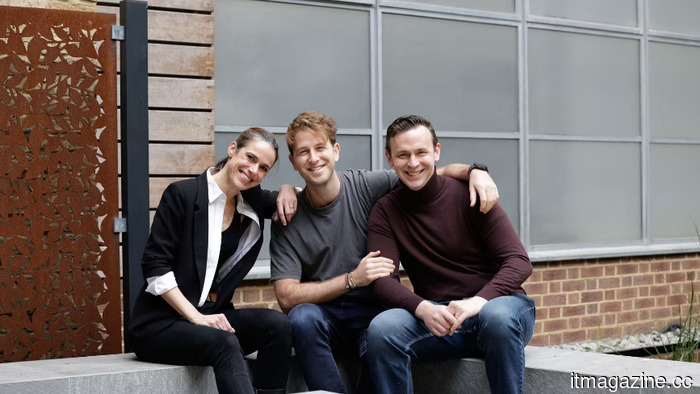
Previously known as Carbon Re, the company rebranded in late May. It emerged in 2020 as the first joint venture between University College London and the University of Cambridge, founded by Daniel Summerbell, Buffy Price, Sherif Elsayed-Ali, and Aidan O’Sullivan. Josh Vernon, who co-founded the Australian fintech company Earnd, took over as CEO in early 2024. The new name reflects a broader ambition: not merely reducing carbon emissions but instead taking control of plant operations.
This differentiation is central to the company’s proposal. Most AI solutions implemented in heavy industry function as an enhancement to existing control systems, providing recommendations that operators can choose to follow or disregard. Gigaton claims to have spent five years analyzing control rooms to understand why traditional systems fail and has designed its technology to supplant the control layer rather than simply advise it.
The company’s software simulates operational behavior, predicts the impact of actions before they are executed, and autonomously modifies parameters like fuel mix, kiln speed, and oxygen levels, continually retraining on real-time plant data as conditions evolve.
The justification for allowing AI to manage the kiln is supported by figures provided by the company. Deployments at Mannok, Adani Cement, Heidelberg Materials, and Holcim reportedly result in annual operational savings ranging from $1M to $3M per plant, along with approximately 30,000 tonnes of CO2 emissions avoided, according to Gigaton, with potential scaling towards $100M or more for larger multi-site customers.
While these are company figures and not independently verified results, and the comparison to the emissions of 11,000 UK households serves as a narrative device, the mentioned customers are substantial entities, and a venture investor has backed these claims.
The competitive challenge the company seeks to address is geographic. China is already constructing “dark factories,” which operate without on-site personnel, and Gigaton positions the rest of the world as lagging behind.
There is significant pressure driving this message. Energy prices have surged, market fluctuations have increased, and the shift toward alternative fuels has complicated plant operations rather than simplifying them.
Kevin Lunney, operations director at Mannok, elaborated on this challenge. Transitioning to solid recovered fuel from coal, he noted, is "genuinely harder to operate," as it varies in calorific value and moisture levels, unlike coal, making it difficult for control room operators to adjust to these new requirements.
This reality highlights the challenges of decarbonizing heavy industry: while the potential carbon and cost savings are substantial, the operational changes are where projects either thrive or stagnate.
A more difficult question arises with any proposal for autonomous control. Trusting software to handle a fourteen-hundred-degree kiln and self-adjust based on live data requires a level of operator confidence that mere recommendation systems do not necessitate, and the consequences of failure can be physical, not solely financial.
Gigaton’s assurance is that operators will clearly understand the rationale behind each action taken. Whether this transparency is sufficient to convince plant managers to relinquish control will be tested in the next phase, which involves multiple sites.
Other articles
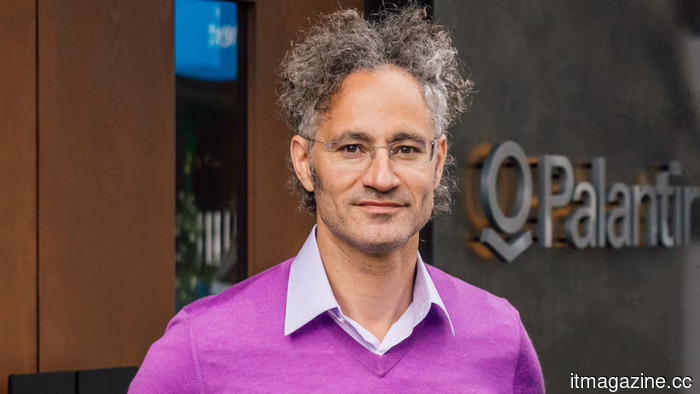 UK committee calls for a termination clause in Palantir's £330M NHS data agreement.
UK MPs have described Palantir’s £330 million ($445 million) NHS contract as an unacceptable reliance and have urged the government to invoke a break clause.
UK committee calls for a termination clause in Palantir's £330M NHS data agreement.
UK MPs have described Palantir’s £330 million ($445 million) NHS contract as an unacceptable reliance and have urged the government to invoke a break clause.
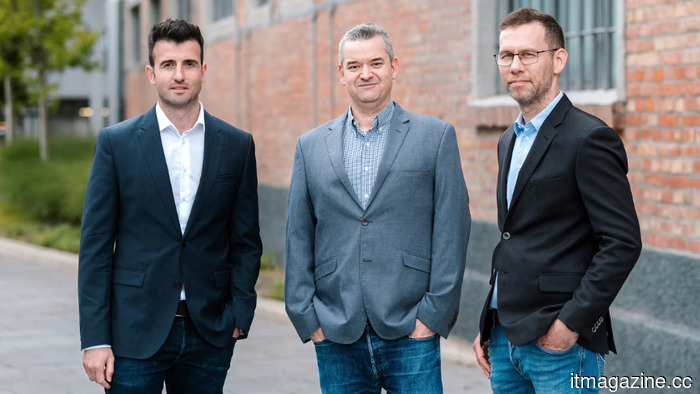 Kodesage secures $6.6 million to bring enterprise legacy software into the AI age, all while keeping it in-house.
Kodesage secured $6.6 million in seed funding, spearheaded by VentureFriends, to update traditional enterprise software using on-premise AI that remains within the customer's environment.
Kodesage secures $6.6 million to bring enterprise legacy software into the AI age, all while keeping it in-house.
Kodesage secured $6.6 million in seed funding, spearheaded by VentureFriends, to update traditional enterprise software using on-premise AI that remains within the customer's environment.
 Allies of Musk support a private-sector version of DOGE as former staff members initiate a Special.
Two ex-DOGE employees have founded Special, a company that acquires businesses to reduce expenses through AI, supported by a16z and associates of Musk, such as Steve Davis.
Megaport secures A$827 million to develop a distributed AI cloud and target the inference market.
Australia's Megaport has obtained four contracts for AI infrastructure valued at A$458.9 million and is seeking to raise A$827.3 million to develop a globally distributed AI inference cloud.
Allies of Musk support a private-sector version of DOGE as former staff members initiate a Special.
Two ex-DOGE employees have founded Special, a company that acquires businesses to reduce expenses through AI, supported by a16z and associates of Musk, such as Steve Davis.
Megaport secures A$827 million to develop a distributed AI cloud and target the inference market.
Australia's Megaport has obtained four contracts for AI infrastructure valued at A$458.9 million and is seeking to raise A$827.3 million to develop a globally distributed AI inference cloud.
 The UK regulator has established new regulations for Google search, which include an option to opt-out of AI training.
The UK's CMA has established new conduct rules for Google search, allowing publishers to opt out of AI training and requiring fair ranking and selection screens.
The UK regulator has established new regulations for Google search, which include an option to opt-out of AI training.
The UK's CMA has established new conduct rules for Google search, allowing publishers to opt out of AI training and requiring fair ranking and selection screens.
Gigaton secures $26 million to replace the control software utilized in heavy industry.
Gigaton, previously known as Carbon Re, secured $26 million in a Series A funding round led by Plural to transform outdated control software in cement and other energy-intensive facilities with self-learning artificial intelligence.