

The UK regulator has established new regulations for Google search, which include an option to opt-out of AI training.
Britain's competition regulator has shifted from consultation to enforcement. On Wednesday, the Competition and Markets Authority (CMA) introduced new conduct requirements for Google’s search services, marking the first specific obligations following its decision to classify the company as having strategic market status.
One notable provision has significant implications for the AI landscape: publishers will now have the option to refuse having their content used to train Google's AI models. Google’s search results increasingly summarize web content instead of directing users to original sources, and these summaries derive from content the company indexes for ranking purposes. Publishers have contended that they are caught in a dilemma: if they deny the crawl, they risk disappearing from search results; if they allow it, they inadvertently support the AI systems that diminish their traffic. The CMA’s new rule aims to alleviate this predicament by enabling sites to appear in search results without giving permission for their content to train AI.
The remaining components of the package focus on structural changes. The CMA's stipulations require fair ranking practices, transparency, proper attribution of content, and mandatory choice screens on Android and Chrome, allowing users to select competing search services instead of being defaulted to Google. The inclusion of choice screens, reminiscent of EU antitrust measures from a decade ago, suggests that the CMA plans to apply effective regulatory tools that have proven successful in other contexts.
What differentiates this situation from a single incident is its legal framework. Under the UK’s Digital Markets, Competition and Consumers regime, the CMA can declare a company as having strategic market status in a digital arena and impose tailored, continuous conduct requirements, rather than addressing each individual case of abuse through litigation.
The CMA confirmed Google’s strategic market status in search in October 2025, initiated a consultation on conduct requirements in January 2026, and has now progressed to enforcement.
This approach contrasts with the American model. While U.S. antitrust actions against Google unfold in court, dealing with remedies on a case-by-case basis over several years, the UK system is regulatory and proactive: a designated firm must comply with an established set of obligations that a regulator can modify. This trade-off is well-known.
The regulatory strategy is swifter and more adaptable; however, it also places considerable discretion in the hands of the regulator, with Brussels often formulating rules before determining the practical aspects of enforcement.
For Google, these requirements come at a time when its search business is already facing challenges from an emerging competitive landscape that antitrust measures were not initially intended to address. AI assistants and chat interfaces are becoming viable alternatives to traditional blue link results, and the CMA’s regulations tacitly recognize that both the competitive landscape and the regulatory issues are now heavily intertwined with AI. The opt-out provision is particularly focused on the control of training data for future interfaces rather than traditional search competition.
Google has repeatedly claimed that its services enhance user experience and that stringent rules could undermine their quality, a stance it will likely maintain in this context. The company has the opportunity to contest specific details, and how compliance is achieved, including the technical execution of the opt-out and the design of choice screens, often determines success or failure in such regulatory frameworks.
What is clear is the trajectory. The UK has established a long-term regulatory relationship with Google’s search division and has now applied it for the first time. The pressing question is whether the AI-training opt-out can function effectively without driving publishers out of search through alternative methods. The CMA has drafted the rule; enforcement details are still being finalized.
Other articles
 Gigaton secures $26 million to replace the control software utilized in heavy industry.
Gigaton, previously known as Carbon Re, secured $26 million in a Series A funding round led by Plural to transform outdated control software in cement and other energy-intensive facilities with self-learning artificial intelligence.
Gigaton secures $26 million to replace the control software utilized in heavy industry.
Gigaton, previously known as Carbon Re, secured $26 million in a Series A funding round led by Plural to transform outdated control software in cement and other energy-intensive facilities with self-learning artificial intelligence.
 Allies of Musk support a private-sector version of DOGE as former staff members initiate a Special.
Two ex-DOGE employees have founded Special, a company that acquires businesses to reduce expenses through AI, supported by a16z and associates of Musk, such as Steve Davis.
Allies of Musk support a private-sector version of DOGE as former staff members initiate a Special.
Two ex-DOGE employees have founded Special, a company that acquires businesses to reduce expenses through AI, supported by a16z and associates of Musk, such as Steve Davis.
 Kodesage secures $6.6 million to bring enterprise legacy software into the AI age, ensuring it remains within the organization.
Kodesage secured $6.6 million in seed funding, led by VentureFriends, to update outdated enterprise software using on-premise AI that remains within the customer's environment.
Megaport secures A$827 million to develop a distributed AI cloud and pursue opportunities in the inference market.
Australia's Megaport has obtained four AI infrastructure contracts totaling A$458.9 million and is raising A$827.3 million to create a globally distributed AI inference cloud.
Kodesage secures $6.6 million to bring enterprise legacy software into the AI age, ensuring it remains within the organization.
Kodesage secured $6.6 million in seed funding, led by VentureFriends, to update outdated enterprise software using on-premise AI that remains within the customer's environment.
Megaport secures A$827 million to develop a distributed AI cloud and pursue opportunities in the inference market.
Australia's Megaport has obtained four AI infrastructure contracts totaling A$458.9 million and is raising A$827.3 million to create a globally distributed AI inference cloud.
 Kodesage secures $6.6 million to bring enterprise legacy software into the AI age, all while keeping it in-house.
Kodesage secured $6.6 million in seed funding, spearheaded by VentureFriends, to update traditional enterprise software using on-premise AI that remains within the customer's environment.
Kodesage secures $6.6 million to bring enterprise legacy software into the AI age, all while keeping it in-house.
Kodesage secured $6.6 million in seed funding, spearheaded by VentureFriends, to update traditional enterprise software using on-premise AI that remains within the customer's environment.
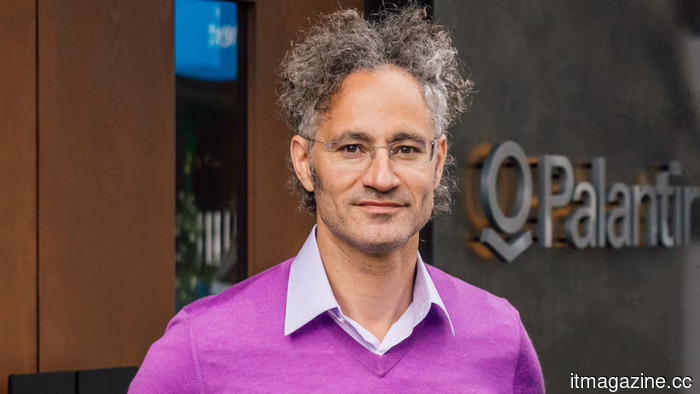 UK committee calls for a termination clause in Palantir's £330M NHS data agreement.
UK MPs have described Palantir’s £330 million ($445 million) NHS contract as an unacceptable reliance and have urged the government to invoke a break clause.
UK committee calls for a termination clause in Palantir's £330M NHS data agreement.
UK MPs have described Palantir’s £330 million ($445 million) NHS contract as an unacceptable reliance and have urged the government to invoke a break clause.
The UK regulator has established new regulations for Google search, which include an option to opt-out of AI training.
The UK's CMA has established new conduct rules for Google search, allowing publishers to opt out of AI training and requiring fair ranking and selection screens.