
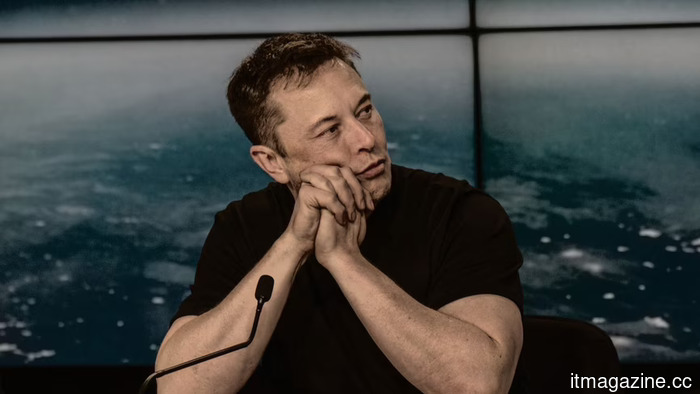
Allies of Musk support a private-sector version of DOGE as former staff members initiate a Special.
The Department of Government Efficiency has been quietly disbanded after a year marked by more controversy than actual savings. Two former staff members believe the concept was valid but that the implementation was flawed.
On Tuesday, they introduced Special, a company that plans to purchase businesses outright and reduce their expenses by implementing artificial intelligence in their operations, applying the DOGE approach to the private sector where numerical data is tangible.
The supporters are noteworthy. According to Bloomberg, Special has secured funding from a group of allies of Elon Musk, which includes Antonio Gracias, founder of Valor Equity Partners, former xAI chief financial officer Anthony Armstrong, and Steve Davis, who acted as Musk’s primary aide at DOGE.
Andreessen Horowitz participated in an investment of an undisclosed amount. Essentially, it represents a reformation of the DOGE network around a commercial entity.
The strategy combines private equity with an AI focus. Instead of merely advising businesses or providing software, Special aims to acquire companies and leverage automation to reduce costs, anticipating that the same strategy that DOGE employed with federal agencies will be more effective when the buyer has control over the business and is accountable to investors rather than voters. Their straightforward rationale is presented clearly: acquire a company, automate its overhead, and maintain the profit margin.
The EU tech scene is buzzing with the latest updates, including insights from our esteemed founder Boris and some dubious AI-generated art. It’s complimentary and delivered weekly to your inbox. Sign up today!
Whether this strategy will be effective in reality remains to be seen, with DOGE serving as a cautionary example that its founders seem to be acknowledging. The government initiative claimed to have saved $160 billion, but one analysis suggested that the cuts ultimately cost taxpayers roughly $135 billion when considering disruption, rehiring, and decreased productivity.
Critics contended that this initiative eroded institutional capacity more swiftly than it eliminated waste. Special’s argument is that the private sector operates differently: a company is a more streamlined entity than government, with costs that are simpler to identify and eliminate, and its incentives are in line with those of the buyer.
There is a plausible aspect to this argument. Many established businesses do exhibit real inefficiencies, and advancements in AI technology mean that automating back-office and operational tasks can genuinely yield savings rather than just be a consultant's dream. Private equity firms have been focused on operational enhancement for many years; integrating effective automation into their strategies is a logical move.
However, there is a less reassuring interpretation reminiscent of DOGE's experience. Cost-cutting portrayed as efficiency can transition into capacity reductions that may look favorable in the short term but incur higher expenses later, and AI-induced layoffs disproportionately affect those removed from their jobs. A private equity structure tends to favor those aspects that manifest quickest in financial results, and the company's origins give critics a clear perspective.
The branding does not mitigate this issue. Naming the firm Special, and employing individuals from a government initiative often seen as having overhyped its results, invites the very scrutiny the founders may wish to evade.
The endorsement from a16z and the support of Musk-related finances lend credibility in Silicon Valley; however, the DOGE connection can act as a drawback as much as an asset.
Currently, Special represents a concept backed by funding and connections but lacks a proven track record. They have the financial resources to begin acquisitions and the contacts to facilitate opportunities. What they have not yet established is a single company that they have effectively improved without causing detriment. This is the challenge that DOGE faced publicly. Special is hoping that the private sector will be more favorable in its evaluation.
Other articles
 UK regulator enforces new regulations on Google search, including an option for AI training opt-out.
The UK's CMA has established new conduct regulations for Google search, allowing publishers to decline participation in AI training and requiring equitable ranking and choice interfaces.
UK regulator enforces new regulations on Google search, including an option for AI training opt-out.
The UK's CMA has established new conduct regulations for Google search, allowing publishers to decline participation in AI training and requiring equitable ranking and choice interfaces.
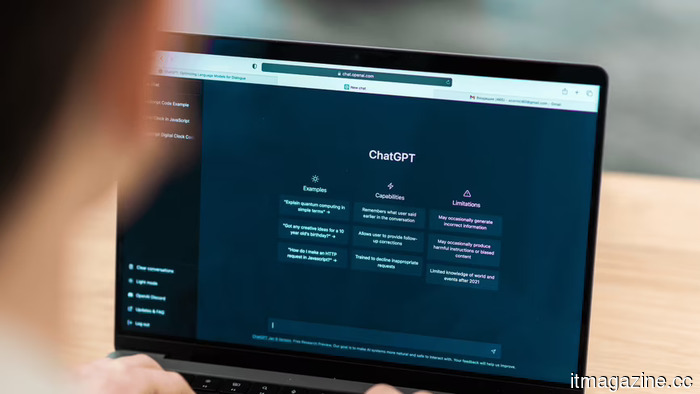 ChatGPT reached 1 billion monthly users more quickly than any other app in history.
According to estimates from Sensor Tower, ChatGPT reached over 1 billion monthly active app users in approximately three years, making it the fastest app to achieve this milestone.
ChatGPT reached 1 billion monthly users more quickly than any other app in history.
According to estimates from Sensor Tower, ChatGPT reached over 1 billion monthly active app users in approximately three years, making it the fastest app to achieve this milestone.
 The UK regulator has established new regulations for Google search, which include an option to opt-out of AI training.
The UK's CMA has established new conduct rules for Google search, allowing publishers to opt out of AI training and requiring fair ranking and selection screens.
The UK regulator has established new regulations for Google search, which include an option to opt-out of AI training.
The UK's CMA has established new conduct rules for Google search, allowing publishers to opt out of AI training and requiring fair ranking and selection screens.
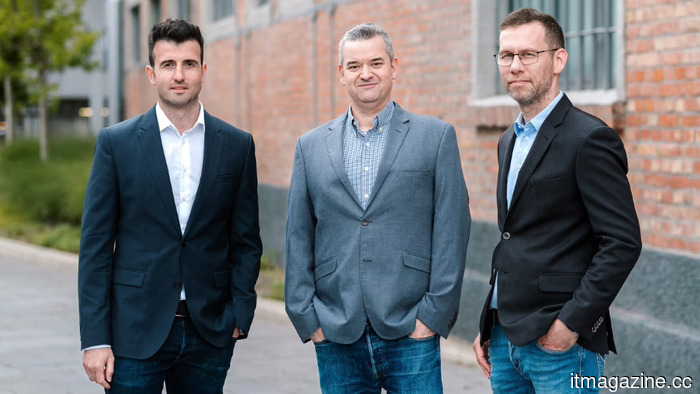 Kodesage secures $6.6 million to bring enterprise legacy software into the AI age, ensuring it remains within the organization.
Kodesage secured $6.6 million in seed funding, led by VentureFriends, to update outdated enterprise software using on-premise AI that remains within the customer's environment.
Kodesage secures $6.6 million to bring enterprise legacy software into the AI age, ensuring it remains within the organization.
Kodesage secured $6.6 million in seed funding, led by VentureFriends, to update outdated enterprise software using on-premise AI that remains within the customer's environment.
 The Anker Solix S2000 can sustain your refrigerator during extended power outages and is now available for purchase.
The Anker SOLIX S2000 is currently priced at $680 and provides up to 35 hours of uninterrupted refrigerator support, features exclusive OptiSave Technology, and has a battery lifespan of 15 years.
The Anker Solix S2000 can sustain your refrigerator during extended power outages and is now available for purchase.
The Anker SOLIX S2000 is currently priced at $680 and provides up to 35 hours of uninterrupted refrigerator support, features exclusive OptiSave Technology, and has a battery lifespan of 15 years.
Allies of Musk support a private-sector version of DOGE as former staff members initiate a Special.
Two ex-DOGE employees have founded Special, a company that acquires businesses to reduce expenses through AI, supported by a16z and associates of Musk, such as Steve Davis.