

Allies of Musk support a private-sector DOGE as former employees initiate Special.
The Department of Government Efficiency has been quietly dissolved after a year marked by more controversy than verified savings. Two former staff members believe the concept was valid, but the execution was flawed.
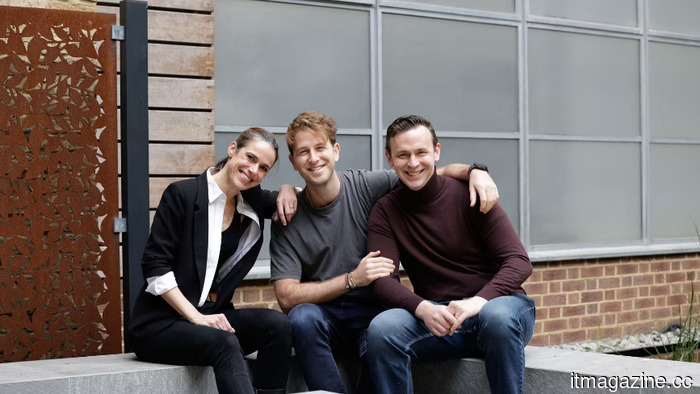
On Tuesday, they launched Special, a firm that plans to acquire companies outright and reduce their costs by implementing artificial intelligence, taking cues from the DOGE model into the private sector, where at least the data are concrete.
The investors are notable. According to Bloomberg, Special has secured funding from a group of allies of Elon Musk, including Antonio Gracias, founder of Valor Equity Partners, Anthony Armstrong, former CFO of xAI, and Steve Davis, who acted as Musk’s unofficial deputy at DOGE.
Andreessen Horowitz led an investment of an undisclosed amount, essentially reforming the DOGE network around a business entity.
The model is based on private equity with an emphasis on AI integration. Instead of merely advising or selling software to companies, Special aims to acquire them and utilize automation to eliminate costs, operating under the belief that the tactics DOGE utilized for federal agencies may prove more effective when the buyer has control over the company and answers to investors, not voters. The premise is straightforward: acquire a company, automate its overhead, and sustain the profit margin.
However, whether this approach will be successful in practice remains uncertain, and DOGE serves as a cautionary example that its founders seem to be countering. While the government initiative claimed to save $160 billion, one analysis revealed that it actually resulted in approximately $135 billion in costs to taxpayers when accounting for disruptions, rehiring, and lost productivity.
Critics contended that the initiative eroded institutional capacity faster than it eliminated waste. Special posits that the private sector differs: a company operates as a cleaner system compared to the government, with costs that can be more easily identified and reduced, and its incentives align more closely with those of the buyer.
There is a reasonable basis for this thesis. Many established companies exhibit real inefficiencies, and AI technologies have advanced to the extent that automating back-office and operational tasks can yield actual savings rather than just being a consultant's dream. Private equity firms have sought operational enhancements for decades; integrating efficient automation into that strategy is a sensible move rather than a reckless gamble.
The more unsettling aspect is reminiscent of the issues DOGE highlighted. Cost-cutting, masquerading as efficiency, can lead to diminished capacity that may appear beneficial in the short term but incurs greater expenses later on, while AI-driven layoffs disproportionately affect those who are automated out of their jobs. A private-equity model naturally leans towards the strategies that yield the quickest financial results, which gives critics an understandable angle to scrutinize.
The branding does not mitigate these concerns. Naming the company Special and employing veterans from a government initiative perceived as having overpromised invites the very examination the founders might want to avoid.
The endorsement from a16z and the investment from Musk’s circle lend credibility within Silicon Valley, but outside of it, the DOGE connection may serve as both a liability and a credential.
At this point, Special represents a concept with funding and a network, but lacks any proven history. It has the financial resources to begin acquisitions and influential names to facilitate introductions. However, it has yet to demonstrate efficiency improvements in any company without negative repercussions. This is the challenge that DOGE faced publicly, and Special is banking on the belief that the private sector will yield better results.
Other articles
 Gigaton secures $26 million to replace the control software utilized in heavy industry.
Gigaton, previously known as Carbon Re, secured $26 million in a Series A funding round led by Plural to transform outdated control software in cement and other energy-intensive facilities with self-learning artificial intelligence.
Megaport secures A$827 million to develop a distributed AI cloud and pursue opportunities in the inference market.
Australia's Megaport has obtained four AI infrastructure contracts totaling A$458.9 million and is raising A$827.3 million to create a globally distributed AI inference cloud.
GitLab plans to reduce its workforce by 14% and withdraw from 22 countries as part of its restructuring in the ‘agentic era.’
GitLab is set to reduce its workforce by approximately 350 employees and withdraw from 22 countries, as announced alongside a first-quarter report revealing a 23% increase in revenue, reaching $264.2 million.
Gigaton secures $26 million to replace the control software utilized in heavy industry.
Gigaton, previously known as Carbon Re, secured $26 million in a Series A funding round led by Plural to transform outdated control software in cement and other energy-intensive facilities with self-learning artificial intelligence.
Megaport secures A$827 million to develop a distributed AI cloud and pursue opportunities in the inference market.
Australia's Megaport has obtained four AI infrastructure contracts totaling A$458.9 million and is raising A$827.3 million to create a globally distributed AI inference cloud.
GitLab plans to reduce its workforce by 14% and withdraw from 22 countries as part of its restructuring in the ‘agentic era.’
GitLab is set to reduce its workforce by approximately 350 employees and withdraw from 22 countries, as announced alongside a first-quarter report revealing a 23% increase in revenue, reaching $264.2 million.
 ChatGPT reached 1 billion monthly users more quickly than any other app in history.
According to estimates from Sensor Tower, ChatGPT reached over 1 billion monthly active app users in approximately three years, making it the fastest app to achieve this milestone.
ChatGPT reached 1 billion monthly users more quickly than any other app in history.
According to estimates from Sensor Tower, ChatGPT reached over 1 billion monthly active app users in approximately three years, making it the fastest app to achieve this milestone.
 The Anker Solix S2000 can sustain your refrigerator during extended power outages and is now available for purchase.
The Anker SOLIX S2000 is currently priced at $680 and provides up to 35 hours of uninterrupted refrigerator support, features exclusive OptiSave Technology, and has a battery lifespan of 15 years.
The Anker Solix S2000 can sustain your refrigerator during extended power outages and is now available for purchase.
The Anker SOLIX S2000 is currently priced at $680 and provides up to 35 hours of uninterrupted refrigerator support, features exclusive OptiSave Technology, and has a battery lifespan of 15 years.
 UK regulator enforces new regulations on Google search, including an option for AI training opt-out.
The UK's CMA has established new conduct regulations for Google search, allowing publishers to decline participation in AI training and requiring equitable ranking and choice interfaces.
UK regulator enforces new regulations on Google search, including an option for AI training opt-out.
The UK's CMA has established new conduct regulations for Google search, allowing publishers to decline participation in AI training and requiring equitable ranking and choice interfaces.
Allies of Musk support a private-sector DOGE as former employees initiate Special.
Two ex-DOGE employees established Special, a company focused on acquiring businesses to reduce expenses through AI, supported by a16z and Musk associates like Steve Davis.