
Kodesage secures $6.6 million to bring enterprise legacy software into the AI age, all while keeping it in-house.
The London and Budapest-based startup is modernizing its AI entirely on-site, targeting banks and insurers that still rely on COBOL and Oracle Forms for their core systems. Often, the most critical software in a bank is the one that few people fully understand anymore. It has been managing essential processes for decades, with the original engineers now retired. Modifying it tends to be slow, costly, and risky, which is why much of it remains unchanged. Kodesage seeks to address this issue and recently secured $6.6 million to pursue its goal.
The seed funding round is led by VentureFriends, with pre-seed leader Portfolion returning, alongside a diverse group of angel investors: Christian Szegedy, a co-founder of Elon Musk's xAI, and footballer Mario Götze, known for scoring the decisive goal in Germany's 2014 World Cup victory. This follows a pre-seed round of about €2.3 million that the company raised in early 2025.
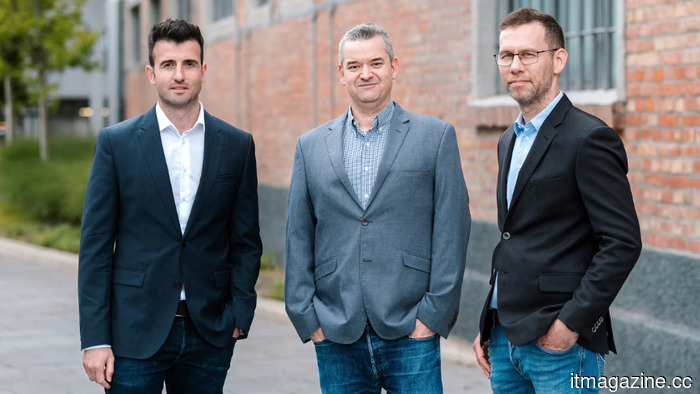
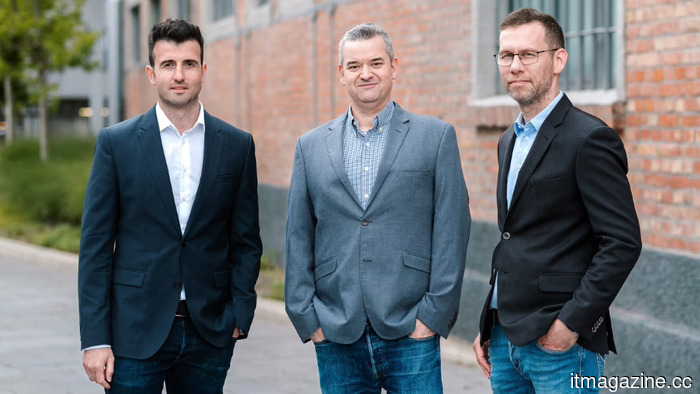
Founded in 2024 by Gergely Dombi, Miklos Szurdi, and Gyorgy Szilagyi, Kodesage's pedigree adds weight to its pitch. Dombi and Szurdi previously established a consultancy with over 300 employees that focused on modernizing legacy systems, encountering consistent obstacles: projects that lasted for years due to the critical knowledge being confined to a few specialists. Szilagyi co-founded Tresorit, the encrypted storage firm acquired by Swiss Post in 2021.
Kodesage's technical challenge is clear but unremarkable. Legacy systems built with COBOL, PL/SQL, PowerBuilder, RPG, or Oracle Forms do not neatly organize their business logic within their source code. Instead, it is embedded in stored procedures, database schemas, and configurations, much of which is undocumented and accumulated over decades.
The platform conducts what Kodesage describes as automated deep discovery of these codebases, extracting hidden logic and transforming it into a living documentation layer comprehensible to both human teams and AI agents. It also enables context-aware code conversion, automated test generation, and AI-supported production assistance.
What sets Kodesage apart is its operational approach. Unlike modern cloud AI coding tools that exist outside the enterprise perimeter, regulated entities that require legacy modernization—such as banks, insurers, energy and transport operators, and public sector organizations—cannot link their core databases to public clouds. The very institutional knowledge that AI would benefit from is the same knowledge that compliance regulations keep inaccessible.
Kodesage’s solution involves functioning entirely within the customer's environment: on premise, within a virtual private cloud, or fully air-gapped if necessary. As a result, source code, schemas, and database content remain under the organization’s control.
This architecture also dissociates costs from per-token cloud pricing, which the company presents as a more predictable option for enterprises cautious about pay-per-use AI expenses. Szilagyi’s experience with Tresorit, a company built on the principle of user data security, is evident in the platform’s design.
Kodesage intends to capitalize on the market for Oracle Forms by offering a dedicated modernization kit tailored to a stack still prevalent in regulated sectors and, as noted by the company, inadequately supported by conventional tools. Kodesage asserts that its migration methodologies, such as transitioning from Oracle Forms to Oracle APEX, can expedite conversions by up to three times and reduce documentation efforts by over 80%.
These are the company's claims and are not independently verified, while the "multi-trillion-dollar drag" attributed to the issue by CEO Gergely Dombi is a broad estimation rather than a quantified assessment.
Dombi's ambitions extend beyond migration. He envisions “self-healing enterprise applications,” where AI agents autonomously prepare, test, and implement fixes while engineers focus on review and approval rather than diagnosis and coding from inception. This vision goes far beyond automated documentation, with the company positioning it as an aspirational goal rather than a current product.
The new funding will support a go-to-market strategy in the United States and Europe, along with additional hiring for engineering and product development. Kodesage is stepping into a competitive field aimed at revitalizing enterprises hindered by outdated software. Its belief is that success will belong to those who can operate within the organizations themselves.
Other articles
 UK regulator enforces new regulations on Google search, including an option for AI training opt-out.
The UK's CMA has established new conduct regulations for Google search, allowing publishers to decline participation in AI training and requiring equitable ranking and choice interfaces.
UK regulator enforces new regulations on Google search, including an option for AI training opt-out.
The UK's CMA has established new conduct regulations for Google search, allowing publishers to decline participation in AI training and requiring equitable ranking and choice interfaces.
 UK committee calls for a termination clause in Palantir's £330M NHS data agreement.
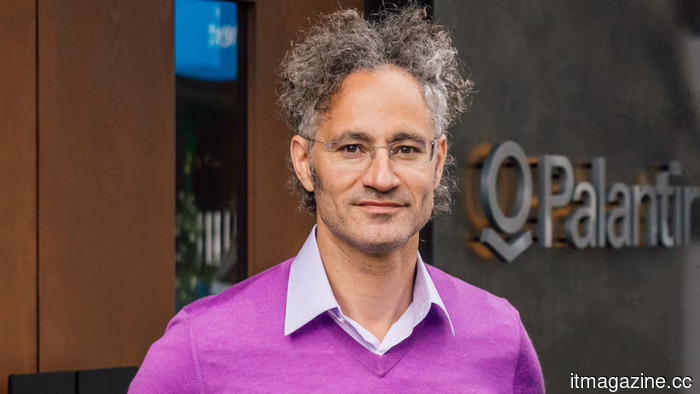
UK MPs have described Palantir’s £330 million ($445 million) NHS contract as an unacceptable reliance and have urged the government to invoke a break clause.
Megaport secures A$827 million to develop a distributed AI cloud and pursue opportunities in the inference market.
Australia's Megaport has obtained four AI infrastructure contracts totaling A$458.9 million and is raising A$827.3 million to create a globally distributed AI inference cloud.
UK committee calls for a termination clause in Palantir's £330M NHS data agreement.
UK MPs have described Palantir’s £330 million ($445 million) NHS contract as an unacceptable reliance and have urged the government to invoke a break clause.
Megaport secures A$827 million to develop a distributed AI cloud and pursue opportunities in the inference market.
Australia's Megaport has obtained four AI infrastructure contracts totaling A$458.9 million and is raising A$827.3 million to create a globally distributed AI inference cloud.
 Gigaton secures $26 million to replace the control software utilized in heavy industry.
Gigaton, previously known as Carbon Re, secured $26 million in a Series A funding round led by Plural to transform outdated control software in cement and other energy-intensive facilities with self-learning artificial intelligence.
Gigaton secures $26 million to replace the control software utilized in heavy industry.
Gigaton, previously known as Carbon Re, secured $26 million in a Series A funding round led by Plural to transform outdated control software in cement and other energy-intensive facilities with self-learning artificial intelligence.
 Kodesage secures $6.6 million to bring enterprise legacy software into the AI age, ensuring it remains within the organization.
Kodesage secured $6.6 million in seed funding, led by VentureFriends, to update outdated enterprise software using on-premise AI that remains within the customer's environment.
Kodesage secures $6.6 million to bring enterprise legacy software into the AI age, ensuring it remains within the organization.
Kodesage secured $6.6 million in seed funding, led by VentureFriends, to update outdated enterprise software using on-premise AI that remains within the customer's environment.
 Allies of Musk support a private-sector DOGE as former employees initiate Special.
Two ex-DOGE employees established Special, a company focused on acquiring businesses to reduce expenses through AI, supported by a16z and Musk associates like Steve Davis.
Allies of Musk support a private-sector DOGE as former employees initiate Special.
Two ex-DOGE employees established Special, a company focused on acquiring businesses to reduce expenses through AI, supported by a16z and Musk associates like Steve Davis.
Kodesage secures $6.6 million to bring enterprise legacy software into the AI age, all while keeping it in-house.
Kodesage secured $6.6 million in seed funding, spearheaded by VentureFriends, to update traditional enterprise software using on-premise AI that remains within the customer's environment.