
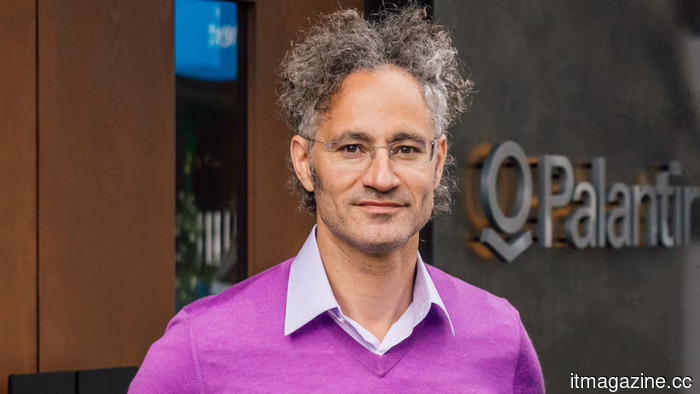
UK committee calls for a termination clause in Palantir's £330M NHS data agreement.
A UK parliamentary committee has termed Palantir's involvement in the public sector as an "unacceptable point of weakness," urging the government to terminate its NHS contract with the American company. The Science, Innovation and Technology Committee specifically highlighted Palantir as the most concerning technology provider, contending that the UK risks becoming overly reliant on a single foreign entity for vital health infrastructure.
Their recommendation is clear: the government should utilize a break clause in the contract to prevent vendor lock-in. This contract pertains to the NHS Federated Data Platform, an AI-based system designed to integrate health data across services in England and aid clinical decision-making. Awarded in 2023 for a span of seven years under the previous Conservative administration, this agreement positions Palantir at the forefront of how the NHS in England handles and utilizes patient data.
The committee's concerns are structural, rather than indicating specific wrongdoing. Their apprehension lies in the concentration of control; entrusting a single company, particularly an American one with ties to defense and intelligence sectors, with the essential linkage of NHS data creates a dependency that could prove difficult to sever and risky to depend upon.
Once a platform like the FDP is integrated into various services, transitioning away from it can be costly and disruptive, which is exactly the scenario the break clause was designed to prevent. This anxiety is not new; The Register reported in April that the UK was already considering the break clause, and Palantir's involvement with the NHS has faced criticism from patient advocacy groups and MPs since the contract signing, especially concerning the extent of identifiable patient data that Palantir's systems can access. The committee’s report crystallizes this ongoing concern into a formal call to action.
Palantir has repeatedly defended its work in the public sector, asserting that its software enhances outcomes and that it operates under the oversight of the contracting authority, not its own initiative. The firm can highlight that the FDP was competitively procured and that no alternative has been demonstrated to perform the task more effectively.
However, this does not alleviate the committee's primary concern, which is about dependence rather than performance: even a system functioning as intended prompts the question of potential issues should one supplier become too integrated to replace.
The decision now rests with the government, which faces a complex choice. Activating the break clause would necessitate dismantling a platform already embedded in NHS operations, incurring its own costs and disruptions. Additionally, the committee’s recommendation is merely that—a suggestion, not an obligatory directive. Ministers must balance the political pressure to lessen reliance on Palantir with the practical implications of replacing it.
This situation exists within a broader European discussion on technological sovereignty, where dependence on US providers for crucial infrastructure—including cloud computing, AI, and health data—has become a persistent concern. Palantir serves as a prominent example in this debate, as health data is among the most sensitive and the NHS is a highly significant institution. What MPs have done is articulate the dependency and prompt the government to determine whether it is prepared to invest in reversing it. The government's response is yet to be determined.
Other articles
 Gigaton secures $26 million to eliminate the control software utilized in heavy industry.
Gigaton, previously known as Carbon Re, secured $26 million in a Series A funding round led by Plural to substitute outdated control software in cement and other energy-intensive facilities with self-learning AI technology.
GitLab will reduce its workforce by 14% and withdraw from 22 countries as part of a restructuring known as the ‘agentic era.’
GitLab plans to reduce its workforce by approximately 350 positions and withdraw from 22 countries, as revealed in its Q1 report, which showed a 23% increase in revenue to $264.2 million.
Gigaton secures $26 million to eliminate the control software utilized in heavy industry.
Gigaton, previously known as Carbon Re, secured $26 million in a Series A funding round led by Plural to substitute outdated control software in cement and other energy-intensive facilities with self-learning AI technology.
GitLab will reduce its workforce by 14% and withdraw from 22 countries as part of a restructuring known as the ‘agentic era.’
GitLab plans to reduce its workforce by approximately 350 positions and withdraw from 22 countries, as revealed in its Q1 report, which showed a 23% increase in revenue to $264.2 million.
 Allies of Musk support a private-sector DOGE as former employees initiate Special.
Two ex-DOGE employees established Special, a company focused on acquiring businesses to reduce expenses through AI, supported by a16z and Musk associates like Steve Davis.
Allies of Musk support a private-sector DOGE as former employees initiate Special.
Two ex-DOGE employees established Special, a company focused on acquiring businesses to reduce expenses through AI, supported by a16z and Musk associates like Steve Davis.
 The Anker Solix S2000 can power your fridge during extended power outages and is now available for purchase.
The Anker SOLIX S2000 is now priced at $680, providing up to 35 hours of uninterrupted refrigerator support, exclusive OptiSave Technology, and a battery lifespan of 15 years.
The Anker Solix S2000 can power your fridge during extended power outages and is now available for purchase.
The Anker SOLIX S2000 is now priced at $680, providing up to 35 hours of uninterrupted refrigerator support, exclusive OptiSave Technology, and a battery lifespan of 15 years.
 Gigaton secures $26 million to replace the control software utilized in heavy industry.
Gigaton, previously known as Carbon Re, secured $26 million in a Series A funding round led by Plural to transform outdated control software in cement and other energy-intensive facilities with self-learning artificial intelligence.
Gigaton secures $26 million to replace the control software utilized in heavy industry.
Gigaton, previously known as Carbon Re, secured $26 million in a Series A funding round led by Plural to transform outdated control software in cement and other energy-intensive facilities with self-learning artificial intelligence.
 The UK regulator has established new regulations for Google search, which include an option to opt-out of AI training.
The UK's CMA has established new conduct rules for Google search, allowing publishers to opt out of AI training and requiring fair ranking and selection screens.
The UK regulator has established new regulations for Google search, which include an option to opt-out of AI training.
The UK's CMA has established new conduct rules for Google search, allowing publishers to opt out of AI training and requiring fair ranking and selection screens.
UK committee calls for a termination clause in Palantir's £330M NHS data agreement.
UK MPs have described Palantir’s £330 million ($445 million) NHS contract as an unacceptable reliance and have urged the government to invoke a break clause.