
Poland implements
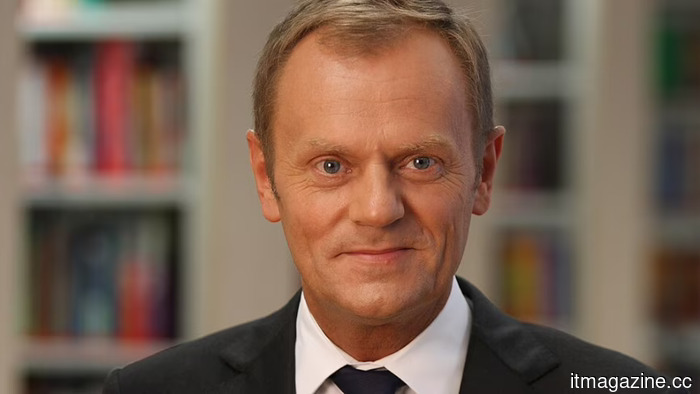
**Summary**: Polish Prime Minister Donald Tusk announced a "sovereignty test" for major government technology acquisitions and annual IT independence reports, emphasizing that Poland’s reliance on foreign digital infrastructure necessitates urgent policy action.
During a speech at the European Financial Congress in Sopot, PM Tusk revealed that Poland will implement a “sovereignty test” for significant technology purchases by the government, highlighting that the nation’s dependence on foreign digital infrastructure has grown to a level that requires a policy response. He also mentioned that Poland would release annual reports detailing its progress towards IT independence, establishing a public accountability framework for this critical issue.
Tusk stated, “The scale of this dependency, particularly regarding the state’s relationship with the digital sphere, has reached a level that requires serious economic, institutional, and organizational decisions.” This announcement aligns Poland with several EU countries that are transforming discussions on tech sovereignty into formal procurement policies.
**Understanding the Sovereignty Test**: While specific details of the test have not been fully shared, it suggests that Poland will assess whether significant government contracts create strategic dependencies on foreign technology providers, especially in areas like AI infrastructure, cloud computing, and telecommunications. Historically, Europe’s approach to technology governance has focused on regulation rather than procurement, but the rise of AI is prompting governments to rethink who controls the infrastructure essential to their citizens and institutions.
Poland has already begun initiatives in this direction. Earlier in the year, the government prohibited the entry of Chinese cars into military facilities due to security concerns. The country is also promoting a higher participation of domestic firms in public contracts, reflecting similar efforts across the EU as member states confront their dependencies on American cloud services and Chinese hardware.
**The European Landscape**: Tusk’s comments come at a time when EU countries are trying to navigate the balance between trade relationships and technology security. Germany and Spain are opposing European Commission proposals to prohibit Chinese tech suppliers from telecommunications networks under new cybersecurity regulations. This interplay between trade policy and technology security is creating divides within the EU, where larger economies with strong commercial ties to China resist restrictions that smaller or security-conscious nations support.
The EU’s own plans for AI infrastructure are currently facing obstacles, with the €20 billion gigafactory initiative encountering delays and funding issues. This gap may lead to more national actions like Poland’s sovereignty test: if the EU cannot present a unified infrastructure strategy, individual member states may establish their own approaches to managing technology dependency.
The urgency around AI adds a dimension that past sovereignty discussions did not address. Europe’s inability to access Anthropic’s Mythos cybersecurity model until recently showed that regulatory authority does not guarantee access to crucial AI technologies. Governments reliant on foreign AI for essential functions—ranging from defense analysis to healthcare—face risks that simple procurement regulations may not mitigate. Efforts in Europe to develop independent AI solutions, such as BNP Paribas and Mistral's cyber-oriented model, are receiving political backing due to these dependency worries.
Poland will hold the rotating presidency of the Council of the EU in the first half of 2025 and is using this role to elevate digital sovereignty on the EU’s agenda. Tusk’s speech in Sopot indicates that Poland aims to set a precedent by enacting domestic procurement reforms while advocating for EU-wide standards. Whether other member states will follow suit will depend on whether they consider technology sovereignty a security necessity or an obstacle to accessing superior resources—an issue that the EU has yet to resolve.
Other articles
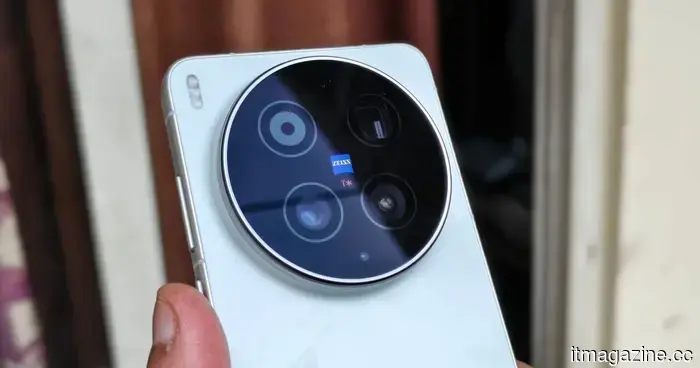 The Vivo X300 Ultra is outshining all other camera phones, and here's the reason.
The Vivo X300 Ultra integrates external lenses, accessories designed for creators, and top-tier camera hardware to bring smartphone photography nearer to the experience of using a professional camera.
The Vivo X300 Ultra is outshining all other camera phones, and here's the reason.
The Vivo X300 Ultra integrates external lenses, accessories designed for creators, and top-tier camera hardware to bring smartphone photography nearer to the experience of using a professional camera.
 EXCLUSIVE: Obsession Star Megan Lawless Discusses Sarah’s Unexpected Destiny, Audience Reactions, and Future Plans
In a unique interview, Obsession star Megan Lawless talks about Sarah's unexpected demise, the film's remarkable success, her camaraderie with Inde Navarrette, and her future plans.
EXCLUSIVE: Obsession Star Megan Lawless Discusses Sarah’s Unexpected Destiny, Audience Reactions, and Future Plans
In a unique interview, Obsession star Megan Lawless talks about Sarah's unexpected demise, the film's remarkable success, her camaraderie with Inde Navarrette, and her future plans.
 OpenAI Codex is extending its reach to enterprises through Sites, plugins, and support for non-developer users.
OpenAI has transformed Codex into an enterprise platform, featuring hosted web applications, 62 business application plugins, and 110 skills. Among the 5 million weekly users, non-developers make up 20% and are growing three times faster.
OpenAI Codex is extending its reach to enterprises through Sites, plugins, and support for non-developer users.
OpenAI has transformed Codex into an enterprise platform, featuring hosted web applications, 62 business application plugins, and 110 skills. Among the 5 million weekly users, non-developers make up 20% and are growing three times faster.
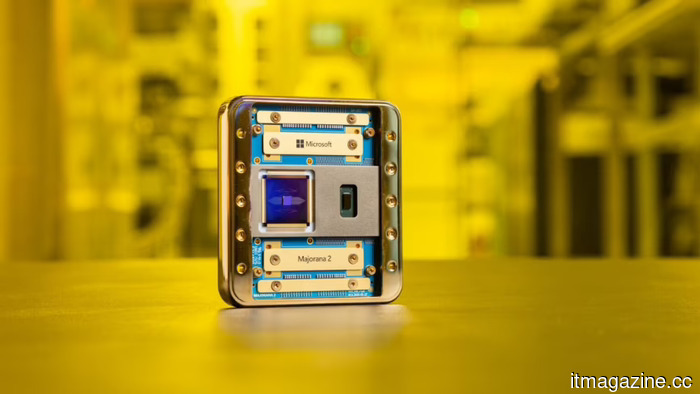 Microsoft's Majorana 2 quantum chip boasts reliability that is 1,000 times greater, with a goal set for 2029.
Microsoft's Majorana 2 qubits can last 20 seconds, compared to microseconds for competitors, and are developed using agentic AI. The company is now aiming to create a scalable quantum computer by 2029.
Microsoft's Majorana 2 quantum chip boasts reliability that is 1,000 times greater, with a goal set for 2029.
Microsoft's Majorana 2 qubits can last 20 seconds, compared to microseconds for competitors, and are developed using agentic AI. The company is now aiming to create a scalable quantum computer by 2029.
 Globally, electric cars are becoming more affordable, with the exception of buyers in the US.
In other parts of the world, electric vehicles became more affordable, but in the US, tax credits were eliminated, resulting in a 45% decline in EV sales in Q4 compared to the previous year.
Globally, electric cars are becoming more affordable, with the exception of buyers in the US.
In other parts of the world, electric vehicles became more affordable, but in the US, tax credits were eliminated, resulting in a 45% decline in EV sales in Q4 compared to the previous year.
Poland implements
The Prime Minister of Poland, Tusk, has declared a sovereignty assessment for the procurement of government technology, along with yearly reports on IT autonomy. He cautioned that reliance on foreign AI poses risks to both security and the economy.