
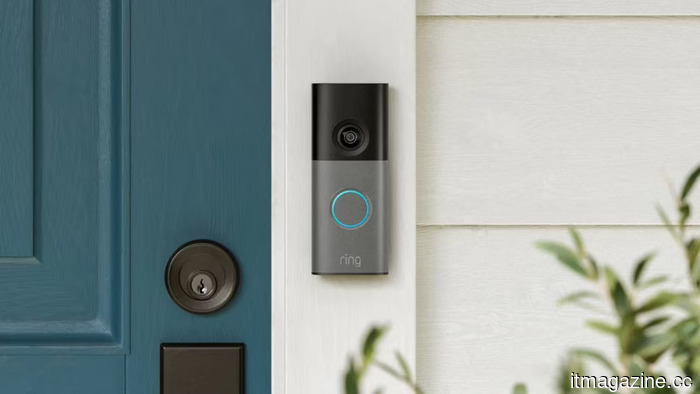
Amazon's Ring faces a lawsuit regarding its Familiar Faces facial-recognition technology.
On Monday, Amazon was sued regarding the facial-recognition feature it has recently added to its Ring doorbells, in a case that highlights a common imbalance: the buyer of the camera gives consent, while the individuals passing by do not.
Charles Sigwalt, a resident of Virginia, filed the proposed class action in federal court in Seattle, claiming that Ring’s “Familiar Faces” feature captures and stores images of people without their consent. According to Reuters, he is seeking at least $5 million in damages on behalf of the class.
Familiar Faces is an optional feature that employs AI to recognize individuals that a camera has seen previously, allowing notifications to specify who is at the door instead of merely indicating that someone is there. Ring launched this feature late last year as part of a broader update to its cameras, enabling users to label recognized individuals while the system collects a limited number of faces over time.
For homeowners who activate the feature, it offers convenience. However, according to the lawsuit, for delivery personnel, neighbors, or strangers passing by, it results in their facial data being captured and stored without their consent, and they have no viable way to opt out of a camera they do not own.
This concern is not new, and Amazon’s actions indicate that it foresaw the potential legal implications. The company has stated that Familiar Faces is unavailable in Illinois and Texas, which have the strictest biometric privacy laws in the U.S.
Illinois’ Biometric Information Privacy Act mandates written consent before a company can capture someone’s facial geometry and permits $1,000 in damages for each negligent violation and $5,000 for each intentional one, making it the costliest law in the country to violate.
Critics suggest that keeping the feature out of these two states appears to be less of a precaution and more of an answer to an unvoiced concern.
The Sigwalt lawsuit is part of an ongoing series of challenges for Ring. The device has faced scrutiny regarding its facial-recognition ambitions for years, along with its data-sharing practices with law enforcement and a 2023 settlement with the U.S. Federal Trade Commission concerning employee access to customer videos.
Amazon, which acquired Ring for about $1 billion in 2018, generally presents the cameras as tools for neighborhood safety, while plaintiffs characterize them as a privately owned surveillance system monitoring public streets.
The next steps are procedural. The court must determine if the case can proceed as a class action, and Amazon has yet to respond to the specific allegations. An earlier biometric lawsuit against Ring survived a motion to dismiss in 2022, which offers a precedent for the new claim, though it does not guarantee a similar outcome. For now, there is a filed complaint, a proposed damages amount, and a feature that continues to scan faces while legal discussions unfold regarding the necessary consent.
Other articles
 Marvell rises after Jensen Huang labels it as the next trillion-dollar company.
Marvell's stock jumped approximately 25% in premarket trading following Nvidia's Jensen Huang's prediction at Computex that it would become the next $1 trillion company.
Marvell rises after Jensen Huang labels it as the next trillion-dollar company.
Marvell's stock jumped approximately 25% in premarket trading following Nvidia's Jensen Huang's prediction at Computex that it would become the next $1 trillion company.
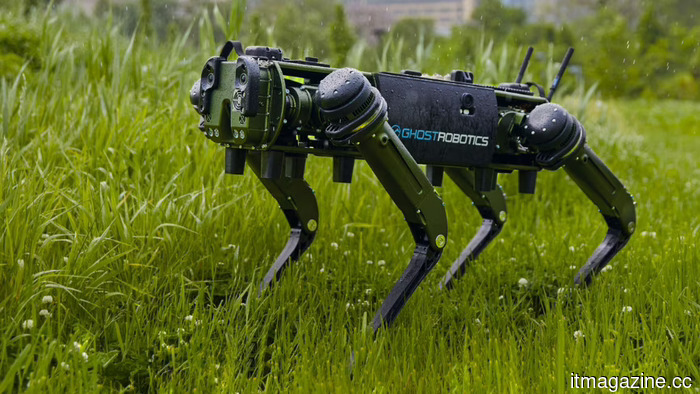 Taiwan unveils robotic patrol dogs that may protect its islands in the South China Sea.
Taiwan's military research institute showcased three Ghost Robotics robotic dogs, one of which is armed, that may eventually be utilized to patrol the Pratas and Itu Aba.
Taiwan unveils robotic patrol dogs that may protect its islands in the South China Sea.
Taiwan's military research institute showcased three Ghost Robotics robotic dogs, one of which is armed, that may eventually be utilized to patrol the Pratas and Itu Aba.
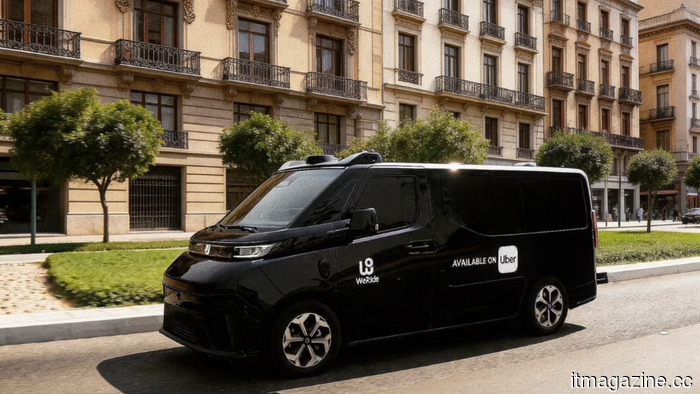 WeRide and Uber expand their robotaxi collaboration to Madrid.
WeRide, Uber, and fleet operator AVOMO are set to launch Madrid’s inaugural commercial robotaxi pilot later this year, initially featuring safety operators.
WeRide and Uber expand their robotaxi collaboration to Madrid.
WeRide, Uber, and fleet operator AVOMO are set to launch Madrid’s inaugural commercial robotaxi pilot later this year, initially featuring safety operators.
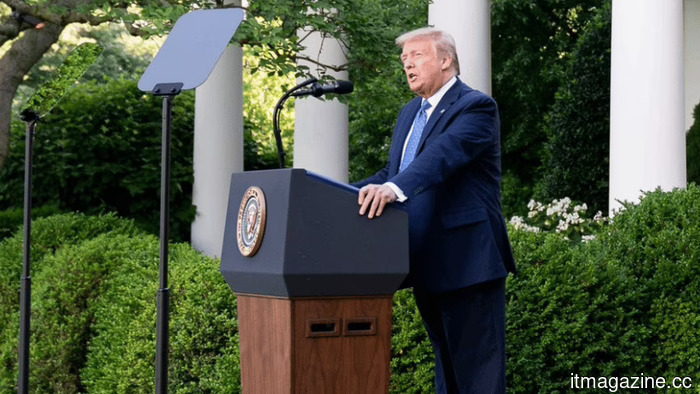 Internal disputes within the White House are hindering the progress of AI regulation in the U.S. following the Mythos incident.
A "knife fight" among Commerce, intelligence agencies, and pro-industry groups has stalled US AI policy, leading to Trump cancelling an executive order and leaving no established framework.
Internal disputes within the White House are hindering the progress of AI regulation in the U.S. following the Mythos incident.
A "knife fight" among Commerce, intelligence agencies, and pro-industry groups has stalled US AI policy, leading to Trump cancelling an executive order and leaving no established framework.
 As Microsoft approaches Build, it faces a challenge with AI integrated throughout its offerings and a dilemma regarding paying customers.
Microsoft kicks off its Build developer conference in San Francisco, aiming to integrate AI further into Windows and Copilot, although adoption remains uncertain.
As Microsoft approaches Build, it faces a challenge with AI integrated throughout its offerings and a dilemma regarding paying customers.
Microsoft kicks off its Build developer conference in San Francisco, aiming to integrate AI further into Windows and Copilot, although adoption remains uncertain.
 As Microsoft approaches Build, it's faced with the challenge of having AI integrated throughout its offerings and dealing with issues related to its paying customers.
Microsoft launches its Build developer conference in San Francisco, anticipated to integrate AI further into Windows and Copilot, while the rate of adoption remains uncertain.
As Microsoft approaches Build, it's faced with the challenge of having AI integrated throughout its offerings and dealing with issues related to its paying customers.
Microsoft launches its Build developer conference in San Francisco, anticipated to integrate AI further into Windows and Copilot, while the rate of adoption remains uncertain.
Amazon's Ring faces a lawsuit regarding its Familiar Faces facial-recognition technology.
A man from Virginia is taking legal action against Amazon regarding Ring's Familiar Faces feature, claiming it scans and retains the images of people's faces who are not authorized. He is requesting a minimum of $5 million in damages.