

A gaming study indicates that skill-based matchmaking is equitable, yet it subtly leads to player attrition.
Skill-based matchmaking was designed to enhance the legitimacy of competitive gaming. However, a new study suggests that while balance is important, it can inadvertently lead to negative outcomes, as evenly matched contests may result in losing streaks that deter players from participating.
The research, published in Management Science, indicates that matchmaking can be more effective if it goes beyond simple skill levels and considers how players respond to their recent performances, including wins, losses, and their competitive history. An analysis of 5.4 million matches from Lichess revealed that an optimized matchmaking system improved engagement by 4% to 6% compared to traditional skill-based methods.
The conventional skill-based matchmaking (SBMM) framework now seems too simplistic for platforms striving to retain players.
The downside of fair matches
SBMM aims to match opponents of similar skill levels to create fair contests. While this seems ideal in theory, the reality can be different. Players typically prefer not to face an opponent who is significantly more skilled, and dominating a novice doesn't provide much learning.
The issue arises from the sequence of outcomes. A singular loss is an expected aspect of competition, but a series of losses can lead to a feeling of entrapment in a frustrating cycle.
This is the behavioral disconnect that standard matchmaking overlooks. Each match outcome influences the next decision a player makes, whether that involves queuing for another game, taking a break, or quitting for the day.
The impact on engagement
The findings from the Lichess study lend substantial credibility to these insights. The optimized system demonstrated a 4% to 6% increase in player engagement across the 5.4 million matches compared to standard skill-based matchmaking. In theoretical models, the improvement could be as high as 50%.
For players, the adjustments would be minimal. An improved system would consider recent outcomes as part of the matchmaking signal and focus on longer-term session patterns rather than relying solely on skill ratings.
For game developers, even slight increases in retention can lead to significant benefits. As reported in the Global Games Market Report, the global gaming market is expected to generate nearly $188 billion annually, indicating that even minor improvements in player retention can translate into substantial value for the platform.
When does retention go too far?
Enhanced matchmaking does not exempt developers from the responsibility to maintain a fair queue. It introduces a more complex trust issue, as the goals of competitive integrity and retention may conflict when players find the system difficult to understand.
This tension is particularly pronounced in pay-to-win models. The study found that monetary advantages could boost engagement in certain contexts by altering the skill distribution, but it does not classify this as a universally positive outcome. More engagement doesn’t always equate to a superior experience.
The risk for developers lies in creating invisible matchmaking that erodes player trust. If they move away from strict SBMM, they will need to ensure that the matchmaking process continues to uphold competitive fairness. The next generation of matchmaking must be able to keep players engaged while avoiding the perception that the game is being manipulated against them.


Other articles
 Lexus has decided to put a stop to the development of an electric vehicle derived from the impressive LF-ZC concept, which is quite disappointing.
Toyota has allegedly halted the development of the Lexus LF-ZC electric sedan, focusing on reevaluating the demand for electric vehicles and its production priorities.
Lexus has decided to put a stop to the development of an electric vehicle derived from the impressive LF-ZC concept, which is quite disappointing.
Toyota has allegedly halted the development of the Lexus LF-ZC electric sedan, focusing on reevaluating the demand for electric vehicles and its production priorities.
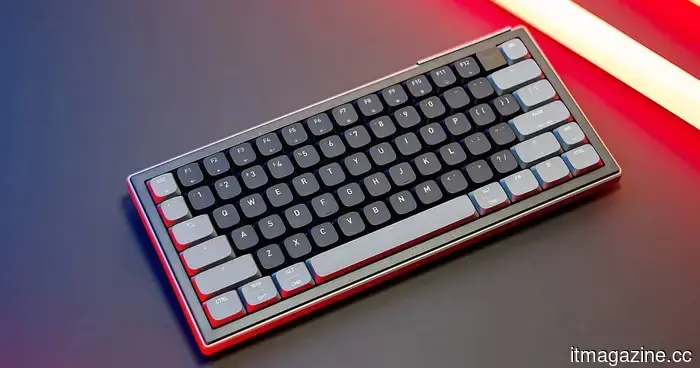 The Cherry XTRFY K63W Pro Compact is a wireless gaming keyboard that eliminates lag.
The Cherry XTRFY K63W Pro Compact introduces Ultra-Wideband technology and an 8000 Hz polling rate for wireless gaming keyboards, set to launch in the US in August at a price of $169.99.
The Cherry XTRFY K63W Pro Compact is a wireless gaming keyboard that eliminates lag.
The Cherry XTRFY K63W Pro Compact introduces Ultra-Wideband technology and an 8000 Hz polling rate for wireless gaming keyboards, set to launch in the US in August at a price of $169.99.
 The X app now allows users to directly record videos capturing their reactions and frustrations about almost anything.
X has introduced React with Video, a new capability that allows iOS users to reply to posts with a recorded video reaction utilizing green screen, split screen, or picture-in-picture modes.
The X app now allows users to directly record videos capturing their reactions and frustrations about almost anything.
X has introduced React with Video, a new capability that allows iOS users to reply to posts with a recorded video reaction utilizing green screen, split screen, or picture-in-picture modes.
 Taiwan unveils robotic patrol dogs that may protect its islands in the South China Sea.
Taiwan's military research institute showcased three Ghost Robotics robotic dogs, one of which is armed, that may eventually be utilized to patrol the Pratas and Itu Aba.
Taiwan unveils robotic patrol dogs that may protect its islands in the South China Sea.
Taiwan's military research institute showcased three Ghost Robotics robotic dogs, one of which is armed, that may eventually be utilized to patrol the Pratas and Itu Aba.
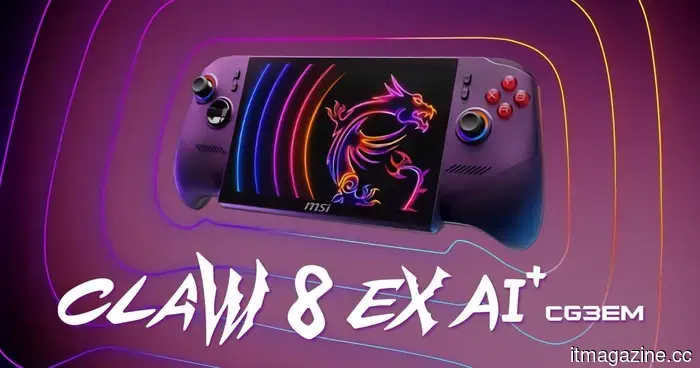 The new MSI Claw 8 EX AI+ is pursuing console-level gaming for on-the-go play.
At Computex 2026, MSI unveiled the Claw 8 EX AI+, which is the first handheld device in the world to utilize Intel's Arc G3 Extreme chip, designed exclusively for handheld gaming.
The new MSI Claw 8 EX AI+ is pursuing console-level gaming for on-the-go play.
At Computex 2026, MSI unveiled the Claw 8 EX AI+, which is the first handheld device in the world to utilize Intel's Arc G3 Extreme chip, designed exclusively for handheld gaming.
 Amazon's Ring faces a lawsuit regarding its Familiar Faces facial-recognition technology.
A man from Virginia is taking legal action against Amazon regarding Ring's Familiar Faces feature, claiming it scans and retains the images of people's faces who are not authorized. He is requesting a minimum of $5 million in damages.
Amazon's Ring faces a lawsuit regarding its Familiar Faces facial-recognition technology.
A man from Virginia is taking legal action against Amazon regarding Ring's Familiar Faces feature, claiming it scans and retains the images of people's faces who are not authorized. He is requesting a minimum of $5 million in damages.
A gaming study indicates that skill-based matchmaking is equitable, yet it subtly leads to player attrition.
A recent study questions the effectiveness of skill-based matchmaking, revealing that contests with equal skill levels may subtly damage player retention, while more intelligent systems succeeded in keeping players engaged for longer durations in millions of matches on Lichess.