

The United States is taking steps to eliminate the loophole that allows Nvidia's leading chips to be sold to Chinese companies overseas.
New guidance from the Commerce Department links export-licence regulations to the headquarters of a company rather than its physical location, impacting overseas branches of Chinese AI firms.
For roughly a year, a geographic loophole existed in the strict chip regulations in the US. A Chinese AI company unable to purchase Nvidia's top processors domestically could theoretically have a subsidiary in a country such as Malaysia make the purchase on its behalf. However, on Sunday, the US Commerce Department took measures to close this gap.
The department released guidance on its website that expands export-licence requirements to advanced chips sold to any entity based in China, regardless of where the entity is located physically.
This change is subtle yet significant: control now hinges on the nationality of the parent company rather than the physical address of the shipment, which is where overseas subsidiaries had been operating without restriction.
The chips in question are among the most powerful available, including Nvidia’s Rubin and Blackwell processors and AMD’s MI350x. The extent of what may have slipped through is noteworthy. An industry insider with extensive supply chain knowledge estimated to Reuters that hundreds of thousands of advanced chips may have been acquired by Chinese-linked entities abroad during the period the loophole was active.
This situation traces back to a specific event. In the final days of the Biden administration, the Commerce Department implemented the so-called AI Diffusion rule, a comprehensive framework governing the distribution of advanced chips.
In May 2025, the Trump administration announced it would not enforce this rule, which effectively left the overseas subsidiaries of Chinese firms in an uncertain situation for nearly a year. The new guidance clarifies this uncertainty.
However, it does not take the most disruptive approach. The guidance does not require existing data centres running the chips to cease their operations, nor does it inhibit the servicing of advanced computing hardware like servers.
The goal of this action is to regulate future transactions rather than to retrieve hardware that has already been shipped, which minimizes immediate operational disruptions while tightening the regulations for the future.
This move follows a pattern of leakage and corrective measures characteristic of US chip policy. Since 2022, Washington has been restricting China's access to advanced chips and repeatedly expanding regulations, yet enforcement continues to encounter loopholes, from third-country subsidiaries to outright smuggling.
Separately, US prosecutors have pursued a case claiming that a Thai company assisted in routing Nvidia chips to Alibaba, highlighting that controls established in Washington are only as effective as the weakest border.
Nvidia and AMD did not respond promptly to requests for comments, and the companies find themselves in a well-known dilemma: China continues to represent a significant potential market, and stricter regulations further limit that space. For Beijing, the closure of this loophole eliminates one of the cleaner legal pathways to access advanced silicon, compelling it to rely more on stockpiles, domestic chips, and less clear channels that Washington continues to monitor. The challenge remains enforcement: while the guidance document redraws the line, it does not oversee its compliance.
Other articles
 Apple's smart glasses are anticipated to be released toward the end of 2027 following some delays.
According to Bloomberg's Gurman, Apple's smart glasses have been postponed from an initial shipping date in early 2027 to late 2027.
Apple's smart glasses are anticipated to be released toward the end of 2027 following some delays.
According to Bloomberg's Gurman, Apple's smart glasses have been postponed from an initial shipping date in early 2027 to late 2027.
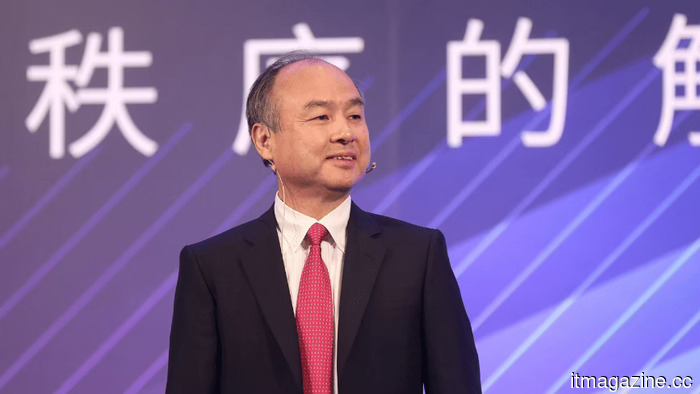 SoftBank surpasses Toyota to become Japan’s most valuable firm amid the AI surge.
On Monday, SoftBank's market capitalization surpassed that of Toyota for the first time in 23 years, propelled by its $65 billion investment in OpenAI and the Nikkei 225 index exceeding 67,000.
SoftBank surpasses Toyota to become Japan’s most valuable firm amid the AI surge.
On Monday, SoftBank's market capitalization surpassed that of Toyota for the first time in 23 years, propelled by its $65 billion investment in OpenAI and the Nikkei 225 index exceeding 67,000.
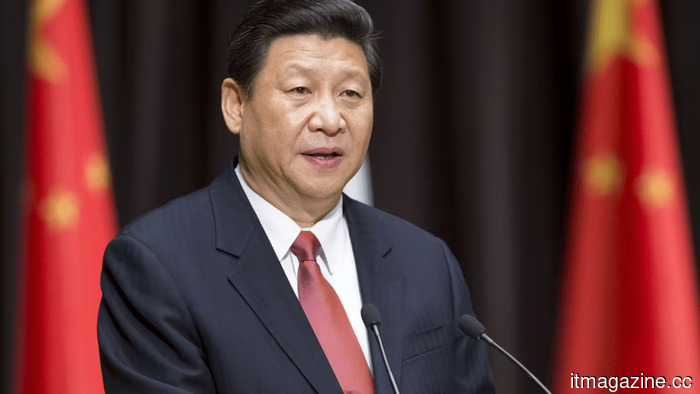 China formalizes stricter regulations on outbound investments following the Meta-Manus blockade.
China has established stricter regulations on outbound investments that formalise the technology-tracing method the NDRC employed to reverse Meta's $2 billion acquisition of Manus. As a result, cross-border AI transactions have become considerably more challenging.
China formalizes stricter regulations on outbound investments following the Meta-Manus blockade.
China has established stricter regulations on outbound investments that formalise the technology-tracing method the NDRC employed to reverse Meta's $2 billion acquisition of Manus. As a result, cross-border AI transactions have become considerably more challenging.
 The prompt box is consuming Photoshop.
AI image editors are shifting the creative process to feel more like providing directives rather than operating software. However, the prompt box introduces its own set of challenges.
The prompt box is consuming Photoshop.
AI image editors are shifting the creative process to feel more like providing directives rather than operating software. However, the prompt box introduces its own set of challenges.
 Apple's smart glasses are anticipated to arrive towards the end of 2027 following some delays.
According to Bloomberg's Gurman, the release date for Apple's smart glasses has been pushed back from early 2027 to late 2027.
Apple's smart glasses are anticipated to arrive towards the end of 2027 following some delays.
According to Bloomberg's Gurman, the release date for Apple's smart glasses has been pushed back from early 2027 to late 2027.
 ASML spinout Invisix secures €20M to explore what the optics cannot reveal inside chips.
Eindhoven's Invisix has secured a €20M seed round to introduce soft x-ray metrology, based on Nobel-winning physics, to large-scale chip production.
ASML spinout Invisix secures €20M to explore what the optics cannot reveal inside chips.
Eindhoven's Invisix has secured a €20M seed round to introduce soft x-ray metrology, based on Nobel-winning physics, to large-scale chip production.
The United States is taking steps to eliminate the loophole that allows Nvidia's leading chips to be sold to Chinese companies overseas.
The US Commerce Department has broadened its chip-export license regulations to apply to Chinese-based companies regardless of their location, eliminating a loophole that existed for a year.