
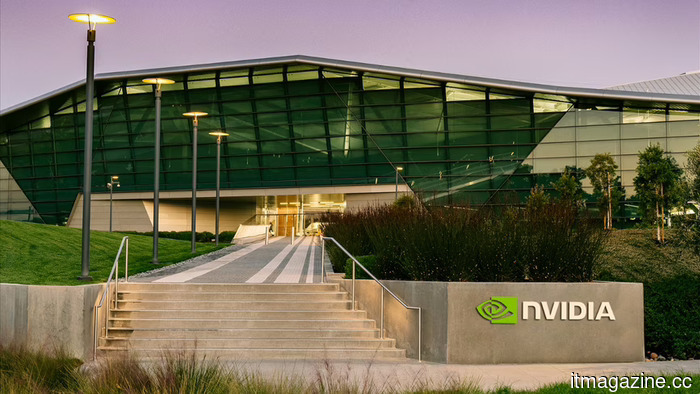
The US takes steps to eliminate the loophole that allows Nvidia's leading chips to be shipped to Chinese companies overseas.
The new guidance from the Commerce Department links export license regulations to the location of a company's headquarters rather than its physical presence, affecting the foreign branches of Chinese AI companies. For about a year, there was a geographical loophole regarding America's strict chip regulations. A Chinese AI firm that was prohibited from purchasing Nvidia’s top processors domestically could, in theory, have a subsidiary in a place like Malaysia buy the chips instead. However, the US Commerce Department moved on Sunday to close that loophole.
The department released guidance on its website, expanding export license requirements to advanced chips sold to any entity based in China, irrespective of where that entity is physically located. This change, while nuanced, has significant implications: the regulations now follow the nationality of the parent company instead of the address of the loading dock, which is where overseas subsidiaries had been operating.
The chips involved include some of the most advanced on the market, such as Nvidia’s Rubin and Blackwell processors and AMD’s MI350x. An industry source with extensive supply-chain insight estimated to Reuters that hundreds of thousands of advanced chips may have been supplied to entities linked to China during the time the loophole was active.
This situation stems from a specific decision made during the final days of the Biden administration when the Commerce Department finalized the AI Diffusion rule, a broad framework for controlling the distribution of advanced chips. In May 2025, the Trump administration announced it would not enforce this rule, leading to a nearly year-long period of ambiguity for the overseas subsidiaries of Chinese firms. The new guidance resolves this uncertainty.
However, it stops short of taking the most disruptive action. The guidance does not mandate that data centers currently operating these chips cease their use, nor does it suspend maintenance on advanced computing equipment like servers. The focus is on future shipments, not reclaiming hardware that has already been delivered, thereby minimizing immediate operational disruptions while tightening regulations going forward.
This development aligns with a broader pattern of leakage and corrective measures that have characterized US chip policy. Washington has been restricting China's access to advanced chips since 2022 and has repeatedly expanded the regulations, yet enforcement continues to encounter loopholes, from third-country subsidiaries to outright smuggling.
US prosecutors are also pursuing a case against a Thai company that allegedly facilitated the routing of Nvidia chips to Alibaba, illustrating that controls established in Washington are only as effective as the weakest border they face. Nvidia and AMD did not respond immediately to requests for comment. The companies find themselves in a challenging position: while China represents a substantial potential market, the tightening of regulations further constricts it.
For Beijing, this change eliminates one of the more straightforward legal avenues to access advanced chips, forcing the country to rely more on stockpiles, domestic production, and less transparent channels that Washington continues to monitor. The more challenging aspect remains enforcement; although a guidance document resets the boundaries, it does not provide enforcement mechanisms.
Other articles
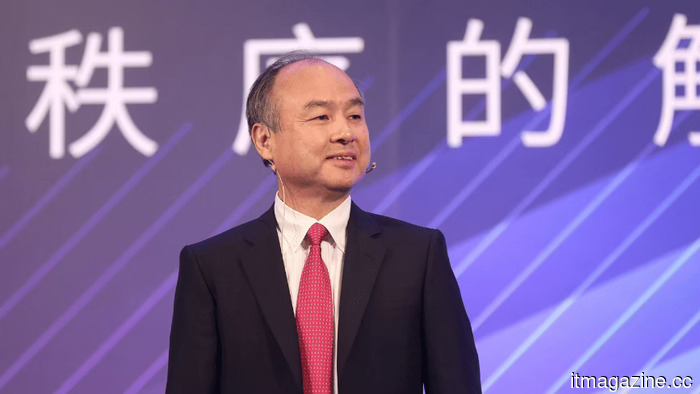 SoftBank surpasses Toyota to become Japan’s most valuable firm amid the AI surge.
On Monday, SoftBank's market capitalization surpassed that of Toyota for the first time in 23 years, propelled by its $65 billion investment in OpenAI and the Nikkei 225 index exceeding 67,000.
SoftBank surpasses Toyota to become Japan’s most valuable firm amid the AI surge.
On Monday, SoftBank's market capitalization surpassed that of Toyota for the first time in 23 years, propelled by its $65 billion investment in OpenAI and the Nikkei 225 index exceeding 67,000.
 Dell's $699 XPS 13 directly enters the realm of MacBook Neo.
Dell introduced a new XPS 13 priced at $699 ($599 for students), targeting Apple’s MacBook Neo by offering a touchscreen, reduced weight, and Intel’s latest Wildcat Lake CPU.
Dell's $699 XPS 13 directly enters the realm of MacBook Neo.
Dell introduced a new XPS 13 priced at $699 ($599 for students), targeting Apple’s MacBook Neo by offering a touchscreen, reduced weight, and Intel’s latest Wildcat Lake CPU.
 Snapchat Planets: What is their sequence, and what do they represent?
Snapchat Planets transforms your friendship rankings into a miniature social solar system, where being Mercury is prestigious, while being Neptune could be a bit hurtful.
Snapchat Planets: What is their sequence, and what do they represent?
Snapchat Planets transforms your friendship rankings into a miniature social solar system, where being Mercury is prestigious, while being Neptune could be a bit hurtful.
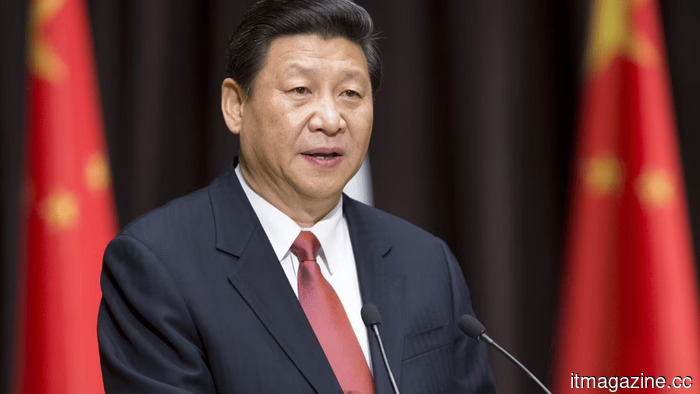 China officially establishes stricter regulations on outbound investments following the Meta-Manus blockade.
China has established stricter regulations for outbound investments that formalize the technology-tracing method previously employed by the NDRC to block Meta's $2 billion Manus acquisition. Securing cross-border AI transactions has become significantly more challenging.
China officially establishes stricter regulations on outbound investments following the Meta-Manus blockade.
China has established stricter regulations for outbound investments that formalize the technology-tracing method previously employed by the NDRC to block Meta's $2 billion Manus acquisition. Securing cross-border AI transactions has become significantly more challenging.
 The ASML spinout Invisix has secured €20 million to explore areas within chips that optics cannot reveal.
Eindhoven's Invisix has secured a €20M seed funding round to introduce soft x-ray metrology, grounded in Nobel Prize-awarded physics, into high-volume chip production.
The ASML spinout Invisix has secured €20 million to explore areas within chips that optics cannot reveal.
Eindhoven's Invisix has secured a €20M seed funding round to introduce soft x-ray metrology, grounded in Nobel Prize-awarded physics, into high-volume chip production.
 Founders of Revolut, Mistral, and Wayve support Balderton’s initiative for ‘Built in Europe.’
Balderton Capital has initiated 'Built in Europe', a five-city advertising campaign and job platform supported by over 100 founders from companies including Revolut, Mistral, Wayve, among others.
Founders of Revolut, Mistral, and Wayve support Balderton’s initiative for ‘Built in Europe.’
Balderton Capital has initiated 'Built in Europe', a five-city advertising campaign and job platform supported by over 100 founders from companies including Revolut, Mistral, Wayve, among others.
The US takes steps to eliminate the loophole that allows Nvidia's leading chips to be shipped to Chinese companies overseas.
The US Commerce Department has broadened the chip-export license regulations to encompass Chinese-based companies regardless of their location, thereby addressing a loophole that has existed for a year.