

Former Meta CTO establishes a $250 million climate fund due to rising energy demands from AI.
**TL;DR** Gigascale Capital, led by former Meta CTO Mike Schroepfer, has established a $250 million fund targeting startups in energy, grid infrastructure, and critical minerals. The fund's strategy is based on the belief that the energy demands of AI will position clean power startups as key beneficiaries of the AI boom.
Gigascale Capital, the venture firm operated by ex-Meta chief technology officer Mike Schroepfer, has secured a $250 million fund dedicated to investing in startups focused on energy, grid infrastructure, and critical minerals. Launched on Monday, this marks Gigascale's second fund and its first to welcome institutional investors. This comes at a time when the majority of the venture capital landscape is shifting focus from climate technology to AI, making Schroepfer’s ongoing commitment to the physical economy a notably contrarian choice.
“The companies we support succeed because they’re more affordable, faster, and reliable,” Schroepfer stated. “Climate impact is a consequence of improved system performance.” This perspective is significant: Gigascale is framing clean technology not merely as a values-driven investment approach but as an economically inevitable choice stemming from performance benefits.
**AI as a Catalyst, Not a Competitor**
The situation of a previous tech executive setting up a climate-focused fund amid an AI surge is less paradoxical than it seems. US utilities have plans to invest $1.4 trillion by 2030 to fulfill the electricity needs of AI data centers, which could account for 9% of the country's total electricity consumption by the decade's end, up from 4% in 2023. Natural gas turbines, the typical backup power source, have waitlists extending into the early 2030s.
This energy challenge is the gap Gigascale aims to exploit. Companies reliant on substantial electricity—be it for AI training, manufacturing, or industrial operations—cannot afford to wait for utility-scale infrastructure to catch up. Startups addressing the energy demands of data centers are already drawing considerable investment, and Schroepfer has discussed on podcasts that “bring-your-own power will become a competitive advantage over time” for energy-intensive enterprises.
**The Heart of EU Tech**
The latest updates from the EU tech landscape, insights from our founder Boris, and some questionable AI-generated art. It's complimentary, available weekly in your inbox. Sign up today!
Gigascale’s current investments exemplify this outlook. Commonwealth Fusion Systems, which has garnered $863 million from backers like Nvidia, Google, and Bill Gates, is working on commercial fusion reactors. Form Energy manufactures 100-hour iron-air batteries designed for large-scale grid storage. Heron Power has raised $140 million to innovate in grid infrastructure technology. These are not consumer-facing applications; they represent companies constructing the physical frameworks that the digital economy requires.
**Defying the Climate Tech Backlash**
The $250 million fundraising is noteworthy, particularly given the current climate where a significant portion of the venture ecosystem has distanced itself from the “climate tech” label. Following a wave of prominent climate-focused funds launched from 2020 to 2023, returns have been mixed, and several leading climate startups have faced challenges. European venture firms are now raising larger funds with wider mandates, while U.S. investors have largely shifted their focus to AI-based companies.
Schroepfer initiated Gigascale after examining climate technology during the pandemic. His view is that the sector's issues are not rooted in technology but in the commercial realm: clean technologies must be more affordable and efficient than existing options, not just greener. Solar energy serves as his benchmark, a technology that gained market share not due to environmental regulations, but because it emerged as the cheapest electricity source in many parts of the world.
The fund will also explore critical minerals and what Schroepfer refers to as “physical AI,” a likely reference to robotics and automation in manufacturing, mining, and construction. Battery storage and mineral supply chains are increasingly viewed as critical hurdles in the energy transition, and startups capable of overcoming these barriers may find clearer revenue opportunities than those simply producing another solar panel.
**The Meta Connection**
Schroepfer held the position of CTO at Meta for over a decade before stepping down in 2022. His tenure included managing the company's infrastructure expansion, including the data centers that now require vast amounts of electricity to support AI operations. This experience has given him firsthand insight into the energy constraints associated with large-scale computing, which shapes Gigascale’s investment strategy.
Meta itself has emerged as one of the largest corporate consumers of clean energy, forecasting capital expenditures of $125 billion to $145 billion by 2026, with a substantial portion allocated to AI infrastructure. The pursuit of solutions for AI’s energy challenges has sparked ideas ranging from space-based data centers to small modular nuclear reactors, yet the most commercially viable solutions are expected from startups focused on practical advancements in energy generation, storage, and distribution.
While Gigascale’s $250 million fund may seem small compared
Other articles
 The Asus ROG Ally X receives a distinctive redesign featuring an OLED screen and tasteful gold accents that are not overly flashy.
The anniversary edition introduces OLED to the Ally series for the first time, featuring a 7.4-inch 120Hz panel with 1,400 nits brightness, an AMD Ryzen AI Z2 Extreme processor, and TMR joysticks.
The Asus ROG Ally X receives a distinctive redesign featuring an OLED screen and tasteful gold accents that are not overly flashy.
The anniversary edition introduces OLED to the Ally series for the first time, featuring a 7.4-inch 120Hz panel with 1,400 nits brightness, an AMD Ryzen AI Z2 Extreme processor, and TMR joysticks.
 Atlas Menu, a cheat service for GTA V, was compromised, leading to the exposure of 64,000 accounts.
Atlas Menu, a cheat service for GTA V that claimed to offer "enhanced privacy," was compromised, leading to the exposure of 64,000 accounts along with their emails, passwords, and IP addresses, which were released on GitHub.
Atlas Menu, a cheat service for GTA V, was compromised, leading to the exposure of 64,000 accounts.
Atlas Menu, a cheat service for GTA V that claimed to offer "enhanced privacy," was compromised, leading to the exposure of 64,000 accounts along with their emails, passwords, and IP addresses, which were released on GitHub.
 GoPro cautioned that it might not endure. The AI memory crisis is threatening the survival of companies that produce tangible products.
Memory prices increased by 80-115%. Revenue decreased by 26%. GoPro expressed "substantial doubt" regarding its ability to persist. The company is considering a sale or a shift towards the defense sector.
GoPro cautioned that it might not endure. The AI memory crisis is threatening the survival of companies that produce tangible products.
Memory prices increased by 80-115%. Revenue decreased by 26%. GoPro expressed "substantial doubt" regarding its ability to persist. The company is considering a sale or a shift towards the defense sector.
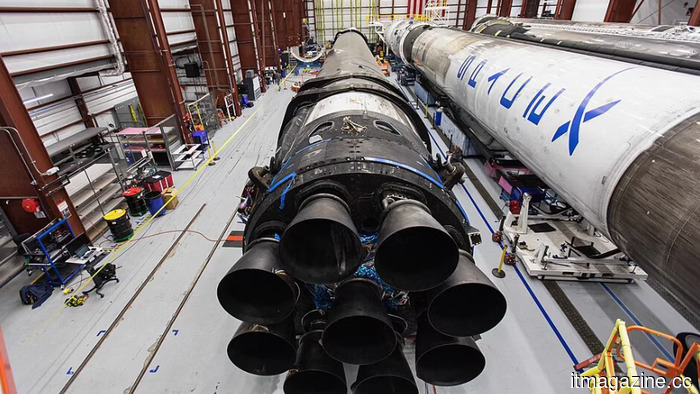 The surge in space stocks falters as the SpaceX IPO approaches and Blue Origin faces a setback.
Rocket Lab, Intuitive Machines, and AST SpaceMobile saw their shares fall by 17-23% over two days as investors get ready to exchange their space-related stocks for SpaceX once its record IPO is established.
The surge in space stocks falters as the SpaceX IPO approaches and Blue Origin faces a setback.
Rocket Lab, Intuitive Machines, and AST SpaceMobile saw their shares fall by 17-23% over two days as investors get ready to exchange their space-related stocks for SpaceX once its record IPO is established.
 IBM experiences a 30% increase as Barclays labels its software as the remedy for the SaaSpocalypse.
Barclays began coverage on IBM with an overweight rating and a target price of $350, stating that its infrastructure software is resilient against AI disruption. The stock rose 30% in May due to commitments in quantum technology.
IBM experiences a 30% increase as Barclays labels its software as the remedy for the SaaSpocalypse.
Barclays began coverage on IBM with an overweight rating and a target price of $350, stating that its infrastructure software is resilient against AI disruption. The stock rose 30% in May due to commitments in quantum technology.
 IBM jumps 30% after Barclays describes its software as the solution to the SaaSpocalypse.
Barclays has started coverage of IBM with an overweight rating and a target price of $350, noting that its infrastructure software is resistant to AI disruption. The stock rose 30% in May due to commitments in quantum technology.
IBM jumps 30% after Barclays describes its software as the solution to the SaaSpocalypse.
Barclays has started coverage of IBM with an overweight rating and a target price of $350, noting that its infrastructure software is resistant to AI disruption. The stock rose 30% in May due to commitments in quantum technology.
Former Meta CTO establishes a $250 million climate fund due to rising energy demands from AI.
Gigascale Capital, led by Mike Schroepfer, has secured $250 million to invest in energy and climate startups, believing that the growing energy needs of AI will position clean technology as the true beneficiaries of the AI surge.