
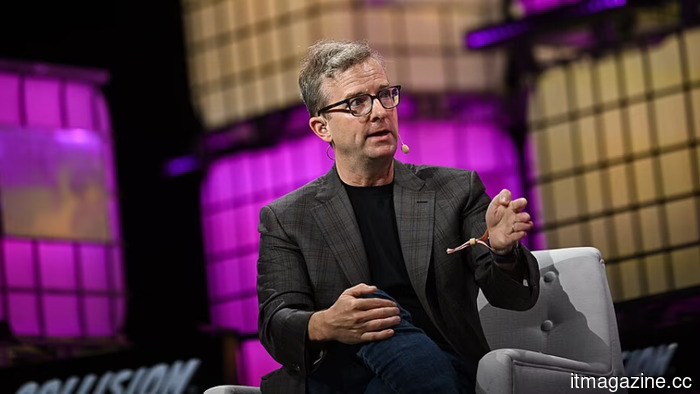
Former Meta CTO launches a $250M climate fund amid rising energy demand from AI.
**TL;DR** Former Meta CTO Mike Schroepfer’s Gigascale Capital has raised a $250 million fund aimed at investing in startups focused on energy, grid infrastructure, and critical minerals. The fund anticipates that the energy demands of AI will favor clean power startups as the primary beneficiaries of the AI boom.
Gigascale Capital, the venture capital firm founded by ex-Meta chief technology officer Mike Schroepfer, has secured a $250 million fund for investment in startups involved in energy, grid infrastructure, and critical minerals. This fund, announced on Monday, is Gigascale's second and its first to include institutional investors. It comes at a time when much of the venture capital sector has shifted focus from climate technology to AI, making Schroepfer’s commitment to the physical economy a notable contrarian strategy.
“The companies we support succeed because they are more affordable, quicker, and more dependable,” Schroepfer noted. “The positive impact on climate is a byproduct of enhanced performance.” This perspective is important: Gigascale is positioning clean technology not merely as a values-driven investment but as an economic necessity based on performance benefits.
**AI as a catalyst, not a competitor**
The irony of a former technology executive launching a climate fund during an AI surge is less paradoxical than it seems. U.S. utilities plan to invest $1.4 trillion by 2030 to meet the electricity demands of AI data centers, which could account for 9% of the country’s total electricity by the end of the decade, up from 4% in 2023. Natural gas turbines, the standard backup power source, currently have waitlists extending into the early 2030s.
This energy crunch presents a market opportunity that Gigascale intends to exploit. Companies requiring substantial electricity, whether for AI training, manufacturing, or industrial processes, cannot afford to wait for grid infrastructure to catch up. Startups addressing the energy challenges of data centers are already attracting considerable investment, and Schroepfer has suggested in podcasts that a “bring-your-own power” model will become a competitive advantage over time for businesses with high energy demands.
**The heart of EU tech**
The latest updates from the EU tech landscape, insights from our wise founder Boris, along with some dubious AI-generated art. Subscribe now for free weekly updates in your inbox!
Gigascale’s current portfolio exemplifies this strategy. Commonwealth Fusion Systems, which raised $863 million from investors such as Nvidia, Google, and Bill Gates, is working on commercial fusion reactors. Form Energy is developing 100-hour iron-air batteries designed for grid-scale storage. Heron Power has secured $140 million for grid infrastructure technology. These ventures are not consumer applications; they are focused on constructing the physical infrastructure essential for the digital economy.
**Resisting the climate tech retreat**
The $250 million fundraise is significant because it comes at a time when many in the venture sector are moving away from the “climate tech” label. Following a surge of climate-centric funds launched between 2020 and 2023, returns have been mixed, and several notable climate startups have faced difficulties. European venture firms are raising sizable funds with wider scopes, while U.S. investors have largely redirected resources toward AI-driven companies.
Schroepfer initiated Gigascale after researching climate technology during the pandemic. He argues that the challenges in this sector are not technological but commercial: clean technologies must be cheaper and quicker than existing options, not just more environmentally friendly. He cites solar energy as a case in point, which gained market share not due to environmental policies but because it became the most cost-effective source of electricity in many regions worldwide.
The fund will also explore critical minerals and what Schroepfer refers to as "physical AI," which likely pertains to robotics and automation in manufacturing, mining, and construction. Battery storage and mineral supply chains are increasingly recognized as bottlenecks in the energy transition, and startups that can navigate these issues are more likely to achieve revenue compared to firms creating yet another solar panel.
**The Meta connection**
Schroepfer was Meta’s CTO for over ten years before stepping down in 2022, during which time he oversaw the company’s infrastructure expansion, including the data centers that now require immense amounts of electricity for AI operations. His experience provided him with firsthand understanding of the energy constraints faced by large-scale computing, which informs Gigascale’s investment strategy.
Meta has also emerged as one of the largest corporate purchasers of clean energy, with capital expenditure guidance for 2026 ranging from $125 billion to $145 billion, much of it allocated to AI infrastructure. The quest for solutions to the energy challenges posed by AI has led to ideas ranging from data centers in space to small modular nuclear reactors; however, the most commercially feasible solutions are likely to come from startups focused on practical advancements in energy generation, storage, and distribution.
Gigascale’s $250 million fund may seem modest relative to
Other articles
 Apple prepares receipt-scanning bill splitter for iOS 27.
Apple is introducing a bill-splitting feature in iOS 27 that takes photos of receipts, allocates items to friends, and creates Apple Cash requests, posing a challenge to Splitwise and Venmo.
Apple prepares receipt-scanning bill splitter for iOS 27.
Apple is introducing a bill-splitting feature in iOS 27 that takes photos of receipts, allocates items to friends, and creates Apple Cash requests, posing a challenge to Splitwise and Venmo.
 Apple prepares a receipt-scanning bill splitter for iOS 27.
Apple is set to introduce a bill-splitting feature in iOS 27 that takes photos of receipts, allocates items to friends, and creates requests for Apple Cash, marking a challenge to Splitwise and Venmo.
Apple prepares a receipt-scanning bill splitter for iOS 27.
Apple is set to introduce a bill-splitting feature in iOS 27 that takes photos of receipts, allocates items to friends, and creates requests for Apple Cash, marking a challenge to Splitwise and Venmo.
 The Asus ROG Ally X receives a distinctive redesign featuring an OLED screen and tasteful gold accents that are not overly flashy.
The anniversary edition introduces OLED to the Ally series for the first time, featuring a 7.4-inch 120Hz panel with 1,400 nits brightness, an AMD Ryzen AI Z2 Extreme processor, and TMR joysticks.
The Asus ROG Ally X receives a distinctive redesign featuring an OLED screen and tasteful gold accents that are not overly flashy.
The anniversary edition introduces OLED to the Ally series for the first time, featuring a 7.4-inch 120Hz panel with 1,400 nits brightness, an AMD Ryzen AI Z2 Extreme processor, and TMR joysticks.
 Hackers took control of Instagram accounts by requesting password resets through Meta's AI chatbot.
The AI support bot inserted a hacker's email address, dispatched a verification code, and provided a button for resetting the password. There was no requirement for access to the victim's email.
Hackers took control of Instagram accounts by requesting password resets through Meta's AI chatbot.
The AI support bot inserted a hacker's email address, dispatched a verification code, and provided a button for resetting the password. There was no requirement for access to the victim's email.
 IBM jumps 30% after Barclays describes its software as the solution to the SaaSpocalypse.
Barclays has started coverage of IBM with an overweight rating and a target price of $350, noting that its infrastructure software is resistant to AI disruption. The stock rose 30% in May due to commitments in quantum technology.
IBM jumps 30% after Barclays describes its software as the solution to the SaaSpocalypse.
Barclays has started coverage of IBM with an overweight rating and a target price of $350, noting that its infrastructure software is resistant to AI disruption. The stock rose 30% in May due to commitments in quantum technology.
Former Meta CTO launches a $250M climate fund amid rising energy demand from AI.
Mike Schroepfer's Gigascale Capital secures $250 million for energy and climate startups, wagering that the energy demands of AI will position clean technology as the true beneficiaries of the AI surge.