
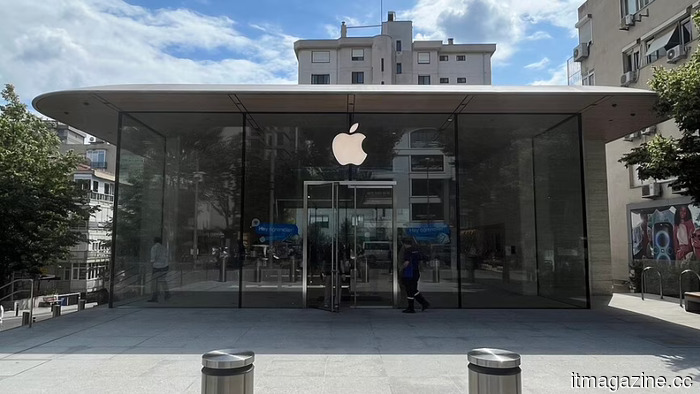
Apple has disrupted the mid-range watch market. Now, it is setting its sights on the $200 billion eyewear sector.
TL;DR: Apple aims to shake up the $200 billion eyewear market similarly to its impact on the watch sector, where Swatch's stock plummeted by 28% and Fossil's by 70%. Smart glasses are set to be released by late 2027.
When Apple introduced the Apple Watch in 2015, the mid-range wristwatch sector was dominated by a few key players. The Swatch Group marketed brands like Tissot, Hamilton, and Longines, while Fossil Group represented Michael Kors, Armani, and Kate Spade. Movado also sold through Coach, Hugo Boss, and Tommy Hilfiger.
A decade later, the repercussions are evident. By 2025, Swatch's revenue was 28% lower compared to 2014, and Fossil's sales had plummeted by about 70%. Apple quickly became the largest watchmaker globally by unit sales and surpassed Rolex last year as the leading watch brand by revenue, generating an estimated $17 billion annually through the Apple Watch.
According to Bloomberg’s Mark Gurman, Apple plans to apply a similar strategy to eyewear, identifying the $200 billion global eyewear market as a greater opportunity than watches. The company intends to directly compete in the $200 to $500 price range, currently dominated by EssilorLuxottica (Ray-Ban, Oakley, etc.), Safilo Group (Tommy Hilfiger, etc.), and Warby Parker.
The potential market is immense, with the WHO estimating that 2.2 billion people worldwide have some form of vision impairment. Numerous glasses are sold yearly. Apple believes its brand strength, design aesthetics, integration with the iPhone, and AI capabilities will attract consumers looking for new regular glasses.
Apple's first pair, codenamed N50, was originally set for release in late 2026, but delays have moved it to the end of 2027, as reported by Gurman. The glasses are expected to feature oval-shaped cameras, distinct colors, and various frame styles, with future potential as health devices that may incorporate augmented reality.
Meta currently holds a significant lead with more than seven million Ray-Ban smart glasses sold in 2025 and around 82% of the smart glasses market. It has retail ties with LensCrafters and continues to launch new models, with further releases scheduled for June. Meta also excels in AI features and benefits from a broader user base on Android compared to iOS.
Apple's reluctance to support Android gives Meta a chance to dominate that market segment permanently. Ironically, Apple’s entry might create more consumer enthusiasm around smart glasses, potentially directing Android users to Meta’s offerings.
Moreover, Meta is broadening its wearable strategy beyond eyewear. A recently leaked internal memo indicated that the company is working on an AI pendant and a "Wearables for Work" subscription service for enterprises. The competitive landscape is expanding even before Apple’s product is launched.
Apple's risk lies in timing; each month of delay allows Meta to gain more users, expand retail presence, and gather more insights into consumer demands for smart glasses. The new offering heavily relies on a redesigned Siri, which has faced a two-year delay. The updated Siri app in iOS 27 may still be released as a beta.
Tim Cook has labeled the glasses project as his top priority, with incoming CEO John Ternus actively leading the initiative. The Vision Products Group responsible for the glasses has been under his guidance for the past two years. Although support from Apple's highest ranks is assured, the execution timeline remains uncertain.
However, not all eyewear brands need to be concerned. High-fashion labels that sell glasses for several thousand dollars, such as Cartier, Lindberg, Jacques Marie Mage, and Maison Bonnet, are likely to continue thriving. Apple made no significant impact on the luxury watch market despite introducing a $10,000 gold Apple Watch. Rolex generated an estimated $14 billion in revenue last year, more than double its sales a decade ago.
Apple's focus is on the mass market, aiming at EssilorLuxottica, Safilo, and Warby Parker similarly to how it approached Swatch, Fossil, and Movado. The strategy is clear: enter an established consumer market, offer an iPhone-compatible product, and wait for established competitors to see their revenues decline.
Apple's Watch segment is also facing new competition from screenless wearables like Whoop, Oura, and Google’s Fitbit Air. The company requires a new hardware growth sector, and well-executed glasses could fill that role. The potential market size is billions, not just millions.
Gurman additionally reported that iOS 27's Siri app will allow conversations to sync across devices via iCloud. Early development on iOS 28 (codenamed Bell) and macOS 28 (codenamed Poppy) has begun, with next year's updates expected to be "far more significant" than
Other articles
 LG Electronics stock surged by 24% in a single day following the introduction of Google-powered automotive technology that reduces expenses for automakers.
LG's latest multi-screen system operates on Android Automotive OS and utilizes a single chip to manage several displays. The market is expected to reach $2.14 billion by 2035.
LG Electronics stock surged by 24% in a single day following the introduction of Google-powered automotive technology that reduces expenses for automakers.
LG's latest multi-screen system operates on Android Automotive OS and utilizes a single chip to manage several displays. The market is expected to reach $2.14 billion by 2035.
 LG Electronics shares surged by 24% in a single day following the introduction of Google-powered automotive technology that reduces expenses for car manufacturers.
LG's latest multi-display system operates on Android Automotive OS and utilizes a single chip to manage several screens. The market is expected to reach $2.14 billion by 2035.
LG Electronics shares surged by 24% in a single day following the introduction of Google-powered automotive technology that reduces expenses for car manufacturers.
LG's latest multi-display system operates on Android Automotive OS and utilizes a single chip to manage several screens. The market is expected to reach $2.14 billion by 2035.
 Tesla operates 42 robotaxis in Texas, while Waymo has 577. This difference is now a matter of public record.
A new law in Texas required both companies to register their vehicle fleets. Tesla self-classified its cars as Level 4, despite having previously informed regulators that they were Level 2.
Tesla operates 42 robotaxis in Texas, while Waymo has 577. This difference is now a matter of public record.
A new law in Texas required both companies to register their vehicle fleets. Tesla self-classified its cars as Level 4, despite having previously informed regulators that they were Level 2.
 A comprehensive list of all Stellaris cheats and console commands.
Console commands in Stellaris can assist you in adding resources, accelerating research, initiating events, and testing empire constructions, but it's essential to first learn the correct commands.
A comprehensive list of all Stellaris cheats and console commands.
Console commands in Stellaris can assist you in adding resources, accelerating research, initiating events, and testing empire constructions, but it's essential to first learn the correct commands.
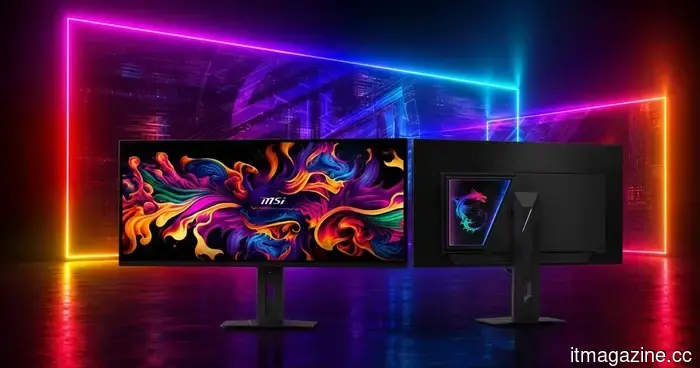 MSI's upcoming gaming monitor can switch between three distinct resolutions and refresh rates.
MSI has introduced a new QD-OLED gaming monitor that can toggle among three different resolution and refresh rate modes for various gaming experiences.
MSI's upcoming gaming monitor can switch between three distinct resolutions and refresh rates.
MSI has introduced a new QD-OLED gaming monitor that can toggle among three different resolution and refresh rate modes for various gaming experiences.
 Apple is set to release new Beats headphones, and FC Barcelona star Lamine Yamal is already seen wearing them.
A pair of yet-to-be-released Beats over-ear headphones was showcased on Instagram by Lamine Yamal, the star from Barcelona and Spain.
Apple is set to release new Beats headphones, and FC Barcelona star Lamine Yamal is already seen wearing them.
A pair of yet-to-be-released Beats over-ear headphones was showcased on Instagram by Lamine Yamal, the star from Barcelona and Spain.
Apple has disrupted the mid-range watch market. Now, it is setting its sights on the $200 billion eyewear sector.
Swatch's revenue decreased by 28%, while Fossil saw a 70% decline following the release of the Apple Watch. Apple intends to implement a similar strategy for glasses, aiming for a launch in late 2027.