
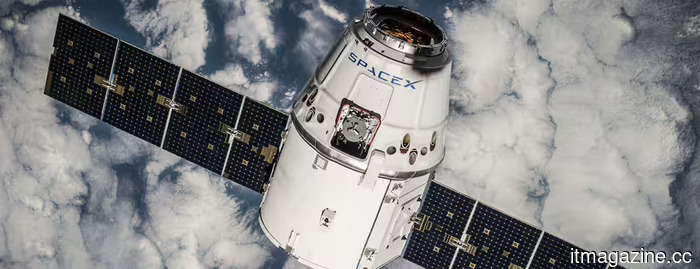
SpaceX has adjusted its IPO target to $1.8 trillion, with marketing set to begin on June 4th.
TL;DR: SpaceX has reduced its IPO valuation target from over $2 trillion to at least $1.8 trillion following discussions with investors. The marketing phase is set to commence by June 4, with potential pricing on June 11. The company reported a revenue of $18.7 billion in 2025 but incurred a $4.94 billion loss after acquiring xAI.
SpaceX is now aiming for a valuation of at least $1.8 trillion for its initial public offering, a decrease from the previous target of over $2 trillion set in April, as reported by Bloomberg. This adjustment followed conversations with advisers and investors and may still increase based on feedback during the official marketing period, expected to start on June 4. Pricing might be finalized as soon as June 11.
The firm hopes to raise up to $75 billion through this offering, which would mark it as the largest IPO in history. SpaceX plans to list on Nasdaq and Nasdaq Texas under the ticker symbol SPCX, with Goldman Sachs, Morgan Stanley, Bank of America, Citigroup, and JPMorgan leading the deal alongside 18 additional banks.
Details from the proposal indicate that although SpaceX has experienced rapid growth, it has not yet achieved profitability. Revenue increased from $14 billion in 2024 to $18.7 billion in 2025. However, the company shifted from a profit of $791 million in 2024 to a loss of $4.94 billion in the last year, primarily due to the costs associated with integrating xAI and expanding its AI infrastructure.
The acquisition of xAI in February contributed to a $1 trillion valuation for SpaceX and $250 billion for xAI at that time. This merger shifted SpaceX’s focus from being primarily a rocket and satellite internet company to an AI services and infrastructure company, targeting a market worth $28.5 trillion, which includes orbital data centers and space-based computing.
Reasons for the adjusted valuation target
The drop from over $2 trillion to $1.8 trillion reflects typical IPO pricing dynamics rather than a lack of confidence. Companies often set high initial targets and adjust them based on institutional investor feedback. At a valuation of $1.8 trillion, SpaceX would still rank among the most valuable companies on any exchange, surpassing Amazon, second only to Apple, Nvidia, Microsoft, and Alphabet.
Musk's financial structure may also influence the valuation. The S-1 filing disclosed a $20 billion bridge loan at 4.58% that replaced $17.5 billion of high-interest junk debt from X and xAI, thereby reducing annual interest expenses considerably. Although Musk owns around 42% of the equity, he controls approximately 79% of the voting power, a dual-class structure that some investors have raised concerns about.
Context from the Blue Origin incident
The news about the valuation came on the same night that Blue Origin’s New Glenn rocket exploded during a static fire test at Cape Canaveral, destroying the vehicle and its launch pad. This incident highlights SpaceX's dominance in the commercial launch market, with a target of 140 to 145 launches in 2026 and already having completed more orbital missions than any other provider, while Blue Origin had planned only 8 to 12 launches this year.
SpaceX has faced its own challenges, including a failure with its Starship V3 booster just three weeks before the IPO filing. However, the company has established sufficient redundancy with multiple launch pads and a reliable fleet of Falcon 9 rockets, ensuring that individual failures have not disrupted operations. In contrast, Blue Origin's loss of its singular New Glenn launch pad represents a more significant issue.
Upcoming steps
The official marketing period, or roadshow, will allow SpaceX's management team about a week to present to investors. The focus will be on Starlink’s satellite internet business, which generated $10.6 billion in revenue in 2025 and boasts over 10 million subscribers, alongside xAI’s aspirations in AI infrastructure.
With a valuation of $1.8 trillion, SpaceX would be valued roughly 96 times its 2025 revenue, a multiple reflecting investor anticipations of ongoing hypergrowth instead of immediate profitability. The IPO includes an unusually large allocation of 30% for retail investors, which may enhance first-day demand but could also lead to volatility. The final pricing will ultimately be determined by institutional investors' reactions to a company that reported almost $5 billion in losses last year but asserts it is creating infrastructure for an AI-driven space economy.
Other articles
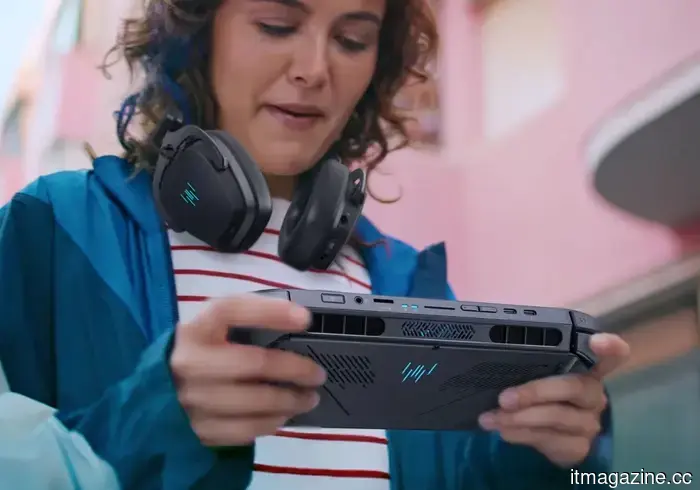 Acer unveils the Predator Atlas 8 gaming handheld featuring metal fans. Let's keep our fingers crossed that it won't be prohibitively expensive.
Acer's Predator Atlas 8 combines desktop-grade Intel performance with an innovative cooling system in a portable design. It appears to be highly competent, but it may come with a hefty price tag as well.
Acer unveils the Predator Atlas 8 gaming handheld featuring metal fans. Let's keep our fingers crossed that it won't be prohibitively expensive.
Acer's Predator Atlas 8 combines desktop-grade Intel performance with an innovative cooling system in a portable design. It appears to be highly competent, but it may come with a hefty price tag as well.
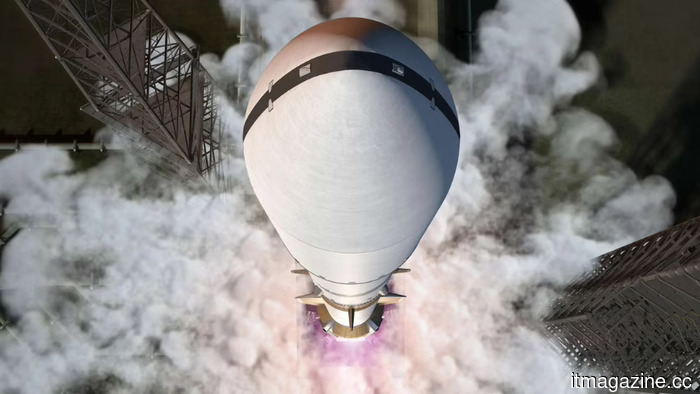 Blue Origin's New Glenn rocket detonates on a launch pad in Florida.
Blue Origin's New Glenn experienced an explosion during a static fire test at Cape Canaveral, leading to the destruction of its sole launch pad. This incident puts Amazon's satellite timeline and NASA's Moon Base contract in jeopardy.
Blue Origin's New Glenn rocket detonates on a launch pad in Florida.
Blue Origin's New Glenn experienced an explosion during a static fire test at Cape Canaveral, leading to the destruction of its sole launch pad. This incident puts Amazon's satellite timeline and NASA's Moon Base contract in jeopardy.
 Waymo's latest Ojai robotaxi appears to be designed for the future, and it also features an enhanced brain.
Waymo's Ojai robotaxi combines sleek, futuristic design with an emphasis on accessibility and advanced autonomy. Initial riders are set to experience it soon, while a larger expansion is already in progress.
Waymo's latest Ojai robotaxi appears to be designed for the future, and it also features an enhanced brain.
Waymo's Ojai robotaxi combines sleek, futuristic design with an emphasis on accessibility and advanced autonomy. Initial riders are set to experience it soon, while a larger expansion is already in progress.
 After a long wait, Spotify will allow you to organize playlist folders on mobile devices.
After a long period of being available solely on desktop, Spotify playlist folders are now accessible on mobile. This update comes alongside features such as bulk editing, background downloads for iOS, and a shuffle button as part of a new series of app enhancements.
After a long wait, Spotify will allow you to organize playlist folders on mobile devices.
After a long period of being available solely on desktop, Spotify playlist folders are now accessible on mobile. This update comes alongside features such as bulk editing, background downloads for iOS, and a shuffle button as part of a new series of app enhancements.
 YouTube has introduced three new podcast features, but these are exclusively available to Premium subscribers.
YouTube has introduced three new podcast features exclusive to Premium subscribers, which will be gradually available for both Android and iOS devices.
YouTube has introduced three new podcast features, but these are exclusively available to Premium subscribers.
YouTube has introduced three new podcast features exclusive to Premium subscribers, which will be gradually available for both Android and iOS devices.
 Asana purchases Stack AI for $75 million to develop an AI agent platform.
Asana acquires Stack AI, which is supported by Y Combinator, for an estimated $75 million, integrating no-code AI agents into its platform. The revenue for Q1 reaches $205 million, while the stock trades at 53% lower than its value in January.
Asana purchases Stack AI for $75 million to develop an AI agent platform.
Asana acquires Stack AI, which is supported by Y Combinator, for an estimated $75 million, integrating no-code AI agents into its platform. The revenue for Q1 reaches $205 million, while the stock trades at 53% lower than its value in January.
SpaceX has adjusted its IPO target to $1.8 trillion, with marketing set to begin on June 4th.
SpaceX has reduced its IPO valuation target from over $2 trillion to at least $1.8 trillion. Marketing will kick off on June 4, with pricing potentially occurring as soon as June 11. The expected revenue for 2025 is $18.7 billion, with a projected loss of $4.94 billion.