
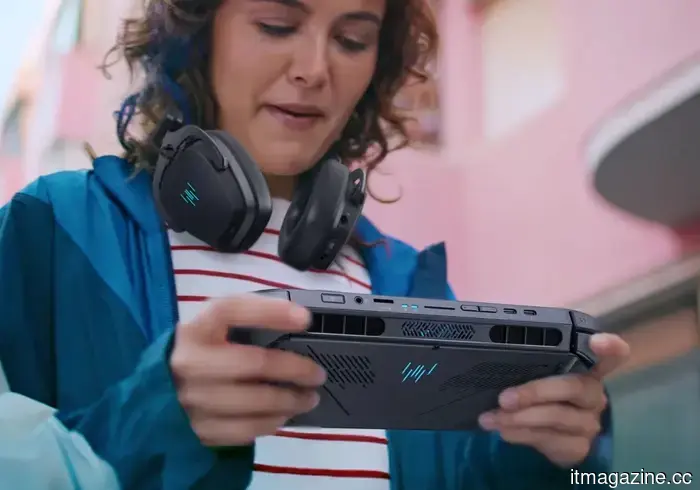
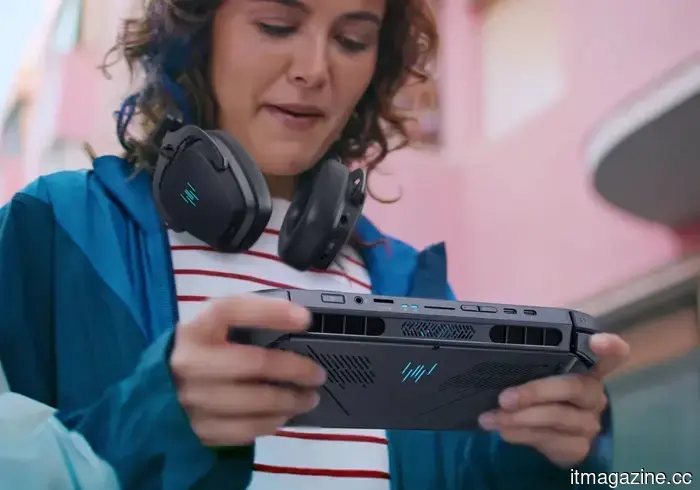
Acer unveils the Predator Atlas 8 gaming handheld featuring metal fans. Let's keep our fingers crossed that it won't be prohibitively expensive.
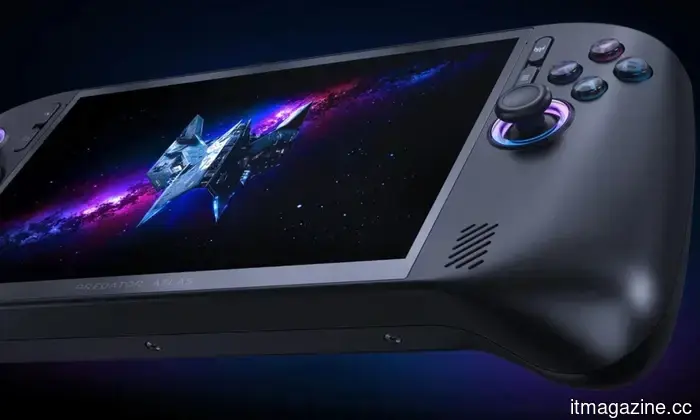
Acer’s Predator Atlas 8 is a handheld that clearly indicates it’s not designed for conventional gameplay. It appears to directly compete with current gaming portables such as the ROG Ally and Steam Deck, but has one rather unconventional feature: it includes a metal cooling fan within the handheld unit. This point alone warrants attention, as it suggests either a significant advancement in thermal engineering for portable computers or a high-end method that could drastically increase your electricity costs.
Internally, the Atlas 8 is powered by Intel’s latest Arc G-Series platform, promoting the concept of “PC-level gaming you can actually carry with you.” It has the capability to scale up to Intel Arc B390 graphics with ray tracing support, along with XeSS 3 AI upscaling. The goal is to achieve smooth frame rates without significantly sacrificing battery life or visual fidelity. This is a common claim among modern handheld devices, but with a stronger emphasis on silicon capabilities.
However, battery life remains a significant concern. Regardless of how powerful these devices may become, they ultimately face the same challenge: demanding AAA games put a strain on portable hardware. Acer is attempting to mitigate this issue by equipping the unit with an 80Wh battery and Intel’s Endurance Gaming technology, which adjusts performance and power consumption dynamically. While this sounds promising, the real test will be whether the device can handle intense gaming sessions without needing a charger in the middle.
Acer is treating the cooling system as a noteworthy feature.
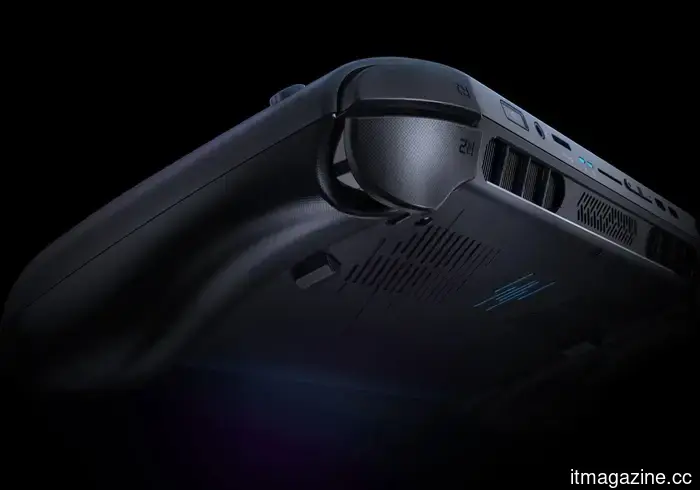
The standout aspect of the Predator Atlas 8 is undoubtedly its cooling system. Acer claims this is the first handheld gaming device to feature a metal AeroBlade fan with ultra-thin 0.1mm blades for enhanced airflow. Additionally, there is a second plastic fan and a feature referred to as “Vortex Flow” tuning that directs heat through the chassis.
This might seem excessive for a handheld device, but thermal management is a common challenge among portable gaming PCs. Models like the ASUS ROG Ally X and Lenovo Legion Go often struggle with balancing performance and overheating issues. If Acer can maintain cooler temperatures without transforming the Atlas 8 into a noisy unit, it could emerge as one of the more viable high-end handheld consoles available.
A handheld loaded with features.
Additionally, the Atlas 8 fulfills almost every expectation for a premium handheld. It includes an 8-inch 120Hz WUXGA display, Wi-Fi 7, Thunderbolt 4, Hall-effect triggers, Xbox Game Pass integration, and PredatorSense controls borrowed from Acer’s gaming laptops. Thus, Acer is not targeting a budget-friendly audience but is instead focusing on enthusiasts who see carrying around a handheld PC the size of a small tablet as perfectly normal.
This leads us to the crucial question: price. Acer has yet to disclose the cost of the Predator Atlas 8, set to launch in October 2026, but considering its metal fans, top-tier Intel graphics, and an array of premium features, it is likely to be quite expensive. Currently, the Atlas 8 presents itself as a luxury gaming handheld that seems to have bypassed the “affordable pricing” segment.
Shimul is a contributor at Digital Trends, with over five years of experience in the tech industry.
Intel has unveiled its Arc G-series processors, aiming to power your next Windows 11 gaming handheld.
Acer, MSI, and OneXPlayer are already positioning themselves for Arc G-series chips.
After years of competing with AMD for dominance in PC gaming, Intel is now set to challenge Team Red’s hold on the Windows 11 gaming handheld market. The company has introduced the Intel Arc G3 and G3 Extreme processors, based on the Panther Lake architecture employed in the Intel Core Ultra Series 3. Intel states that these chips are optimized for handheld devices, featuring 2 performance cores, 8 efficiency cores, 4 low-power efficiency cores, and graphics built on its latest Xe3 architecture. The highest configuration utilizes Intel Arc B390 graphics, which supports real-time ray tracing, XeSS 3, Multi-Frame Generation, Xe Low Latency, and AI-powered upscaling.
You should try Marathon before the community decides for you.
Marathon's free week offers the best opportunity to experience Bungie's bold new game.
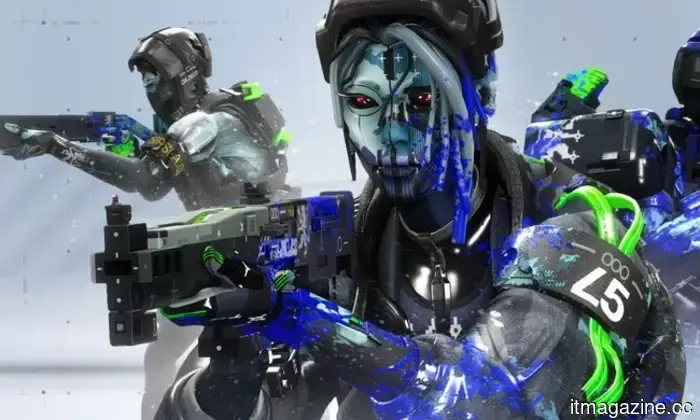
Marathon has turned into one of those titles where the discussions surrounding it often overshadow the game itself. Behind this new extraction shooter lies Bungie's extensive development history and the weight of Destiny 2. Amid rumors of layoffs after the completion of Destiny 2, some individuals have prematurely concluded that Marathon exemplifies everything wrong with live-service gaming, despite their comments being made before they’ve even had a chance to play. With Bungie announcing its first Open Play Week, now is an ideal time for many to engage with Marathon on their own terms.
Nintendo could emerge as the most intriguing battleground for Call of Duty in 2027.
A purported cover image has generated skepticism, while a Switch 2 rumor hints at Call of Duty’s long


Other articles
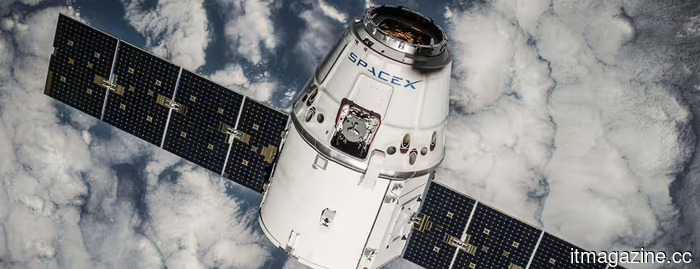 SpaceX reduces IPO target to $1.8 trillion, with marketing set to begin on June 4.
SpaceX has reduced its IPO valuation target from over $2 trillion to a minimum of $1.8 trillion. Marketing will start on June 4, with pricing potentially as soon as June 11. The company anticipates revenue of $18.7 billion in 2025, with a projected loss of $4.94 billion.
SpaceX reduces IPO target to $1.8 trillion, with marketing set to begin on June 4.
SpaceX has reduced its IPO valuation target from over $2 trillion to a minimum of $1.8 trillion. Marketing will start on June 4, with pricing potentially as soon as June 11. The company anticipates revenue of $18.7 billion in 2025, with a projected loss of $4.94 billion.
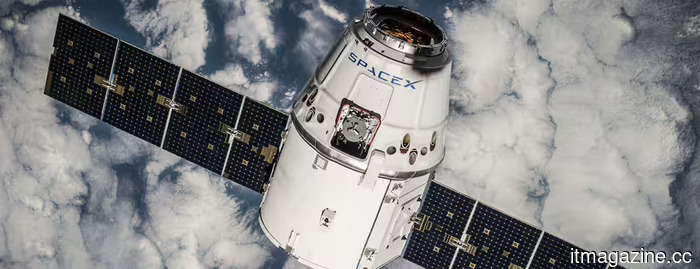 SpaceX has adjusted its IPO target to $1.8 trillion, with marketing set to begin on June 4th.
SpaceX has reduced its IPO valuation target from over $2 trillion to at least $1.8 trillion. Marketing will kick off on June 4, with pricing potentially occurring as soon as June 11. The expected revenue for 2025 is $18.7 billion, with a projected loss of $4.94 billion.
SpaceX has adjusted its IPO target to $1.8 trillion, with marketing set to begin on June 4th.
SpaceX has reduced its IPO valuation target from over $2 trillion to at least $1.8 trillion. Marketing will kick off on June 4, with pricing potentially occurring as soon as June 11. The expected revenue for 2025 is $18.7 billion, with a projected loss of $4.94 billion.
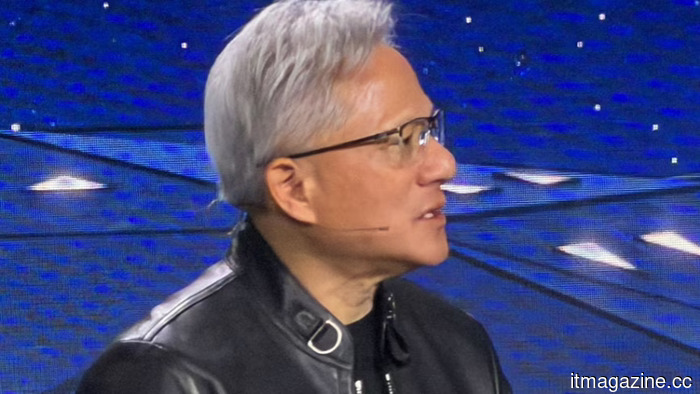 Nvidia invests $6.5 billion in photonics to overcome AI's copper limitations.
Nvidia has allocated over $6.5 billion to photonics since March, focusing on Coherent, Lumentum, Marvell, Corning, and Ayar Labs to substitute copper with light in AI data centers.
Nvidia invests $6.5 billion in photonics to overcome AI's copper limitations.
Nvidia has allocated over $6.5 billion to photonics since March, focusing on Coherent, Lumentum, Marvell, Corning, and Ayar Labs to substitute copper with light in AI data centers.
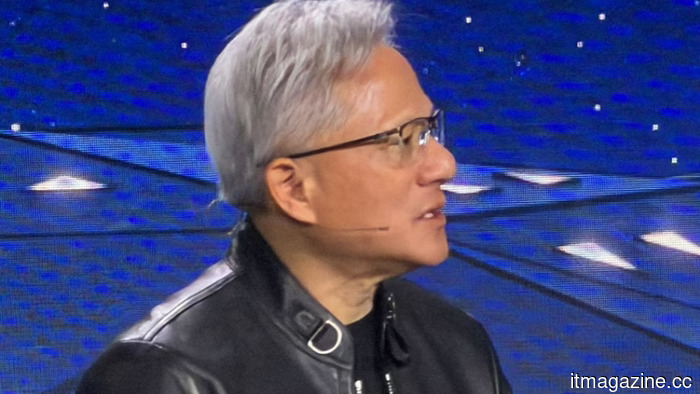 Nvidia invests $6.5 billion in photonics to address the copper bottleneck in AI.
Since March, Nvidia has invested over $6.5 billion in photonics, focusing on companies like Coherent, Lumentum, Marvell, Corning, and Ayar Labs to transition from copper to light in AI data centers.
Nvidia invests $6.5 billion in photonics to address the copper bottleneck in AI.
Since March, Nvidia has invested over $6.5 billion in photonics, focusing on companies like Coherent, Lumentum, Marvell, Corning, and Ayar Labs to transition from copper to light in AI data centers.
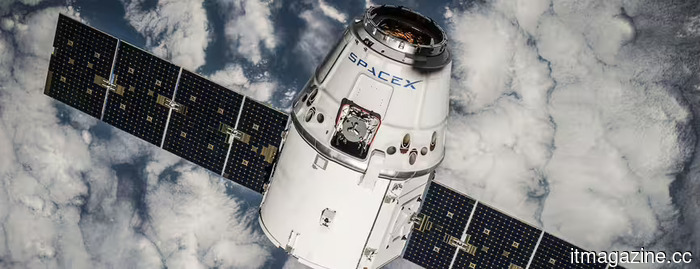 SpaceX reduces IPO target to $1.8 trillion, with marketing commencing on June 4.
SpaceX has reduced its IPO valuation target from over $2 trillion to a minimum of $1.8 trillion. Marketing will start on June 4, with pricing potentially taking place as soon as June 11. The company expects to generate $18.7 billion in revenue by 2025, with a projected loss of $4.94 billion.
SpaceX reduces IPO target to $1.8 trillion, with marketing commencing on June 4.
SpaceX has reduced its IPO valuation target from over $2 trillion to a minimum of $1.8 trillion. Marketing will start on June 4, with pricing potentially taking place as soon as June 11. The company expects to generate $18.7 billion in revenue by 2025, with a projected loss of $4.94 billion.
 Asana purchases Stack AI for $75 million to develop an AI agent platform.
Asana acquires Stack AI, which is supported by Y Combinator, for an estimated $75 million, integrating no-code AI agents into its platform. The revenue for Q1 reaches $205 million, while the stock trades at 53% lower than its value in January.
Asana purchases Stack AI for $75 million to develop an AI agent platform.
Asana acquires Stack AI, which is supported by Y Combinator, for an estimated $75 million, integrating no-code AI agents into its platform. The revenue for Q1 reaches $205 million, while the stock trades at 53% lower than its value in January.
Acer unveils the Predator Atlas 8 gaming handheld featuring metal fans. Let's keep our fingers crossed that it won't be prohibitively expensive.
Acer's Predator Atlas 8 combines desktop-grade Intel performance with an innovative cooling system in a portable design. It appears to be highly competent, but it may come with a hefty price tag as well.