

Nvidia invests $6.5 billion in photonics to address the copper bottleneck in AI.
TL;DR: Since March 2026, Nvidia has invested over $6.5 billion in photonics companies, including $2 billion each in Coherent, Lumentum, and Marvell, up to $3.2 billion in Corning, and $500 million in Ayar Labs’ Series E. This spending aims to transition from copper to light-based interconnects as AI training clusters exceed electrical bandwidth capabilities.
Nvidia has allocated at least $6.5 billion to photonics companies since early March, making it the largest investor in this technology, seen by many in the industry as a replacement for copper wiring in AI data centers. This investment reflects the understanding that copper, the conventional medium for chip data transfer, is nearing its physical limits at a time when AI training clusters are rapidly increasing their bandwidth needs.
Photonics utilizes light instead of electrical signals for data transmission, allowing for significantly higher bandwidth with lower power consumption—critical factors when numerous GPUs must function cohesively. However, the current photonics supply chain isn’t yet equipped to meet the scale required by AI infrastructure. Nvidia's broader investment approach for 2026, which surpasses $40 billion in AI equity investments, is aimed at addressing this gap.
Where the $6.5 billion was allocated:
Most of the funds were directed towards three established optical component manufacturers. Nvidia invested $2 billion each in Coherent and Lumentum in March, which included multi-billion dollar purchase commitments and funding for new fabrication capabilities in the U.S. Additionally, $2 billion was allocated to Marvell, which acquired photonics startup Celestial AI in December 2025 and is working on silicon photonics for AI networking.
Nvidia also positioned up to $3.2 billion in Corning, utilizing a mix of $500 million in equity warrants and multi-year purchase agreements. This funding will help Corning increase its U.S.-based optical connectivity manufacturing capacity tenfold, raise fiber production by over 50%, and establish three new advanced manufacturing plants in North Carolina and Texas, generating over 3,000 jobs.
Furthermore, Nvidia participated in Ayar Labs’ $500 million Series E round alongside AMD and MediaTek, valuing the startup at $3.75 billion. Ayar Labs focuses on developing silicon photonics chiplets that integrate directly with processors, advancing the technology known as co-packaged optics beyond the discrete optical modules targeted by larger investments.
Why copper cannot meet demand:
The fundamental issue lies in physics. Copper interconnects experience signal degradation and higher power consumption as data rates rise. Within a single GPU rack, copper can manage bandwidth effectively. However, as AI training clusters extend across multiple racks, the distance between chips exceeds the efficient service capability of copper.
An example of this is Nvidia’s next-generation Vera Rubin platform. The Vera Rubin Ultra NVL576, a 576-GPU supercomputer spanning eight racks, employs copper within each rack while utilizing optical interconnects between them. Jensen Huang has referred to this platform as the largest product launch in Taiwan's history, comprising nearly 2 million parts developed through 150 ecosystem partners on the island.
Transitioning from copper to optics is not a distant prospect. Nvidia introduced its Quantum-X and Spectrum-X Photonics platforms in March 2025, which represent the first commercial-grade co-packaged optics networking switches created in collaboration with TSMC, Coherent, Lumentum, Corning, and Foxconn. The $6.5 billion in investments intends to ensure the supply chain can produce the necessary components at the volume required by the Vera Rubin system.
A supply chain Nvidia seeks to secure:
Nvidia’s substantial spending on photonics has raised alarm among competitors. Reports from TechTimes indicate that Nvidia’s purchase commitments to Coherent and Lumentum could effectively dominate the global supply of advanced laser components until 2027, thus relegating competing chipmakers and data center operators to a lesser priority. While AMD and MediaTek have co-invested in Ayar Labs, their investment levels do not approach Nvidia's extensive photonics commitment. The investments also hold geopolitical significance, as Huang has stated that competitors in China utilizing Huawei chips for advanced AI could pose a significant threat to the U.S., making domestic photonics manufacturing a strategic priority.
Other players in this sector include Lightmatter, valued at $4.4 billion, which is developing a 3D-stacked silicon photonics engine called Passage. Its recently announced L20 module can reach 6.4 terabits per second in each direction and is expected to begin sampling in late 2026. Companies like Broadcom, Intel, and Cisco are also developing optical interconnect products, although none have matched the ecosystem-wide investment made by Nvidia.
The financial landscape:
Nvidia reported first-quarter revenue of $44.1 billion and projected $91 billion for the second quarter, approving an additional $80 billion in share buybacks. The company’s market capitalization is roughly $4 trillion. Although
Other articles
 Asana purchases Stack AI for $75 million to develop an AI agent platform.
Asana acquires Stack AI, which is backed by Y Combinator, for an estimated $75 million, incorporating no-code AI agents into its platform. Revenue for Q1 reaches $205 million while stock is trading 53% lower than in January.
Asana purchases Stack AI for $75 million to develop an AI agent platform.
Asana acquires Stack AI, which is backed by Y Combinator, for an estimated $75 million, incorporating no-code AI agents into its platform. Revenue for Q1 reaches $205 million while stock is trading 53% lower than in January.
 Asana has purchased Stack AI for $75 million to develop an AI agent platform.
Asana has acquired Stack AI, which is supported by Y Combinator, for an estimated $75 million, integrating no-code AI agents into its platform. In the first quarter, revenue reached $205 million, while its stock is trading 53% lower than in January.
Asana has purchased Stack AI for $75 million to develop an AI agent platform.
Asana has acquired Stack AI, which is supported by Y Combinator, for an estimated $75 million, integrating no-code AI agents into its platform. In the first quarter, revenue reached $205 million, while its stock is trading 53% lower than in January.
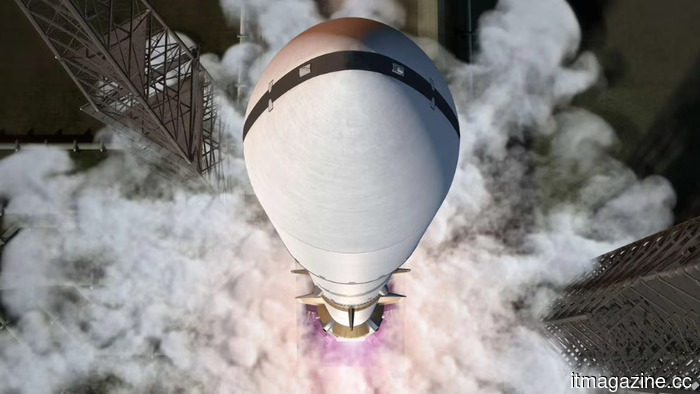 Blue Origin's New Glenn rocket detonates on the launch pad in Florida.
Blue Origin's New Glenn detonated during a static fire test at Cape Canaveral, obliterating its sole launch pad. This incident jeopardizes Amazon's satellite timeline and the NASA Moon Base contract.
Blue Origin's New Glenn rocket detonates on the launch pad in Florida.
Blue Origin's New Glenn detonated during a static fire test at Cape Canaveral, obliterating its sole launch pad. This incident jeopardizes Amazon's satellite timeline and the NASA Moon Base contract.
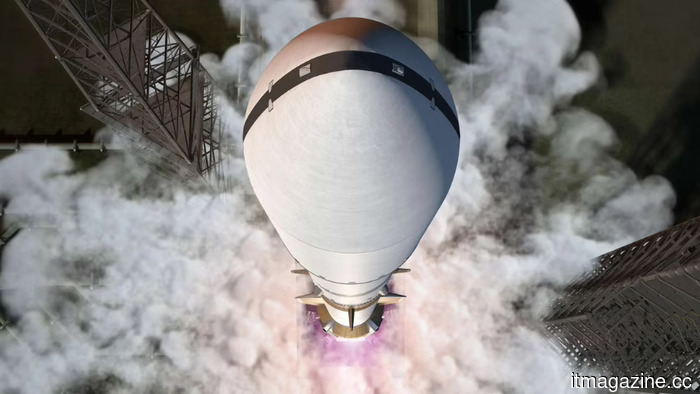 Blue Origin's New Glenn rocket detonates on a launch pad in Florida.
Blue Origin's New Glenn experienced an explosion during a static fire test at Cape Canaveral, leading to the destruction of its sole launch pad. This incident puts Amazon's satellite timeline and NASA's Moon Base contract in jeopardy.
Blue Origin's New Glenn rocket detonates on a launch pad in Florida.
Blue Origin's New Glenn experienced an explosion during a static fire test at Cape Canaveral, leading to the destruction of its sole launch pad. This incident puts Amazon's satellite timeline and NASA's Moon Base contract in jeopardy.
 Acer unveils the Predator Atlas 8 gaming handheld featuring metal fans. Let's keep our fingers crossed that it won't be prohibitively expensive.
Acer's Predator Atlas 8 combines desktop-grade Intel performance with an innovative cooling system in a portable design. It appears to be highly competent, but it may come with a hefty price tag as well.
Acer unveils the Predator Atlas 8 gaming handheld featuring metal fans. Let's keep our fingers crossed that it won't be prohibitively expensive.
Acer's Predator Atlas 8 combines desktop-grade Intel performance with an innovative cooling system in a portable design. It appears to be highly competent, but it may come with a hefty price tag as well.
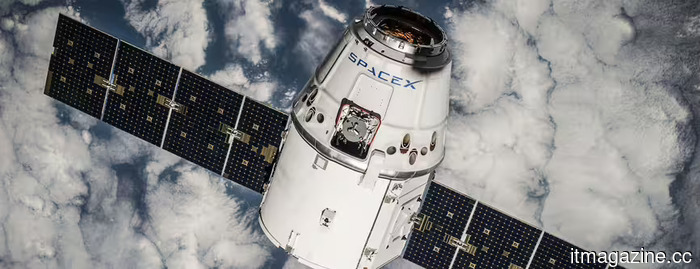 SpaceX reduces IPO target to $1.8 trillion, with marketing commencing on June 4.
SpaceX has lowered its IPO valuation estimate from over $2 trillion to a minimum of $1.8 trillion. Marketing efforts will commence on June 4, with pricing potentially occurring as soon as June 11. The projected revenue for 2025 is $18.7 billion, alongside a loss of $4.94 billion.
SpaceX reduces IPO target to $1.8 trillion, with marketing commencing on June 4.
SpaceX has lowered its IPO valuation estimate from over $2 trillion to a minimum of $1.8 trillion. Marketing efforts will commence on June 4, with pricing potentially occurring as soon as June 11. The projected revenue for 2025 is $18.7 billion, alongside a loss of $4.94 billion.
Nvidia invests $6.5 billion in photonics to address the copper bottleneck in AI.
Since March, Nvidia has invested over $6.5 billion in photonics, focusing on companies like Coherent, Lumentum, Marvell, Corning, and Ayar Labs to transition from copper to light in AI data centers.