
Asana has purchased Stack AI for $75 million to develop an AI agent platform.
TL;DR: Asana has acquired Stack AI, a no-code platform for building AI agents, for an estimated $75 million, enhancing its AI capabilities for cross-system workflow execution. This acquisition was announced alongside a positive Q1 earnings report, revealing a revenue increase of 9.5% to $205.1 million, though the stock is currently trading 53% lower than in January.
Asana has purchased Stack AI, a no-code platform that enables the creation of AI agents functioning across various enterprise systems, including Salesforce, Slack, and Google Workspace. The acquisition, valued at approximately $75 million, was revealed on May 28 after market hours, coinciding with Asana's first-quarter earnings call. Stack AI's founders, Tony Rosinol and Bernard Aceituno, will join Asana, although financial details were not officially shared.
Previously part of Y Combinator's Winter 2023 cohort, Stack AI raised nearly $20 million, including a $16 million Series A from investors such as Gradient and LifeX Ventures. The platform allows companies to create, test, deploy, and manage custom AI agents that automate essential business workflows without the need for coding.
What Asana gains
With this acquisition, Asana integrates a cross-system execution layer that it currently lacks. While Asana’s existing AI products, AI Studio and AI Teammates, function solely within Asana's environment, Stack AI’s agents can access ERP, CRM, and IT service management systems to automate tasks such as customer support, compliance workflows, and cross-departmental operations.
CEO Dan Rogers presented the acquisition as a move toward positioning Asana as the "operating system for human-agent teams," a phrase that has been reiterated since the introduction of AI Teammates in April 2026. AI Teammates are priced at $15 per user per month and offer pre-built agents tailored for roles in marketing, IT, and operations.
The financials behind the acquisition
Asana posted Q1 revenue of $205.1 million, an increase of 9.5% year-over-year, surpassing consensus expectations. Earnings per share were reported at $0.10, beating the estimated $0.07. The company also achieved record GAAP and non-GAAP operating margins and raised its full-year revenue guidance to between $855 million and $863.5 million, up from a previous estimate of $850 million to $858 million.
These figures led to a 3.3% rise in stock price during after-hours trading, reaching $6.88. However, the overall trend has been troubling, as a market-wide downturn in early 2026 significantly impacted Asana, with the stock plummeting over 53% year-to-date and a current market capitalization of around $1.5 billion, down from nearly $20 billion in 2021.
A company in flux
The acquisition coincides with a transformative phase at Asana. Co-founder Dustin Moskovitz announced in March 2025 his intention to step down as CEO, with Dan Rogers, previously of LaunchDarkly and ServiceNow, succeeding him in July 2025. Moskovitz has since taken on the role of Chair, where he focuses on product vision and AI strategy.
Rogers is heavily pursuing an AI shift, arguing that Asana's Work Graph—a data model mapping projects, tasks, ownership, and dependencies—provides the essential context and governance for AI agents to function effectively. Stack AI enhances this by giving those agents the capability to execute workflows beyond Asana’s confines.
The competitive landscape
Asana is not the only work management platform investing in AI agent technology. Zendesk has acquired Forethought in its largest deal in 20 years, betting on 2026 as the year when AI agents surpass human agents in customer service roles. Google introduced a range of enterprise AI tools at Cloud Next 2026, while Salesforce has focused its strategy around Agentforce. Both Monday.com and Notion have also rolled out their own agent features.
Stack AI faced considerable competition from automation platforms like Zapier and from AI labs such as OpenAI and Anthropic, which have developed their own tools for creating agents. The no-code agent-builder market has rapidly become crowded, and Stack AI’s choice to sell rather than pursue further funding indicates that remaining independent may have been increasingly challenging.
For Asana, the critical question is whether the $75 million investment can sufficiently change the company's direction. As the software industry shifts towards AI agents, competitors are reducing staff to finance similar transformations that Asana is attempting through acquisitions. After a dramatic decline in stock value over five months, Asana will need more than a shift in narrative; it requires operational success with the agents, customer adoption, and a revenue growth sufficient to validate this endeavor.
Other articles
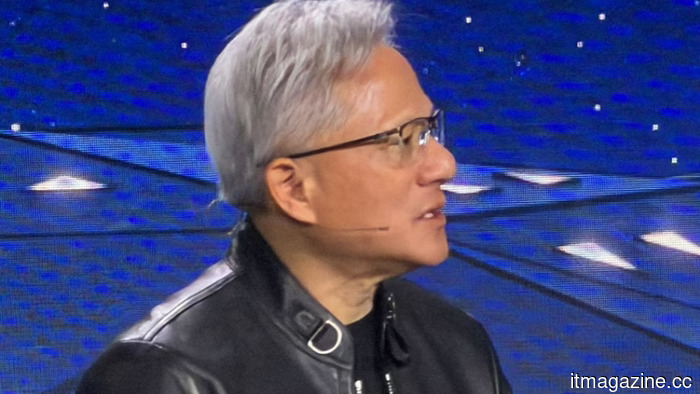 Nvidia invests $6.5 billion in photonics to address the copper bottleneck in AI.
Since March, Nvidia has invested over $6.5 billion in photonics, focusing on companies like Coherent, Lumentum, Marvell, Corning, and Ayar Labs to transition from copper to light in AI data centers.
Nvidia invests $6.5 billion in photonics to address the copper bottleneck in AI.
Since March, Nvidia has invested over $6.5 billion in photonics, focusing on companies like Coherent, Lumentum, Marvell, Corning, and Ayar Labs to transition from copper to light in AI data centers.
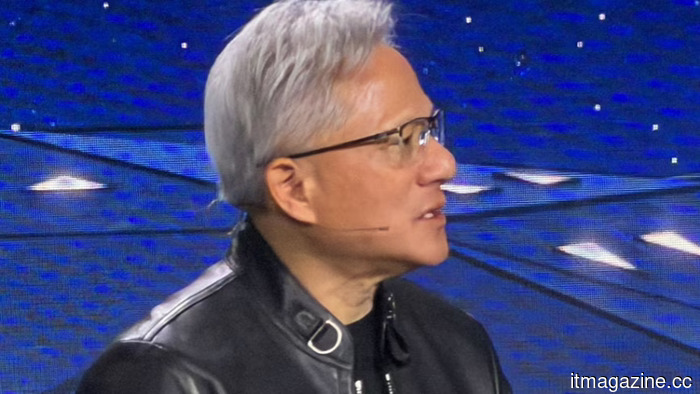 Nvidia invests $6.5 billion in photonics to overcome AI's copper limitations.
Nvidia has allocated over $6.5 billion to photonics since March, focusing on Coherent, Lumentum, Marvell, Corning, and Ayar Labs to substitute copper with light in AI data centers.
Nvidia invests $6.5 billion in photonics to overcome AI's copper limitations.
Nvidia has allocated over $6.5 billion to photonics since March, focusing on Coherent, Lumentum, Marvell, Corning, and Ayar Labs to substitute copper with light in AI data centers.
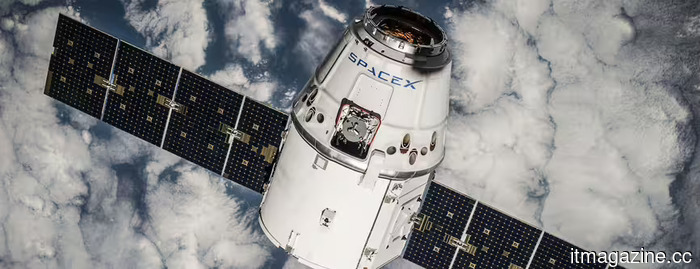 SpaceX reduces IPO target to $1.8 trillion, with marketing commencing on June 4.
SpaceX has lowered its IPO valuation estimate from over $2 trillion to a minimum of $1.8 trillion. Marketing efforts will commence on June 4, with pricing potentially occurring as soon as June 11. The projected revenue for 2025 is $18.7 billion, alongside a loss of $4.94 billion.
SpaceX reduces IPO target to $1.8 trillion, with marketing commencing on June 4.
SpaceX has lowered its IPO valuation estimate from over $2 trillion to a minimum of $1.8 trillion. Marketing efforts will commence on June 4, with pricing potentially occurring as soon as June 11. The projected revenue for 2025 is $18.7 billion, alongside a loss of $4.94 billion.
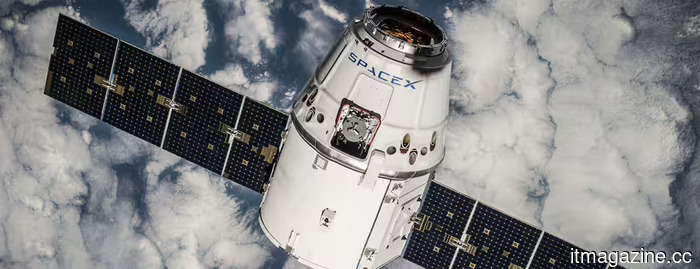 SpaceX has adjusted its IPO target to $1.8 trillion, with marketing set to begin on June 4th.
SpaceX has reduced its IPO valuation target from over $2 trillion to at least $1.8 trillion. Marketing will kick off on June 4, with pricing potentially occurring as soon as June 11. The expected revenue for 2025 is $18.7 billion, with a projected loss of $4.94 billion.
SpaceX has adjusted its IPO target to $1.8 trillion, with marketing set to begin on June 4th.
SpaceX has reduced its IPO valuation target from over $2 trillion to at least $1.8 trillion. Marketing will kick off on June 4, with pricing potentially occurring as soon as June 11. The expected revenue for 2025 is $18.7 billion, with a projected loss of $4.94 billion.
 Waymo's latest Ojai robotaxi appears to be designed for the future, and it also features an enhanced brain.
Waymo's Ojai robotaxi combines sleek, futuristic design with an emphasis on accessibility and advanced autonomy. Initial riders are set to experience it soon, while a larger expansion is already in progress.
Waymo's latest Ojai robotaxi appears to be designed for the future, and it also features an enhanced brain.
Waymo's Ojai robotaxi combines sleek, futuristic design with an emphasis on accessibility and advanced autonomy. Initial riders are set to experience it soon, while a larger expansion is already in progress.
 Asana has purchased Stack AI for $75 million to develop an AI agent platform.
Asana has acquired Stack AI, which is backed by Y Combinator, for an estimated $75 million, thereby incorporating no-code AI agents into its platform. Revenue for Q1 reached $205 million, while the stock is trading 53% lower than it was in January.
Asana has purchased Stack AI for $75 million to develop an AI agent platform.
Asana has acquired Stack AI, which is backed by Y Combinator, for an estimated $75 million, thereby incorporating no-code AI agents into its platform. Revenue for Q1 reached $205 million, while the stock is trading 53% lower than it was in January.
Asana has purchased Stack AI for $75 million to develop an AI agent platform.
Asana has acquired Stack AI, which is supported by Y Combinator, for an estimated $75 million, integrating no-code AI agents into its platform. In the first quarter, revenue reached $205 million, while its stock is trading 53% lower than in January.