

Are the EU's tech regulations sufficient? Founders, policymakers, and operators gather in Amsterdam to talk about the realities of scaling in Europe.
Independent research conducted by DutchBasecamp and Ogni, which involved insights from over 150 founders across Europe, will be unveiled at a special event in Amsterdam co-hosted with CCIA Europe on June 30.
Startup and scale-up founders throughout Europe are increasingly expressing concerns that fragmented and overlapping digital regulations are hindering innovation, delaying growth, and complicating global competition. Regulatory frameworks such as GDPR, the AI Act, NIS2, CRA, DORA, and MDR/IVDR are no longer viewed as isolated issues. Instead, many companies are grappling with the cumulative challenge of complying with multiple regulations simultaneously across 27 member states.
Despite several years of discussions regarding the Single Market, many founders feel it still does not function as a unified entity in practice.
The latest updates from the EU tech community, including insights from our seasoned founder Boris and some dubious AI-generated art, are available for free every week in your inbox. Sign up now! This ongoing discussion will take place in Amsterdam.
On June 30, DutchBasecamp and CCIA Europe will present “EU Nough Tech Rules? The Realities of Scaling in Europe,” an exclusive event uniting founders, CEOs from rapidly growing European tech firms, investors, stakeholders, and policymakers from Brussels and the Netherlands, along with key leaders in the ecosystem. The event will feature the presentation of new independent research carried out by DutchBasecamp in collaboration with Ogni, based on interviews and surveys from more than 150 founders and operators across various EU member states.
What was initially regarded mainly as a legal or compliance matter is increasingly perceived as an operational and competitive issue. Founders involved in the research reported challenges such as delayed market entry, extended procurement processes, rising compliance costs, stalled product launches, and increased uncertainty surrounding growth strategies.
Some companies are now considering regulatory complexities when deciding where to hire, launch products, and whether to expand within Europe at all.
The research encompasses companies from Seed stage to Series F and emphasizes practical implications rather than policy theory, exploring how Europe's regulatory landscape affects businesses.
For many founders, the core issue is not the regulations themselves but rather the overlapping, fragmented nature, and inconsistent enforcement across markets that are meant to operate under a singular European framework.
Moreover, founders are beginning to pose a challenging question: if Europe aims to foster globally competitive tech leaders, can it afford to create an environment where scaling across Europe is so operationally burdensome?
There is still an opportunity to contribute to the research if you are a founder, operator, or tech leader working across Europe.
Contribute to the research.
The findings will be shared during the event in Amsterdam on June 30. Request an invitation to attend.
Other articles
 Nvidia invests $6.5 billion in photonics to overcome AI's copper limitations.
Nvidia has allocated over $6.5 billion to photonics since March, focusing on Coherent, Lumentum, Marvell, Corning, and Ayar Labs to substitute copper with light in AI data centers.
Nvidia invests $6.5 billion in photonics to overcome AI's copper limitations.
Nvidia has allocated over $6.5 billion to photonics since March, focusing on Coherent, Lumentum, Marvell, Corning, and Ayar Labs to substitute copper with light in AI data centers.
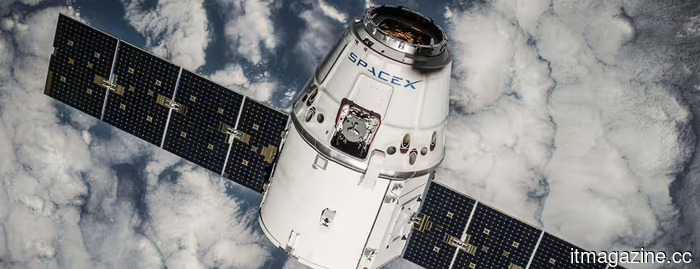 SpaceX reduces IPO target to $1.8 trillion, with marketing set to begin on June 4.
SpaceX has reduced its IPO valuation target from over $2 trillion to a minimum of $1.8 trillion. Marketing will start on June 4, with pricing potentially as soon as June 11. The company anticipates revenue of $18.7 billion in 2025, with a projected loss of $4.94 billion.
SpaceX reduces IPO target to $1.8 trillion, with marketing set to begin on June 4.
SpaceX has reduced its IPO valuation target from over $2 trillion to a minimum of $1.8 trillion. Marketing will start on June 4, with pricing potentially as soon as June 11. The company anticipates revenue of $18.7 billion in 2025, with a projected loss of $4.94 billion.
 Asana purchases Stack AI for $75 million to develop an AI agent platform.
Asana acquires Stack AI, which is backed by Y Combinator, for an estimated $75 million, incorporating no-code AI agents into its platform. Revenue for Q1 reaches $205 million while stock is trading 53% lower than in January.
Asana purchases Stack AI for $75 million to develop an AI agent platform.
Asana acquires Stack AI, which is backed by Y Combinator, for an estimated $75 million, incorporating no-code AI agents into its platform. Revenue for Q1 reaches $205 million while stock is trading 53% lower than in January.
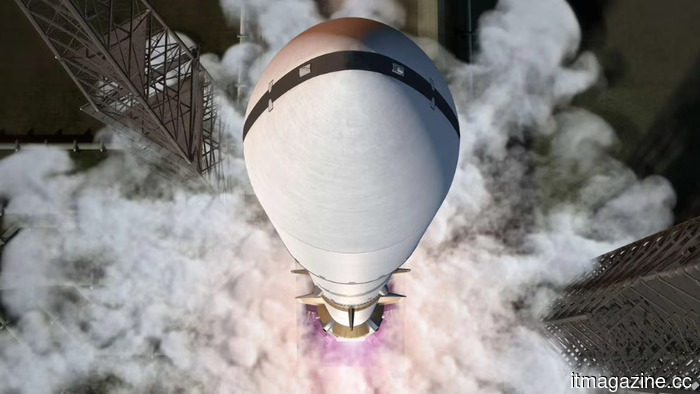 Blue Origin's New Glenn rocket detonates on the launch pad in Florida.
Blue Origin's New Glenn detonated during a static fire test at Cape Canaveral, obliterating its sole launch pad. This incident jeopardizes Amazon's satellite timeline and the NASA Moon Base contract.
Blue Origin's New Glenn rocket detonates on the launch pad in Florida.
Blue Origin's New Glenn detonated during a static fire test at Cape Canaveral, obliterating its sole launch pad. This incident jeopardizes Amazon's satellite timeline and the NASA Moon Base contract.
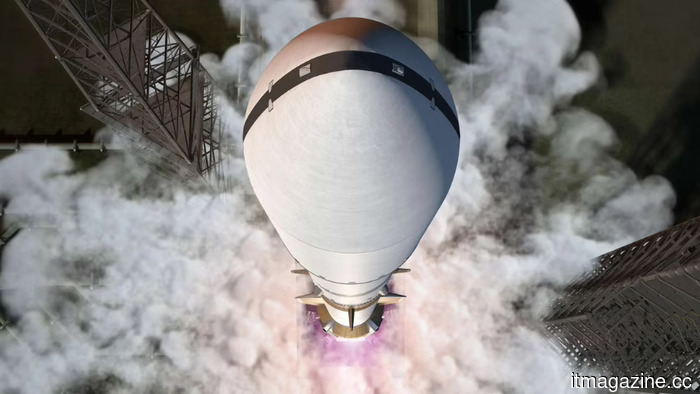 Blue Origin's New Glenn rocket detonates on a launch pad in Florida.
Blue Origin's New Glenn experienced an explosion during a static fire test at Cape Canaveral, leading to the destruction of its sole launch pad. This incident puts Amazon's satellite timeline and NASA's Moon Base contract in jeopardy.
Blue Origin's New Glenn rocket detonates on a launch pad in Florida.
Blue Origin's New Glenn experienced an explosion during a static fire test at Cape Canaveral, leading to the destruction of its sole launch pad. This incident puts Amazon's satellite timeline and NASA's Moon Base contract in jeopardy.
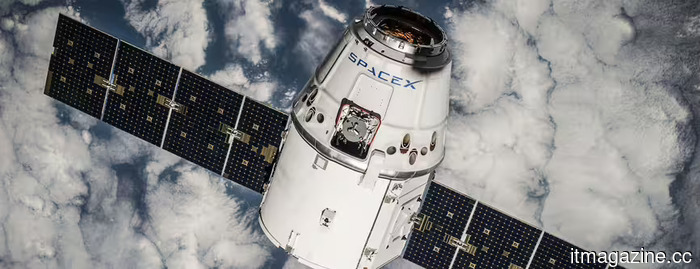 SpaceX reduces IPO target to $1.8 trillion, with marketing commencing on June 4.
SpaceX has lowered its IPO valuation estimate from over $2 trillion to a minimum of $1.8 trillion. Marketing efforts will commence on June 4, with pricing potentially occurring as soon as June 11. The projected revenue for 2025 is $18.7 billion, alongside a loss of $4.94 billion.
SpaceX reduces IPO target to $1.8 trillion, with marketing commencing on June 4.
SpaceX has lowered its IPO valuation estimate from over $2 trillion to a minimum of $1.8 trillion. Marketing efforts will commence on June 4, with pricing potentially occurring as soon as June 11. The projected revenue for 2025 is $18.7 billion, alongside a loss of $4.94 billion.
Are the EU's tech regulations sufficient? Founders, policymakers, and operators gather in Amsterdam to talk about the realities of scaling in Europe.
On June 30, DutchBasecamp and CCIA Europe will present "EU Nough Tech Rules? The Realities of Scaling in Europe," an exclusive gathering of founders and CEOs from rapidly growing European tech firms.