
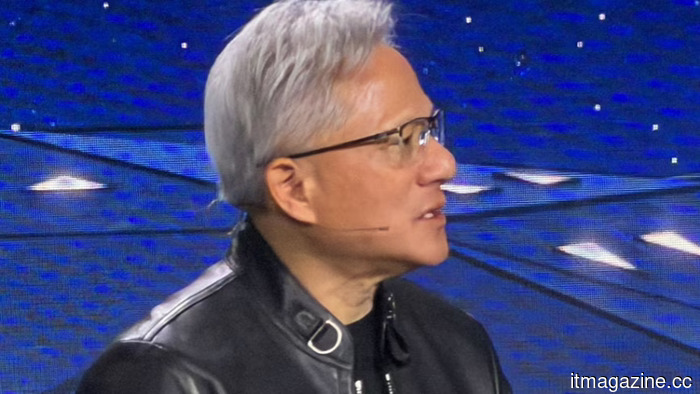
Nvidia invests $6.5 billion in photonics to overcome AI's copper limitations.
Nvidia has allocated at least $6.5 billion to photonics companies since March 2026, which includes $2 billion investments in Coherent, Lumentum, and Marvell each, up to $3.2 billion in Corning, and participation in Ayar Labs’ $500 million Series E. The goal of this spending is to transition from copper to light-based interconnects as AI training clusters exceed the limitations of electrical bandwidth.
Since early March, Nvidia has emerged as the largest individual investor in photonics, a technology anticipated to replace copper wiring as the foundation for AI data centers. This investment strategy comes from the understanding that copper, the conventional medium for data transfer between chips, is nearing its physical limits while AI training demands significantly higher bandwidth.
Photonics transmits data using light instead of electrical signals, providing higher bandwidth and lower power consumption, which are essential for systems with thousands of GPUs. However, the current photonics supply chain is not sufficiently robust to meet the needs of AI infrastructures. Nvidia's broader investment approach in 2026, which exceeds $40 billion in AI bets, is aimed at addressing this shortfall.
The majority of the $6.5 billion invested has been directed towards three well-established optical component manufacturers. Nvidia put $2 billion each into Coherent and Lumentum in early March, including multi-billion-dollar purchase commitments and funding for new manufacturing capabilities in the US. An additional $2 billion was allocated to Marvell, known for acquiring photonics startup Celestial AI in December 2025 and developing silicon photonics for AI networking.
Nvidia also invested up to $3.2 billion in Corning through a mix of $500 million in equity warrants and multi-year purchase agreements. This funding will enable Corning to increase its US production capacity for optical connectivity tenfold, boost fiber production by over 50%, and construct three new advanced manufacturing facilities in North Carolina and Texas, resulting in over 3,000 new jobs.
Additionally, Nvidia joined AMD and MediaTek in Ayar Labs’ $500 million Series E, valuing the co-packaged optics startup at $3.75 billion. Ayar Labs focuses on silicon photonics chiplets that integrate directly with processors, advancing the technology known as co-packaged optics beyond the discrete optical modules targeted by the larger investments.
The primary challenge lies in the physics of copper. As data rates rise, copper interconnects experience loss of signal integrity and increased power consumption. While copper can manage bandwidth within a single rack of GPUs at acceptable power levels, it becomes inefficient when AI training clusters extend across multiple racks.
Nvidia’s upcoming Vera Rubin platform exemplifies this transition. The Vera Rubin Ultra NVL576, a supercomputer housing 576 GPUs across eight racks, utilizes copper within racks and optical interconnects between them. Jensen Huang has described this platform as the largest product launch in Taiwan's history, comprising nearly 2 million parts from 150 ecosystem partners on the island.
The shift from copper to optics is not merely a future prospect. Nvidia introduced its Quantum-X and Spectrum-X Photonics platforms in March 2025, launching the first commercial-grade co-packaged optics networking switches in collaboration with TSMC, Coherent, Lumentum, Corning, and Foxconn. The $6.5 billion in investments is intended to secure a supply chain capable of producing the necessary components at the scale required for Vera Rubin.
Nvidia's significant spending in the photonics domain has raised concerns among competitors. Reports suggest that Nvidia’s purchase commitments to Coherent and Lumentum may effectively dominate the global supply of high-end laser components until 2027, pushing other chipmakers and data center operators to a disadvantage. AMD and MediaTek have attempted to counter this by investing in Ayar Labs, but neither has equaled the scale of Nvidia’s photonics investments. These investments also carry geopolitical implications. Huang has indicated that the advancement of Chinese competitors using Huawei chips for AI could be detrimental to the US, and securing domestic photonics manufacturing aligns with this strategic perspective.
Other notable companies in this field include Lightmatter, valued at $4.4 billion, which is creating a 3D-stacked silicon photonics engine called Passage. Its L20 module, introduced in March, is designed to achieve 6.4 terabits per second in each direction and is anticipated to begin sampling in late 2026. Broadcom, Intel, and Cisco are also working on optical interconnect products, but none have made the extensive ecosystem-level investments that Nvidia has.
From a financial standpoint, Nvidia reported first-quarter revenues of $44.1 billion, projecting $91 billion for the second quarter, and has authorized another $80 billion in share buybacks. Its market capitalization hovers around $4 trillion. The $6.5 billion allocated to photonics in just three months is negligible compared to its overall finances, yet it represents a significant portion of the annual revenue for the
Other articles
 After a long wait, Spotify will allow you to organize playlist folders on mobile devices.
After a long period of being available solely on desktop, Spotify playlist folders are now accessible on mobile. This update comes alongside features such as bulk editing, background downloads for iOS, and a shuffle button as part of a new series of app enhancements.
After a long wait, Spotify will allow you to organize playlist folders on mobile devices.
After a long period of being available solely on desktop, Spotify playlist folders are now accessible on mobile. This update comes alongside features such as bulk editing, background downloads for iOS, and a shuffle button as part of a new series of app enhancements.
 Asana has purchased Stack AI for $75 million to develop an AI agent platform.
Asana has acquired Stack AI, which is backed by Y Combinator, for an estimated $75 million, thereby incorporating no-code AI agents into its platform. Revenue for Q1 reached $205 million, while the stock is trading 53% lower than it was in January.
Asana has purchased Stack AI for $75 million to develop an AI agent platform.
Asana has acquired Stack AI, which is backed by Y Combinator, for an estimated $75 million, thereby incorporating no-code AI agents into its platform. Revenue for Q1 reached $205 million, while the stock is trading 53% lower than it was in January.
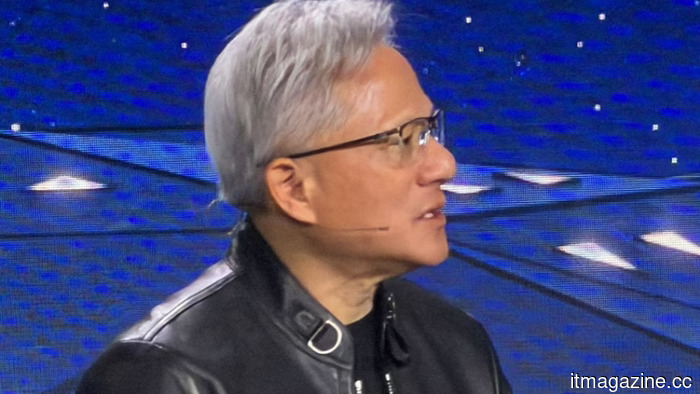 Nvidia invests $6.5 billion in photonics to address the copper bottleneck in AI.
Since March, Nvidia has invested over $6.5 billion in photonics, focusing on companies like Coherent, Lumentum, Marvell, Corning, and Ayar Labs to transition from copper to light in AI data centers.
Nvidia invests $6.5 billion in photonics to address the copper bottleneck in AI.
Since March, Nvidia has invested over $6.5 billion in photonics, focusing on companies like Coherent, Lumentum, Marvell, Corning, and Ayar Labs to transition from copper to light in AI data centers.
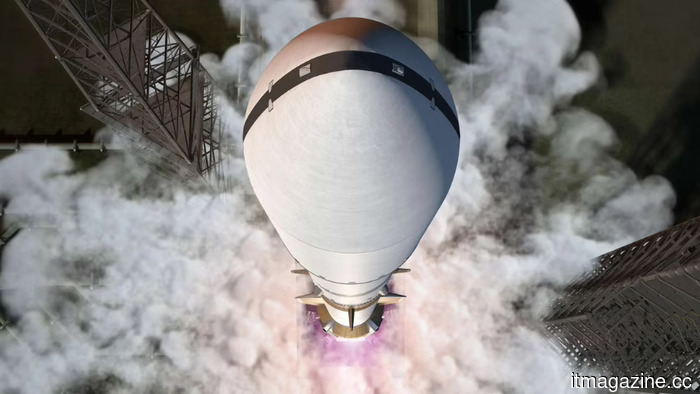 Blue Origin's New Glenn rocket detonates on a launch pad in Florida.
Blue Origin's New Glenn experienced an explosion during a static fire test at Cape Canaveral, leading to the destruction of its sole launch pad. This incident puts Amazon's satellite timeline and NASA's Moon Base contract in jeopardy.
Blue Origin's New Glenn rocket detonates on a launch pad in Florida.
Blue Origin's New Glenn experienced an explosion during a static fire test at Cape Canaveral, leading to the destruction of its sole launch pad. This incident puts Amazon's satellite timeline and NASA's Moon Base contract in jeopardy.
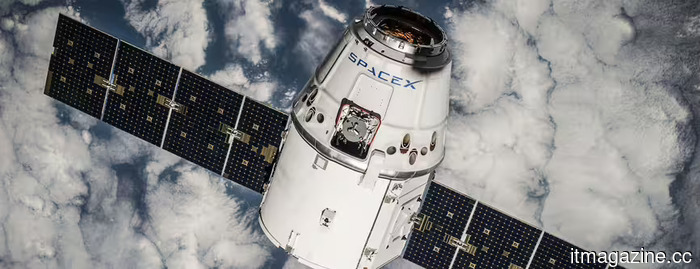 SpaceX reduces IPO target to $1.8 trillion, with marketing commencing on June 4.
SpaceX has lowered its IPO valuation estimate from over $2 trillion to a minimum of $1.8 trillion. Marketing efforts will commence on June 4, with pricing potentially occurring as soon as June 11. The projected revenue for 2025 is $18.7 billion, alongside a loss of $4.94 billion.
SpaceX reduces IPO target to $1.8 trillion, with marketing commencing on June 4.
SpaceX has lowered its IPO valuation estimate from over $2 trillion to a minimum of $1.8 trillion. Marketing efforts will commence on June 4, with pricing potentially occurring as soon as June 11. The projected revenue for 2025 is $18.7 billion, alongside a loss of $4.94 billion.
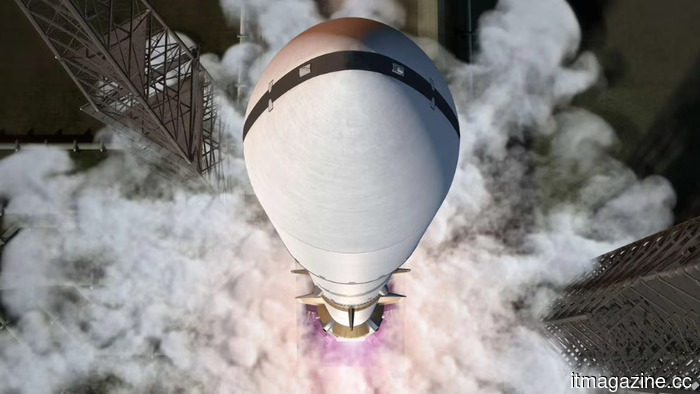 Blue Origin's New Glenn rocket detonates on the launch pad in Florida.
Blue Origin's New Glenn detonated during a static fire test at Cape Canaveral, obliterating its sole launch pad. This incident jeopardizes Amazon's satellite timeline and the NASA Moon Base contract.
Blue Origin's New Glenn rocket detonates on the launch pad in Florida.
Blue Origin's New Glenn detonated during a static fire test at Cape Canaveral, obliterating its sole launch pad. This incident jeopardizes Amazon's satellite timeline and the NASA Moon Base contract.
Nvidia invests $6.5 billion in photonics to overcome AI's copper limitations.
Nvidia has allocated over $6.5 billion to photonics since March, focusing on Coherent, Lumentum, Marvell, Corning, and Ayar Labs to substitute copper with light in AI data centers.