
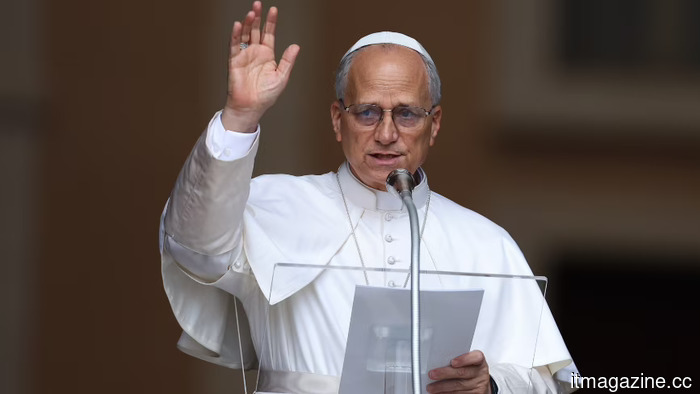
Pope Leo XIV instructs the Vatican to regulate AI in the initial encyclical of his papacy.
Magnifica humanitas advocates for dismantling monopolistic control of technology, dismisses algorithmic warfare, and is being introduced by Chris Olah, the co-founder of Anthropic.
Pope Leo XIV utilized the first encyclical of his papacy, released in Rome on Monday, to urge for the disarmament of artificial intelligence. The 245-paragraph document, titled Magnifica humanitas, describes AI as a technology that has started to overshadow the very people it was designed to assist, arguing that disarming AI involves reinstating the moral superiority of humans over algorithms.
“To disarm means challenging the belief that technical power inherently grants the right to govern,” the pope noted. “Disarming does not entail rejecting technology; it means preventing it from overpowering humanity.”
This encyclical is the most significant act of his year-long papacy and marks the first time a pope has centered an entire foundational letter on an emerging technology rather than a doctrinal or social issue. Leo, the first American pope and a former math major from Villanova, signed it on May 15, coinciding with the 135th anniversary of Leo XIII’s Rerum novarum, which established Catholic social teaching for the industrial era.
The framing is intentional: this encyclical serves as its successor for the age of AI. Its primary focuses are the issues of concentration and warfare. The pope emphasized the need for AI to be made more “human-friendly” and liberated from “monopolistic control,” targeting the few major US companies that currently shape the technology landscape.
Regarding warfare, he was more emphatic: “No algorithm can render war morally acceptable,” he stated. “AI does not eliminate the fundamental inhumanity of conflict; rather, it can accelerate it and make it more impersonal.”
The selection of speaker for the encyclical's launch highlighted this line of thought. Christopher Olah, co-founder of Anthropic and head of interpretability research, spoke alongside cardinals in the Vatican Synod Hall on Monday morning.
Anthropic has been at the center of a broader global discussion in recent months regarding the security concerns of Mythos, its autonomous vulnerability-discovery model that has uncovered thousands of zero-day vulnerabilities across major operating systems.
The company has experienced conflicts with the Trump administration over its technology's application in warfare and surveillance.
In this context, the encyclical now stands in opposition to the White House's stance. Vice President JD Vance, a Catholic convert with ties to early OpenAI investor Peter Thiel, addressed the document during a press briefing on May 19, saying, “When the leader of the world’s largest Christian denomination speaks on an issue like this, it’s certainly going to have some impact. I’m sure it will offer many insights, some of which I might agree with, and some I may not.”
In the same briefing, he reaffirmed President Donald Trump's desire to secure victory in the AI competition against all other nations.
The existing tension predates this week’s events. Thiel spent part of March in Rome giving private lectures at Palazzo Taverna on the concept of the Antichrist, suggesting that a unified technocratic government could arise under the guise of preventing catastrophes related to AI, nuclear threats, or climate change.
Father Paolo Benanti, the Vatican’s advisor on AI, responded in an op-ed describing Thiel’s lectures as “a prolonged act of heresy” against the prevailing liberal consensus. Leo and Trump have separately disagreed on the conflict in Iran.
By design, an encyclical is not a policy paper but rather a moral framework within which subsequent policy discussions occur. Magnifica humanitas emphasizes “human dignity” and “shared standards of social justice” as central to any future regulatory structures, explicitly rejecting algorithmic warfare.
Pope Leo XIV presented the encyclical personally, deviating from tradition by not delegating it to cardinals, and addressed the world’s 1.4 billion Catholics, recognizing the broader audience.
Other articles
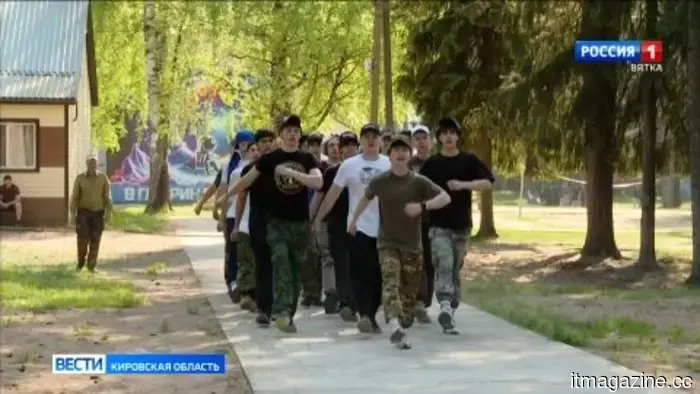 China allocates identification codes to over 28,000 humanoid robots.
China has introduced a national robot identification system that assigns a 29-character code to each humanoid robot, allowing it to be tracked from the factory to the scrapyard, with 28,000 robots already registered.
China allocates identification codes to over 28,000 humanoid robots.
China has introduced a national robot identification system that assigns a 29-character code to each humanoid robot, allowing it to be tracked from the factory to the scrapyard, with 28,000 robots already registered.
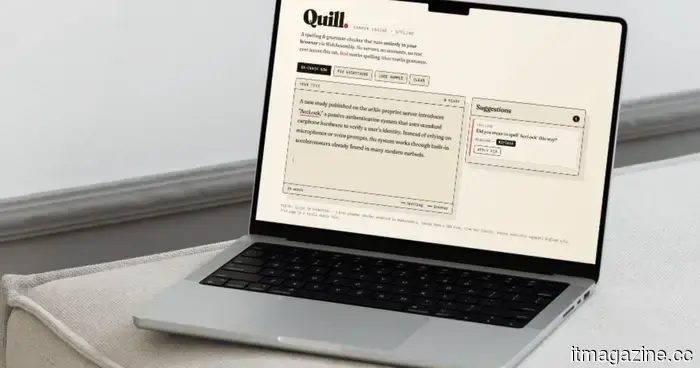 I created an offline alternative to Grammarly and transformed it into a Mac application without any programming.
I utilized Claude to create a completely offline and locally processed substitute for Grammarly. The initial version took me under 30 seconds to complete, and I didn’t need to view or write any code.
I created an offline alternative to Grammarly and transformed it into a Mac application without any programming.
I utilized Claude to create a completely offline and locally processed substitute for Grammarly. The initial version took me under 30 seconds to complete, and I didn’t need to view or write any code.
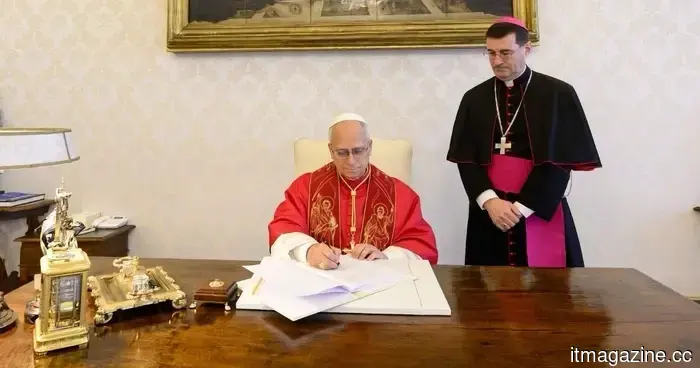 The Pope states that AI should be disarmed and not allowed to dominate humanity. However, we are moving in the opposite direction.
Pope Leo XIV issued his initial encyclical on May 25, discussing artificial intelligence, human dignity, warfare, and the risks associated with allowing technology to be controlled by a select few.
The Pope states that AI should be disarmed and not allowed to dominate humanity. However, we are moving in the opposite direction.
Pope Leo XIV issued his initial encyclical on May 25, discussing artificial intelligence, human dignity, warfare, and the risks associated with allowing technology to be controlled by a select few.
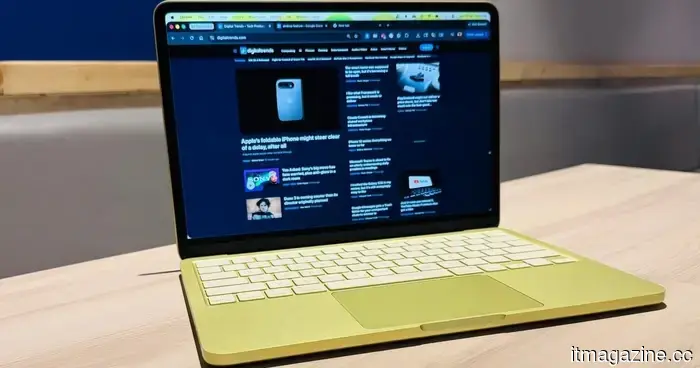 In a market where Mac has been seen as aspirational, it now seems to offer a better value than Windows machines.
MacBooks have traditionally been seen as the high-end, aspirational laptop option, but increasing prices for Windows laptops combined with Apple’s more affordable MacBook approach are changing this narrative.
In a market where Mac has been seen as aspirational, it now seems to offer a better value than Windows machines.
MacBooks have traditionally been seen as the high-end, aspirational laptop option, but increasing prices for Windows laptops combined with Apple’s more affordable MacBook approach are changing this narrative.
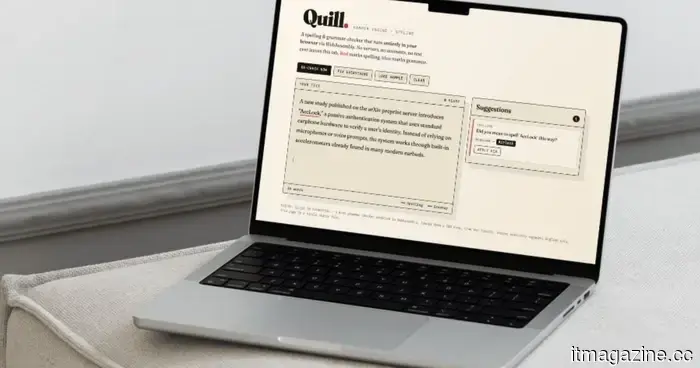 I created an offline alternative to Grammarly and transformed it into a Mac application without writing any code.
I utilized Claude to create a completely offline and locally processed alternative to Grammarly. The initial build took me under 30 seconds, and I didn’t need to view or write any code.
I created an offline alternative to Grammarly and transformed it into a Mac application without writing any code.
I utilized Claude to create a completely offline and locally processed alternative to Grammarly. The initial build took me under 30 seconds, and I didn’t need to view or write any code.
 Microsoft will finally allow you to remove Copilot.
The April 2026 update for Windows 11 introduces an official option to uninstall Copilot, following the fact that only 3.3% of eligible users decided to pay for it and after requests from administrators for removal controls.
Microsoft will finally allow you to remove Copilot.
The April 2026 update for Windows 11 introduces an official option to uninstall Copilot, following the fact that only 3.3% of eligible users decided to pay for it and after requests from administrators for removal controls.
Pope Leo XIV instructs the Vatican to regulate AI in the initial encyclical of his papacy.
Pope Leo XIV's inaugural encyclical, Magnifica humanitas, advocates for the disarmament of AI and prohibits algorithmic warfare. Chris Olah from Anthropic spoke in conjunction with cardinals.