
Microsoft will finally allow you to remove Copilot.
**TL;DR**: Microsoft's April 2026 update allows users and administrators to completely uninstall the Copilot app from Windows 11. This decision comes after low adoption rates, with only 3.3% of eligible users opting to pay for Copilot, alongside ongoing criticism regarding forced AI features without sufficient user control.
Microsoft has introduced the function to fully remove the Copilot app from Windows 11 in the April 2026 update. This change applies to enterprise administrators utilizing Group Policy as well as regular users, who can now uninstall it from the Settings like any other application.
For IT administrators, the new policy, titled “Remove Microsoft Copilot app,” is found under User Configuration, Administrative Templates, Windows Components, Windows AI in the Group Policy Editor. It can also be implemented via the Windows Registry. The policy uninstalls Copilot only if certain criteria are met: both Microsoft 365 Copilot and the standalone Microsoft Copilot must be installed, the user should not have manually installed the Copilot app, and it must not have been launched within the last 28 days.
Home and Pro users have a more straightforward process: by navigating to Settings, then Apps, then Installed Apps, searching for Copilot, and selecting Uninstall. If necessary, the app can be reinstalled later from the Microsoft Store.
This change represents a concession. Since the rollout of Copilot across Windows 11 and Microsoft 365 in 2023, Microsoft has heavily promoted the tool as a core AI product, integrating it into the taskbar, Edge, Notepad, Office apps, and Outlook, all of which run in the background and are enabled by default. Users who wanted to remove it previously had to rely on PowerShell scripts, third-party debloating tools, or registry tweaks. The new policy now legitimizes the removal option.
The timing highlights ongoing issues with Copilot’s adoption, as only 3.3% of Microsoft 365 users with access to Copilot Chat are paying for it. Out of approximately 450 million Microsoft 365 seats, only 15 million are subscribed to Copilot. This low conversion rate suggests that many users either do not find the tool valuable enough to pay for or prefer to avoid it altogether. Microsoft’s own terms describe Copilot as “for entertainment purposes only,” which contrasts with its promotion as a productivity tool priced at $30 per user per month.
The option to uninstall is part of a broader initiative to clean up Windows 11. Microsoft has been eliminating outdated features and reducing pre-installed software in recent updates. WordPad was deprecated in 2024, the Tips app was removed, and Cortana was discontinued. Allowing users to remove Copilot aligns with this reasoning: if a feature is not utilized, forcing it on users may lead to frustration rather than acceptance.
Enterprise clients have been particularly vocal in their objections. IT administrators responsible for managing numerous devices have raised concerns about Copilot being introduced into controlled environments without adequate management options. Microsoft is reassessing its AI approach generally, launching its own MAI model family to decrease reliance on OpenAI and terminating internal Claude Code licenses due to high costs.
It's also important to note the 28-day inactivity stipulation in the Group Policy removal. If a user has utilized Copilot at least once in the last four weeks, the policy will not uninstall it. Microsoft appears to be attempting to retain the app for anyone who has shown a minimal level of usage while providing administrators a means to remove it from machines where it remains unused.
This update does not impact Copilot features integrated into other areas of Windows, such as AI suggestions in the Start menu search, AI functionalities in Paint and Photos, or Copilot features in Edge. Although removing the standalone Copilot app eliminates the specific AI chat interface, it does not remove AI capabilities from the operating system as a whole.
For Microsoft, the rationale is clear. A product that users actively dislike and that administrators need to circumvent creates more negativity toward Windows than any AI feature could justify. Allowing its removal is more cost-effective than managing support issues, community discontent, and enterprise challenges stemming from its imposition.
This trend is evident industry-wide. GitHub halted new Copilot sign-ups following financial issues caused by agentic AI usage. Google has faced backlash over AI Overviews in Search, while Apple resolved an AI exaggeration lawsuit for $250 million. The common takeaway is that users will embrace AI tools that provide clear benefits, but they will resist AI that is enforced upon them without demonstrable value.
Microsoft is currently learning this lesson. Although the option to uninstall may seem minor, it conveys a significant message. When a company that invested $13 billion in OpenAI admits its leading AI product should be optional, it acknowledges that the current version has not yet proven its worth on every desktop.
Other articles
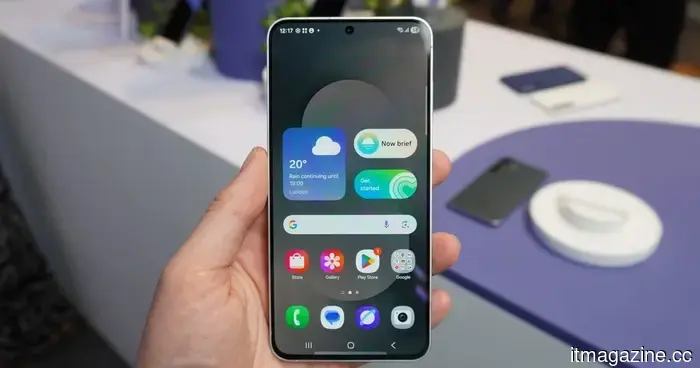 The upcoming budget flagship from Samsung has just been revealed, and here's a glimpse of its design.
Case renders for the Galaxy S26 FE have emerged online, showcasing its design and potential color choices several months before its anticipated release in October.
The upcoming budget flagship from Samsung has just been revealed, and here's a glimpse of its design.
Case renders for the Galaxy S26 FE have emerged online, showcasing its design and potential color choices several months before its anticipated release in October.
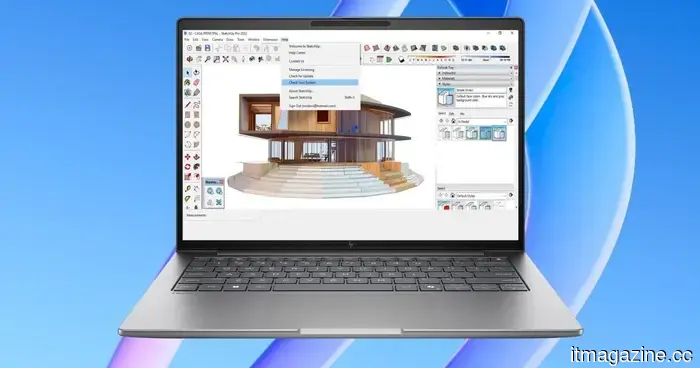 HP's latest ZBook workstations feature AI chips, Blackwell GPUs, and eye-popping price tags.
HP has introduced new ZBook workstation laptops that are equipped with Ryzen AI processors, high-quality displays, and top-tier configurations designed for creators and professional users.
HP's latest ZBook workstations feature AI chips, Blackwell GPUs, and eye-popping price tags.
HP has introduced new ZBook workstation laptops that are equipped with Ryzen AI processors, high-quality displays, and top-tier configurations designed for creators and professional users.
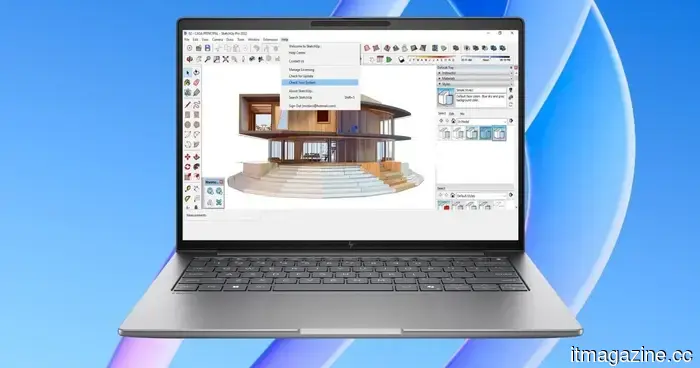 HP's latest ZBook workstations feature AI chips, Blackwell GPUs, and astonishingly high prices.
HP has introduced new ZBook workstation laptops equipped with Ryzen AI processors, high-quality displays, and advanced configurations designed for creators and professional users.
HP's latest ZBook workstations feature AI chips, Blackwell GPUs, and astonishingly high prices.
HP has introduced new ZBook workstation laptops equipped with Ryzen AI processors, high-quality displays, and advanced configurations designed for creators and professional users.
 China allocates identification codes to over 28,000 humanoid robots.
China has introduced a national robot identification system that assigns a 29-character code to each humanoid robot, allowing it to be tracked from the factory to the scrapyard, with 28,000 robots already registered.
China allocates identification codes to over 28,000 humanoid robots.
China has introduced a national robot identification system that assigns a 29-character code to each humanoid robot, allowing it to be tracked from the factory to the scrapyard, with 28,000 robots already registered.
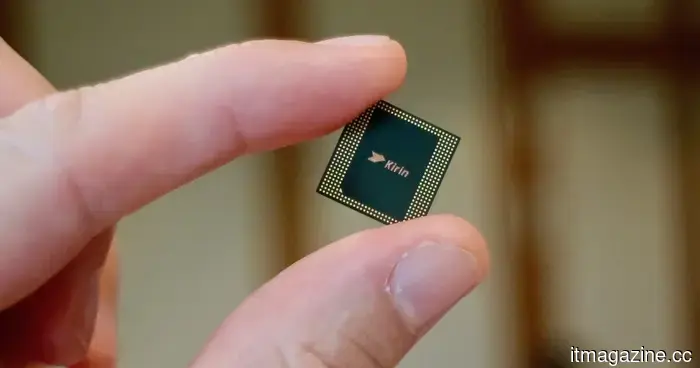 Huawei has introduced its alternative to Moore's Law as it targets the development of 1.4nm chips.
Huawei's Tau Scaling Law redirects the focus of the chip competition from merely reducing transistor size to enhancing signal speed, with the company confidently targeting a density equivalent to 1.4nm by 2031.
Huawei has introduced its alternative to Moore's Law as it targets the development of 1.4nm chips.
Huawei's Tau Scaling Law redirects the focus of the chip competition from merely reducing transistor size to enhancing signal speed, with the company confidently targeting a density equivalent to 1.4nm by 2031.
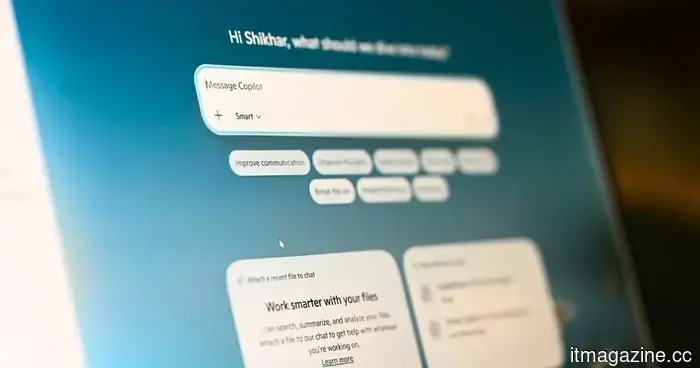 Copilot is receiving a sidebar design for Windows 11, similar to Gemini in Chrome.
Copilot is set to receive a dockable sidebar in Windows 11, functioning similarly to Gemini in Chrome, an approach that Microsoft previously attempted and abandoned.
Copilot is receiving a sidebar design for Windows 11, similar to Gemini in Chrome.
Copilot is set to receive a dockable sidebar in Windows 11, functioning similarly to Gemini in Chrome, an approach that Microsoft previously attempted and abandoned.
Microsoft will finally allow you to remove Copilot.
The April 2026 update for Windows 11 introduces an official option to uninstall Copilot, following the fact that only 3.3% of eligible users decided to pay for it and after requests from administrators for removal controls.