

China allocates identification codes to over 28,000 humanoid robots.
Summary: China has introduced a national identification system for humanoid robots, providing each with a unique 29-character code that monitors its journey from production to disposal. Currently, over 28,000 robots from 200 different models possess IDs. This system records real-time operational data such as joint wear, battery condition, and AI training history.
The Humanoid Full Lifecycle Management Service Platform, developed by the Humanoid Robotics and Embodied Intelligence Standardization committee under the Ministry of Industry and Information Technology, assigns each robot a specific digital code that follows it from manufacturing to recycling. This code encompasses comprehensive information: manufacturer, product model, serial number, hardware details, AI proficiency level, software training history, and production logs. It is inspired by China's 18-character national citizen ID system but includes 11 additional characters to account for machinery-specific operational details. Since its launch by Hubei province’s Humanoid Robotics Innovation Center in May, more than 28,000 robots have been registered through this platform.
This system is dynamic, serving as a continually updated digital registry that tracks maintenance logs, work settings, and real-time performance indicators such as joint wear, battery life, and accuracy of movements. In instances of failure, the platform enables swift identification of faults. Upon decommissioning, the ID continues to accompany the robot through the recycling process.
The urgency for such measures is driven by the rapid growth of China's humanoid robotics sector, which boasts over 100 manufacturers. Investment in robotics and embodied intelligence surpassed the total for the entire year of 2024 by the end of May 2025, with China investing $3.4 billion in new ventures, significantly outpacing both the United States and Europe. Shanghai has developed China's first provincial plan for embodied intelligence, combining research and development support with shared resources for computing, testing, pilot production, and financing.
Humanoid robots are becoming increasingly prevalent in society. A humanoid named Lightning completed the Beijing E-Town Half-Marathon this year in 50 minutes and 26 seconds, outperforming the human world record by nearly seven minutes while autonomously navigating the 21-kilometre course. China's State Grid Corporation intends to utilize 8,500 robots, including humanoids and robotic dogs, for power grid operations. Tea farms in Hubei province have initiated field trials with humanoid workers in preparation for the 2026 World Robot Games.
The ID system seeks to fill a governance gap that has widened with the swift integration of these technologies. In the absence of a standardized method for tracking a robot's manufacturer, software, deployment history, and performance details, assigning liability becomes complicated. If a humanoid causes injury to a worker or damages property, regulators require a comprehensive record linking the incident to the specific robot, its maker, and its past operations. The ID code establishes this connection.
There is a wider regulatory backdrop to consider. China has outpaced other nations regarding AI governance frameworks, introducing algorithmic recommendation rules in 2022, generative AI regulations in 2023, and new rules for deepfakes and synthetic content in 2024. The robot ID system extends this governance model to physical AI, treating humanoid robots similarly to vehicles, medical devices, and industrial equipment that require oversight throughout their lifespan.
The intention behind likening the system to citizen IDs is clear but somewhat flawed; robots are not citizens and do not possess rights. This ID system is an industrial standard rather than a legal classification. However, the structural similarity of having a state-issued identifier that tracks an entity throughout its lifecycle prompts questions that other nations will eventually confront. As humanoid robots transition from factories to hospitals, residences, and public areas, determining accountability for their actions becomes essential. While the ID code does not provide a definitive answer, it lays the groundwork for the necessary information framework.
Currently, there is no comparable system in the United States or Europe. The EU AI Act categorizes AI systems based on risk but does not mandate individual identification for physical robots. The U.S. lacks a federal framework for registering humanoid robots. China's strategy for AI governance consistently emphasizes state insight into technology deployment, and the robot ID system reflects this philosophy.
For manufacturers, the system imposes both responsibilities and potential advantages. Compliance involves submitting comprehensive technical information for each unit manufactured. However, a robot with a well-documented lifecycle history, maintained diligently and used within its designed capabilities, can present a reliable record that serves as a quality indicator for customers. In a market with over 100 manufacturers and no leading brand, standardization becomes a strategic asset as much as a regulatory necessity.
The pertinent question for the global community is not whether China's approach is correct, but whether it is ahead of the curve. Should humanoid robots become as prevalent as China's industrial policies envision, every country will require a methodology to monitor them. China is developing that framework while others are still deliberating the readiness of these robots. With 28,000 units already logged in the system,
Other articles
 HP's latest ZBook workstations feature AI chips, Blackwell GPUs, and astonishingly high prices.
HP has introduced new ZBook workstation laptops equipped with Ryzen AI processors, high-quality displays, and advanced configurations designed for creators and professional users.
HP's latest ZBook workstations feature AI chips, Blackwell GPUs, and astonishingly high prices.
HP has introduced new ZBook workstation laptops equipped with Ryzen AI processors, high-quality displays, and advanced configurations designed for creators and professional users.
 Microsoft will indeed allow you to remove Copilot.
The April 2026 update for Windows 11 introduces an official option to uninstall Copilot, following the fact that only 3.3% of eligible users subscribed to it and administrators requested the ability to remove it.
Microsoft will indeed allow you to remove Copilot.
The April 2026 update for Windows 11 introduces an official option to uninstall Copilot, following the fact that only 3.3% of eligible users subscribed to it and administrators requested the ability to remove it.
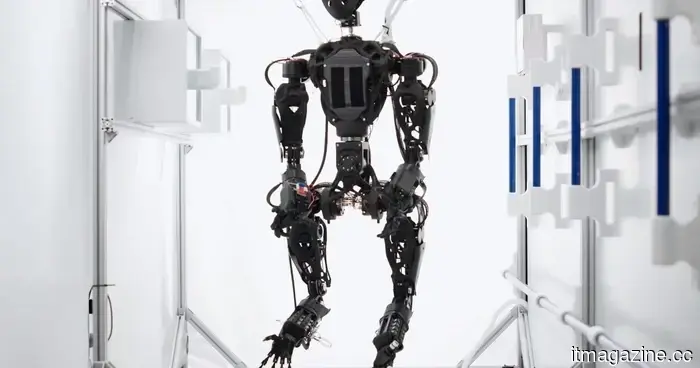 China plans to assign a unique identification code to humanoid robots, similar to how citizens are issued identification numbers.
China's new humanoid robot identification system functions similarly to a citizen identity code, assigning a distinct number that accompanies each bipedal robot throughout its entire lifecycle.
China plans to assign a unique identification code to humanoid robots, similar to how citizens are issued identification numbers.
China's new humanoid robot identification system functions similarly to a citizen identity code, assigning a distinct number that accompanies each bipedal robot throughout its entire lifecycle.
 HP's latest ZBook workstations feature AI chips, Blackwell GPUs, and eye-popping price tags.
HP has introduced new ZBook workstation laptops that are equipped with Ryzen AI processors, high-quality displays, and top-tier configurations designed for creators and professional users.
HP's latest ZBook workstations feature AI chips, Blackwell GPUs, and eye-popping price tags.
HP has introduced new ZBook workstation laptops that are equipped with Ryzen AI processors, high-quality displays, and top-tier configurations designed for creators and professional users.
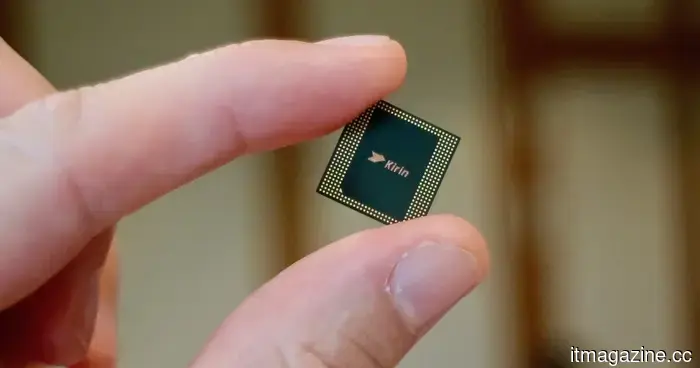 Huawei has introduced its alternative to Moore's Law as it targets the development of 1.4nm chips.
Huawei's Tau Scaling Law redirects the focus of the chip competition from merely reducing transistor size to enhancing signal speed, with the company confidently targeting a density equivalent to 1.4nm by 2031.
Huawei has introduced its alternative to Moore's Law as it targets the development of 1.4nm chips.
Huawei's Tau Scaling Law redirects the focus of the chip competition from merely reducing transistor size to enhancing signal speed, with the company confidently targeting a density equivalent to 1.4nm by 2031.
 Microsoft will allow users to remove the Copilot app as part of its ongoing cleanup for Windows 11.
The most recent update to Windows 11 from Microsoft brings new options for permanently eliminating Copilot via Group Policy, alterations to the Registry, and conventional uninstallation methods.
Microsoft will allow users to remove the Copilot app as part of its ongoing cleanup for Windows 11.
The most recent update to Windows 11 from Microsoft brings new options for permanently eliminating Copilot via Group Policy, alterations to the Registry, and conventional uninstallation methods.
China allocates identification codes to over 28,000 humanoid robots.
China has introduced a national robot identification system that assigns a 29-character code to each humanoid robot, allowing it to be tracked from the factory to the scrapyard, with 28,000 robots already registered.