
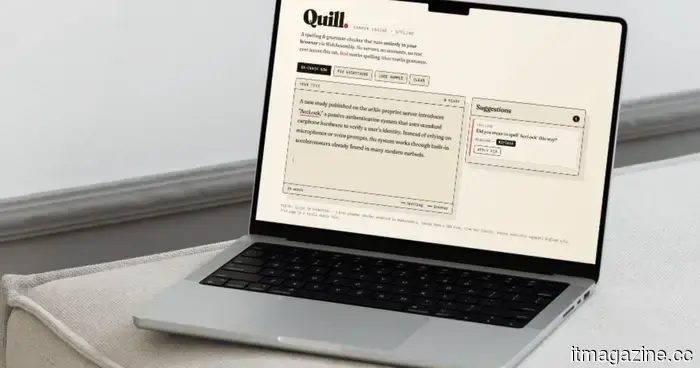
I created an offline alternative to Grammarly and transformed it into a Mac application without any programming.
I composed this entire article while aboard an airplane facing unusual turbulence. The software I utilized for spell-checking and grammatical refinement was developed at an airport. The language engine operates solely on my Mac, completely offline, correcting my typos and eliminating double spaces as I rapidly type and enjoy a sugary coffee.
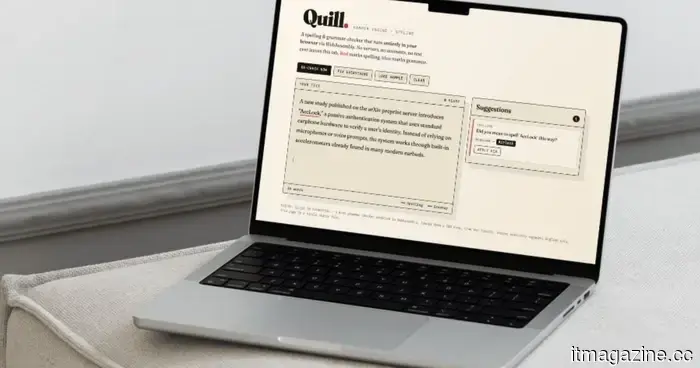
Additionally, I lack coding skills. I haven't written a single line of code, yet the Mac software I'm currently using appears more stylish and performs better than Grammarly ever did. For those unfamiliar, Grammarly is one of the most widely used applications for spelling and grammar checking globally. So, how did I achieve this? I consulted Claude. After stating my requirements and preferences, I created a Grammarly alternative offline in under 30 minutes while avoiding the dreaded “yet-another-subscription” scenario.
The journey began here. / (Nadeem Sarwar / Digital Trends)
The initial version functions as its own website in a browser tab without needing an internet connection. The second version operates as a Chrome extension, functioning seamlessly offline. Lastly, I developed a comprehensive Mac app that serves as a menu bar utility. I had several individuals test these on Mac and Windows systems, and they were quite impressed with the tool’s speed and accuracy.
Addressing my challenges, or controlling my habits
In the past few weeks, I have fully immersed myself in app and software development. My first project was a Mac application that harnesses the motion sensors in AirPods Pro to monitor my posture. Essentially, the app identifies proper posture and sends alerts when I slouch or lean forward. It operates offline, with all processing taking place directly on my Mac.
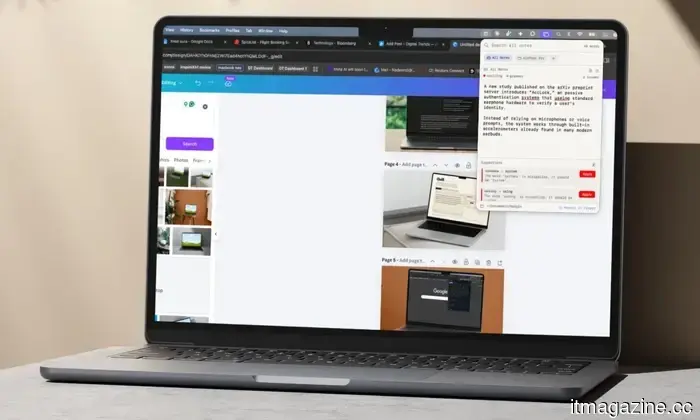
The Mac app I created is a minimalist utility in the menu bar. Nadeem Sarwar / Digital Trends
I accomplished all this without ever seeing the underlying code.
For my next endeavor, I envisioned developing a solution that would free me from the constant need to be online. As an editor who writes all day, Grammarly serves as an essential tool, despite some of its recent questionable practices. I've often lost portions of text in the Grammarly iPad app due to malfunctioning cloud sync. On days when I take my reliable Mac, finding a stable internet connection can be a continual hassle.
I simply want to write a few articles in peace and have a dependable tool handle grammar checking while I type rapidly on a laptop's unresponsive keyboard. Yet that’s not my only concern. Remaining online—while it works as a Chrome extension in Google Docs—also leads to a barrage of distracting applications. Just a single tab can divert you from focused work into a cycle of mindless scrolling on X, YouTube, or other digital distractions.
I’m still in disbelief.
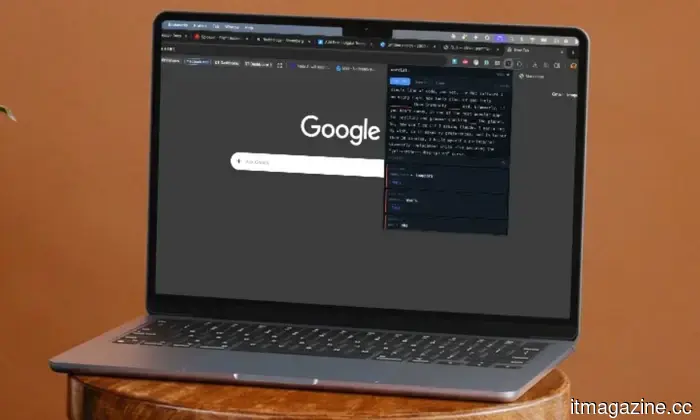
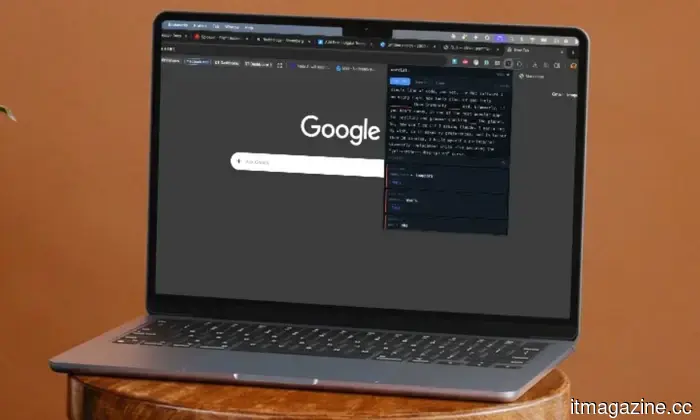
Running my Grammarly alternative as a Chrome tool. Nadeem Sarwar / Digital Trends
But why, you may wonder? For starters, I can finally create software tailored to my specific needs. Secondly, I’m exhausted by privacy concerns. Naturally, avoiding yet another app subscription is a strong incentive. However, the most motivating aspect is realizing I can take control of my daily workflow (at least a portion of it), and I intend to keep going.
How was the process?
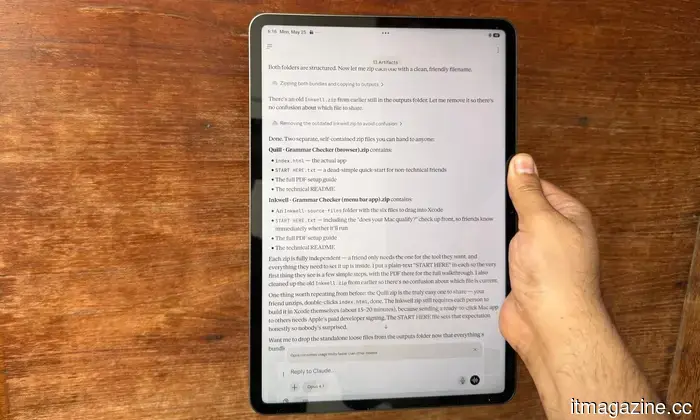
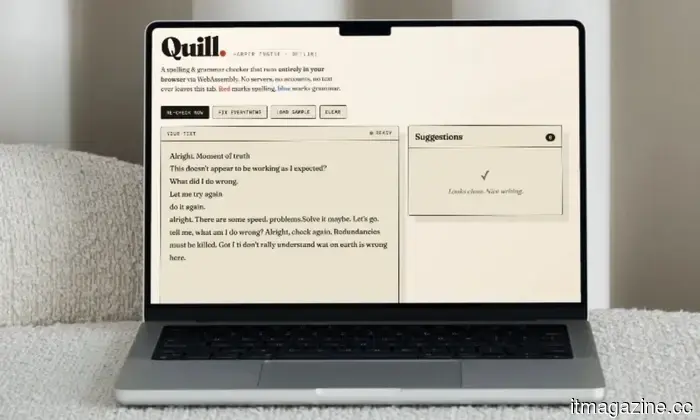
I’ll let the image below speak for itself. I launched the Claude mobile app on an Android tablet to develop software for the Mac. On my first attempt, my Grammarly alternative, created by Claude, worked flawlessly. In fact, I built three versions. One operates entirely offline, the second requires an internet connection, and the third is a proper macOS app that functions as a menu bar utility.
The latter merges note-taking and grammar correction into a single tool, complete with a one-click export feature to Apple Notes. This version necessitated using Xcode to create a dedicated app icon, which Claude handled for me. The reality is, the barriers to "building" products have never been lower, nor more flexible. A year ago, if you had told me I would create a powerful macOS tool on an Android tablet without writing any code, I would have found it laughable.
Nadeem Sarwar / Digital Trends
When I engaged Claude, I simply expressed my needs. Claude proposed three paths for creating my own offline grammar checker, and I selected the one that functioned without an internet connection, operated smoothly, and, most importantly, was responsive. Initially, I wanted to utilize Apple’s on-device foundational models (provided with Apple Intelligence). It worked, but was relatively slow. Claude suggested using the Harper engine from Automattic. At first, the tool, which I named InkWell, needed an internet connection.
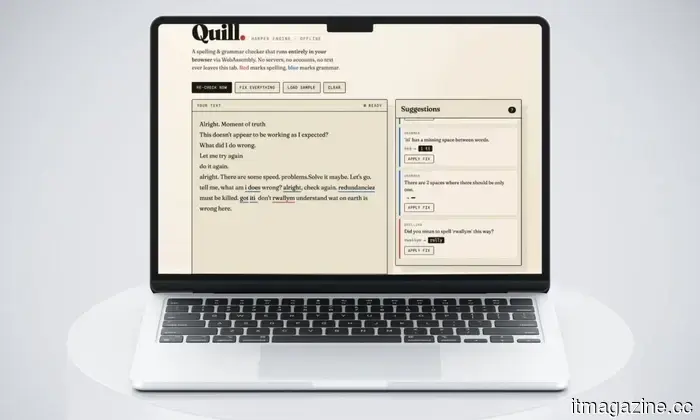
The entire package was under 10 megabytes in size. However, I desired a tool that would function offline. Claude indicated that the Harper engine could be incorporated into the file package, allowing the tool (now named Quill) to operate entirely without internet access. The only drawback? The file size increased to 25 megabytes. The concern about storage space for the AI was nearly
Other articles
 China allocates identification codes to over 28,000 humanoid robots.
China has introduced a national robot identification system that assigns a 29-character code to each humanoid robot, allowing it to be tracked from the factory to the scrapyard, with 28,000 robots already registered.
China allocates identification codes to over 28,000 humanoid robots.
China has introduced a national robot identification system that assigns a 29-character code to each humanoid robot, allowing it to be tracked from the factory to the scrapyard, with 28,000 robots already registered.
 Microsoft will finally allow you to remove Copilot.
The April 2026 update for Windows 11 introduces an official option to uninstall Copilot, following the fact that only 3.3% of eligible users decided to pay for it and after requests from administrators for removal controls.
Microsoft will finally allow you to remove Copilot.
The April 2026 update for Windows 11 introduces an official option to uninstall Copilot, following the fact that only 3.3% of eligible users decided to pay for it and after requests from administrators for removal controls.
 I created an offline alternative to Grammarly and transformed it into a Mac application without writing any code.
I utilized Claude to create a completely offline and locally processed alternative to Grammarly. The initial build took me under 30 seconds, and I didn’t need to view or write any code.
I created an offline alternative to Grammarly and transformed it into a Mac application without writing any code.
I utilized Claude to create a completely offline and locally processed alternative to Grammarly. The initial build took me under 30 seconds, and I didn’t need to view or write any code.
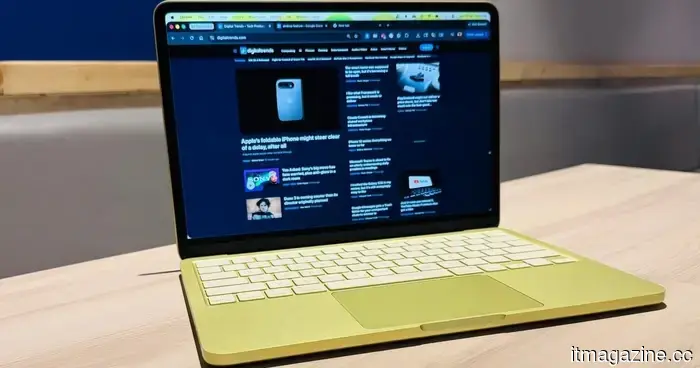 In a market where Mac has been seen as aspirational, it now seems to offer a better value than Windows machines.
MacBooks have traditionally been seen as the high-end, aspirational laptop option, but increasing prices for Windows laptops combined with Apple’s more affordable MacBook approach are changing this narrative.
In a market where Mac has been seen as aspirational, it now seems to offer a better value than Windows machines.
MacBooks have traditionally been seen as the high-end, aspirational laptop option, but increasing prices for Windows laptops combined with Apple’s more affordable MacBook approach are changing this narrative.
 Ericsson is relocating from Kista to central Stockholm, marking the largest office lease in Swedish history.
Ericsson is relocating its Stockholm headquarters from Kista to Hagastaden, occupying 71,000 sqm in what Atrium Ljungberg describes as the largest office lease in the history of Sweden.
Ericsson is relocating from Kista to central Stockholm, marking the largest office lease in Swedish history.
Ericsson is relocating its Stockholm headquarters from Kista to Hagastaden, occupying 71,000 sqm in what Atrium Ljungberg describes as the largest office lease in the history of Sweden.
 The Pope states that AI should be disarmed and not allowed to dominate humanity. However, we are moving in the opposite direction.
Pope Leo XIV issued his initial encyclical on May 25, discussing artificial intelligence, human dignity, warfare, and the risks associated with allowing technology to be controlled by a select few.
The Pope states that AI should be disarmed and not allowed to dominate humanity. However, we are moving in the opposite direction.
Pope Leo XIV issued his initial encyclical on May 25, discussing artificial intelligence, human dignity, warfare, and the risks associated with allowing technology to be controlled by a select few.
I created an offline alternative to Grammarly and transformed it into a Mac application without any programming.
I utilized Claude to create a completely offline and locally processed substitute for Grammarly. The initial version took me under 30 seconds to complete, and I didn’t need to view or write any code.