
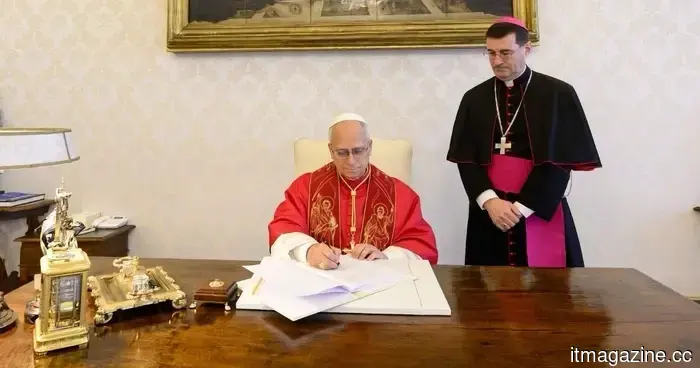
The Pope states that AI should be disarmed and not allowed to dominate humanity. However, we are moving in the opposite direction.
Pope Leo XIV issued his inaugural encyclical on May 15, coinciding with the 135th anniversary of Pope Leo XIII’s Rerum novarum. Titled Magnifica humanitas, the document was released on May 25 and tackles one of the pivotal challenges of our era: the role of artificial intelligence and its effects on humanity.
The primary message is not one of technological opposition. The Pope clearly states that technology itself is not a danger or inherently malevolent. Nevertheless, he notes that technology is never neutral since it reflects the values of those who create, fund, and control it. This is where matters become complex.
Is AI becoming a means of empowerment for the elite?
A substantial part of the encyclical addresses the concentration of AI capabilities within a small group. Pope Leo XIV cautions that this situation risks exacerbating the divide between those included in the digital advancement and those left out. He advocates for ethical guidelines that emerge not from a select few decision-makers, but from commonly held principles of social justice.
He also critiques the application of AI in warfare, asserting that no algorithm can render war morally justifiable. He contends that AI accelerates conflict, makes it more impersonal, and reduces the threshold for engaging in violence, which does not represent progress in any true sense.
The timing of Pope Leo XIV’s encyclical is notable. In July 2025, the U.S. Department of Defense awarded contracts to companies like Google, OpenAI, Anthropic, and xAI to incorporate advanced AI into military operations, including battlefield decision-making and classified intelligence systems.
Anthropic ultimately withdrew from its agreement in early 2026 over concerns regarding autonomous weapons and mass surveillance, which led to a ban from the Trump administration. OpenAI quickly filled the gap, securing its own contract with the Pentagon, which provoked significant backlash from its users and a mass uninstallation of its app.
By April 2026, the Pentagon had entered new classified AI agreements with OpenAI, Google, and others. It is evident that the Pope disapproves of these developments and is implicitly urging the U.S. government to refrain from utilizing AI in military contexts.
What direction does the Pope envision moving forward?
The essence of the encyclical is that the Pope desires technology to be a servant to humanity, rather than the reverse. He calls for enhanced labor protections, increased transparency in communications, renewed focus on education, and legal structures to ensure accountability in AI development.
He specifically highlights migrants, individuals working in hazardous conditions, and victims of abuse as populations deserving of our compassion and safeguarding. At its core, Magnifica humanitas serves as a reminder that regardless of technological advancement, the true measure of progress remains a human one.

Other articles
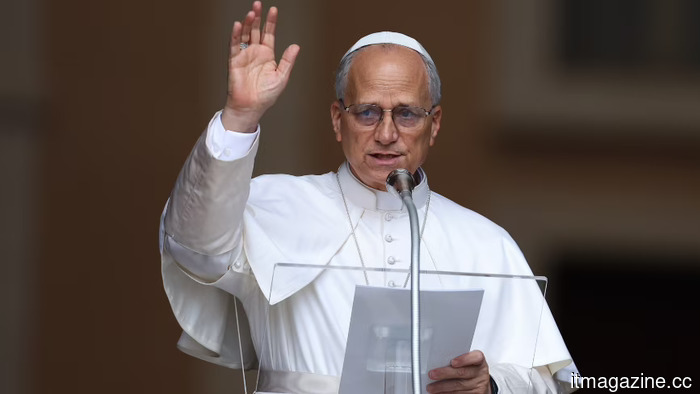 Pope Leo XIV instructs the Vatican to regulate AI in the initial encyclical of his papacy.
Pope Leo XIV's inaugural encyclical, Magnifica humanitas, advocates for the disarmament of AI and prohibits algorithmic warfare. Chris Olah from Anthropic spoke in conjunction with cardinals.
Pope Leo XIV instructs the Vatican to regulate AI in the initial encyclical of his papacy.
Pope Leo XIV's inaugural encyclical, Magnifica humanitas, advocates for the disarmament of AI and prohibits algorithmic warfare. Chris Olah from Anthropic spoke in conjunction with cardinals.
 Ericsson is relocating from Kista to central Stockholm, marking the largest office lease in Swedish history.
Ericsson is relocating its Stockholm headquarters from Kista to Hagastaden, occupying 71,000 sqm in what Atrium Ljungberg describes as the largest office lease in the history of Sweden.
Ericsson is relocating from Kista to central Stockholm, marking the largest office lease in Swedish history.
Ericsson is relocating its Stockholm headquarters from Kista to Hagastaden, occupying 71,000 sqm in what Atrium Ljungberg describes as the largest office lease in the history of Sweden.
 Huawei has introduced its alternative to Moore's Law as it targets the development of 1.4nm chips.
Huawei's Tau Scaling Law redirects the focus of the chip competition from merely reducing transistor size to enhancing signal speed, with the company confidently targeting a density equivalent to 1.4nm by 2031.
Huawei has introduced its alternative to Moore's Law as it targets the development of 1.4nm chips.
Huawei's Tau Scaling Law redirects the focus of the chip competition from merely reducing transistor size to enhancing signal speed, with the company confidently targeting a density equivalent to 1.4nm by 2031.
 In a market where Mac has been seen as aspirational, it now seems to offer a better value than Windows machines.
MacBooks have traditionally been seen as the high-end, aspirational laptop option, but increasing prices for Windows laptops combined with Apple’s more affordable MacBook approach are changing this narrative.
In a market where Mac has been seen as aspirational, it now seems to offer a better value than Windows machines.
MacBooks have traditionally been seen as the high-end, aspirational laptop option, but increasing prices for Windows laptops combined with Apple’s more affordable MacBook approach are changing this narrative.
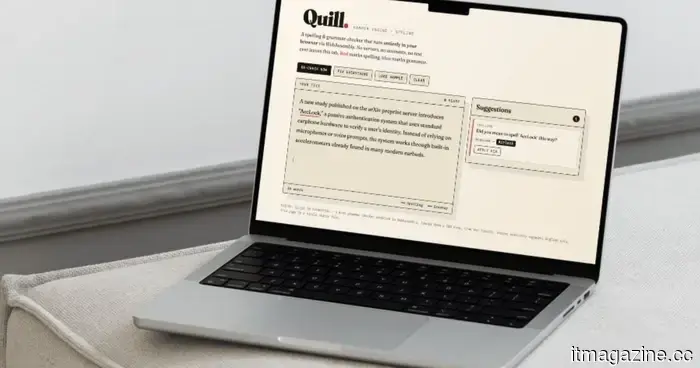 I created an offline alternative to Grammarly and transformed it into a Mac application without writing any code.
I utilized Claude to create a completely offline and locally processed alternative to Grammarly. The initial build took me under 30 seconds, and I didn’t need to view or write any code.
I created an offline alternative to Grammarly and transformed it into a Mac application without writing any code.
I utilized Claude to create a completely offline and locally processed alternative to Grammarly. The initial build took me under 30 seconds, and I didn’t need to view or write any code.
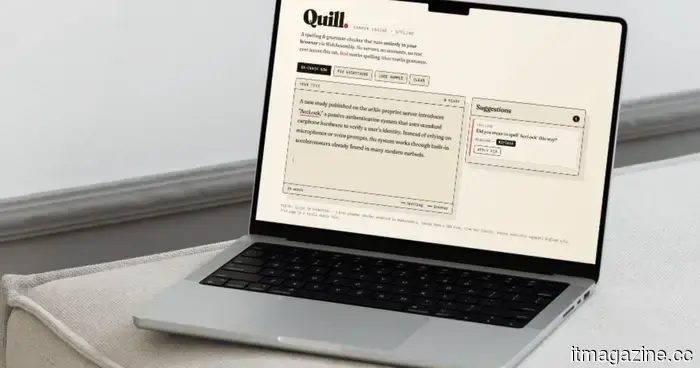 I created an offline alternative to Grammarly and transformed it into a Mac application without any programming.
I utilized Claude to create a completely offline and locally processed substitute for Grammarly. The initial version took me under 30 seconds to complete, and I didn’t need to view or write any code.
I created an offline alternative to Grammarly and transformed it into a Mac application without any programming.
I utilized Claude to create a completely offline and locally processed substitute for Grammarly. The initial version took me under 30 seconds to complete, and I didn’t need to view or write any code.
The Pope states that AI should be disarmed and not allowed to dominate humanity. However, we are moving in the opposite direction.
Pope Leo XIV issued his initial encyclical on May 25, discussing artificial intelligence, human dignity, warfare, and the risks associated with allowing technology to be controlled by a select few.